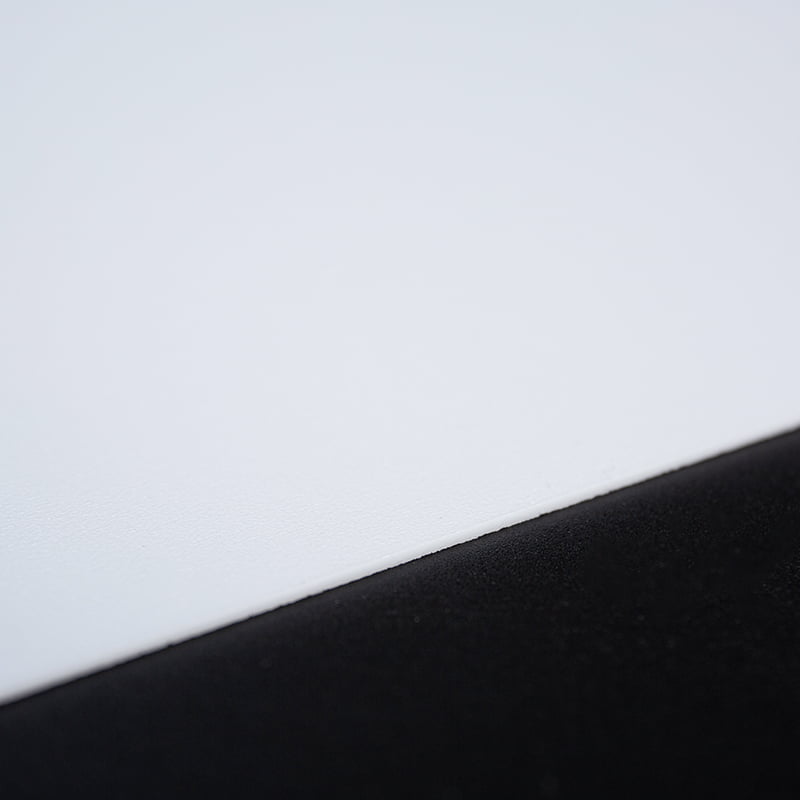
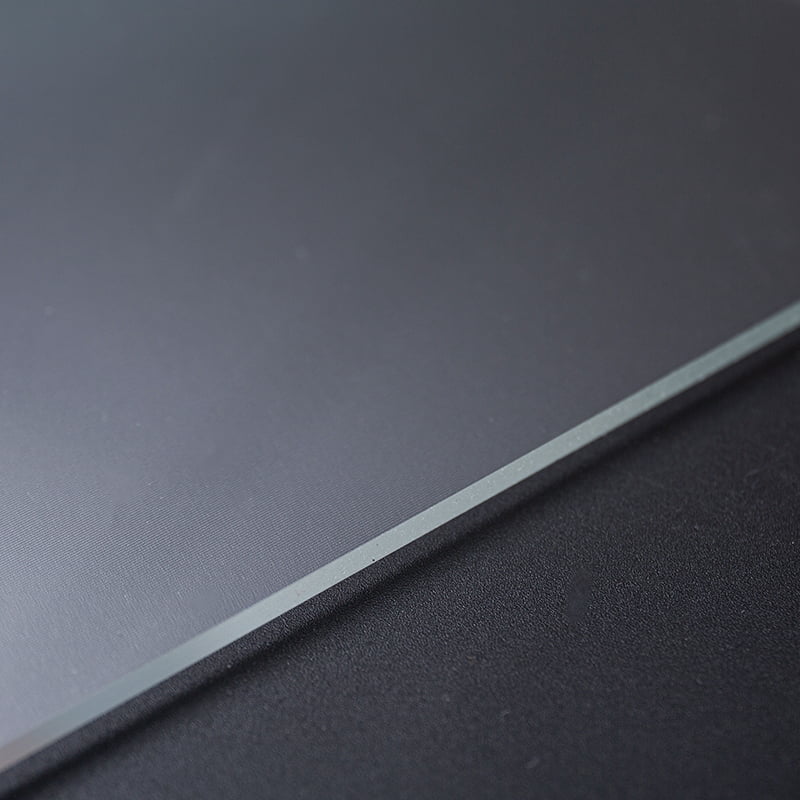
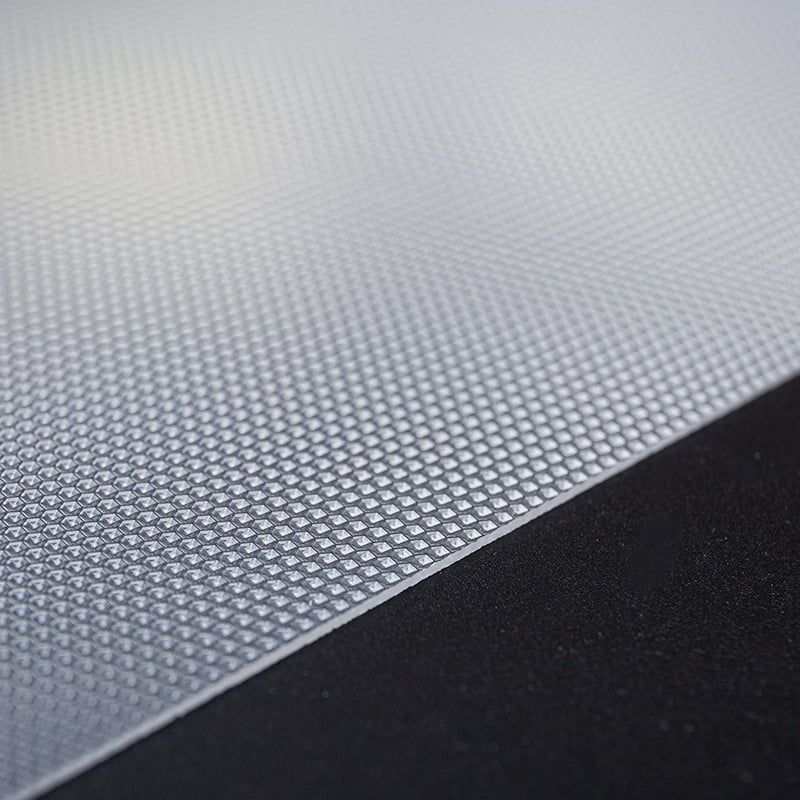
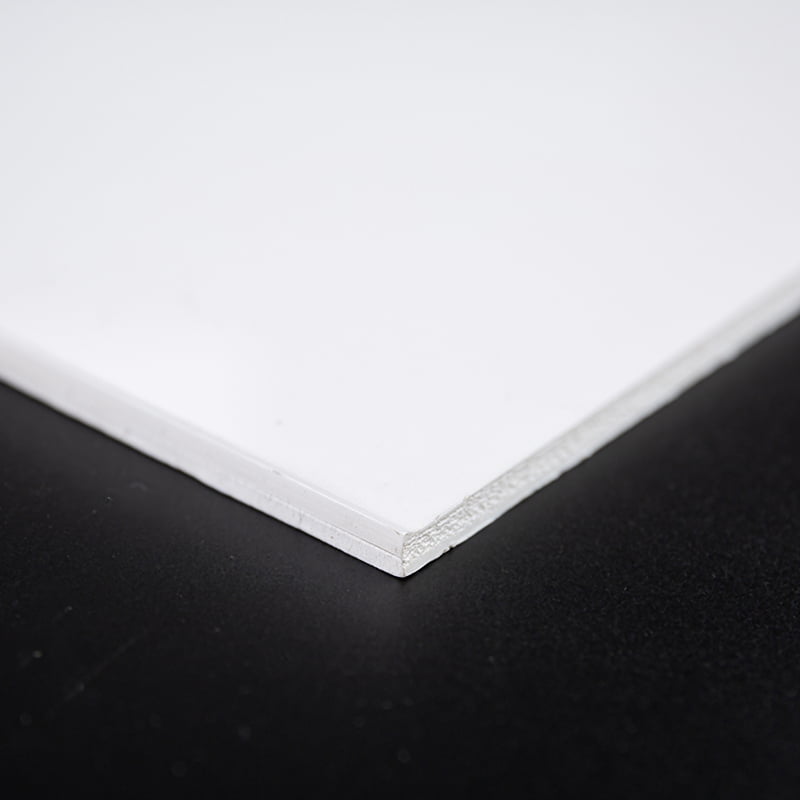
Suzhou Gentle Photoelectric Technology Co., Ltd. is a PS Sheet Series manufacturer producing extruded polystyrene optical sheets for LED lighting, display backlight modules, appliance panels and decorative surfaces. We run PS extrusion lines in Suzhou and Zhongshan, and we develop the material formulation, the micro-structured surface and the finished sheet format as one package.
Our PS range covers diffusion sheets, light guide plates, prism anti-glare sheets, decorative sheets and blow-molded grades. Each type is engineered around a defined working point: light transmittance, haze, thickness, surface texture and the assembly method used on your line.
What We Manufacture in the PS Sheet Series
Polystyrene is a styrene-based thermoplastic supplied as GPPS (general purpose, high clarity) and HIPS (high impact, opaque or tinted). Our PS Sheet Series is built mainly on GPPS because it offers 88–92% light transmittance in the natural grade, high gloss, low water absorption and stable rigidity. HIPS grades are used where toughness or opacity matters more than clarity.
Sheets are produced by extrusion: molten pellets pass through a die and a chill-roll stack, then through calibration, slitting and, where required, embossing, polishing, laser dotting or screen printing. Extrusion temperature sits around 220 °C; below that the melt does not fully plasticize and flow marks appear, above it thermal degradation affects flatness and dimensional stability.
Our PS Range and Where Each Type Fits
| PS sheet type |
Typical thickness / transmittance |
Primary application fit |
| Double-Sided Frosted Scratch-Resistant PS Diffusion Sheet |
0.5–2 mm; 30–80% |
LED panel lights, downlights, ceiling and fan lights, linear strips, TV and monitor backlight modules |
| Good Durability PS High-Transmittance Diffusion Sheet |
0.6–0.7 mm at 63%; 0.8–2 mm at 55–80% |
High-efficiency panel lights targeting 200 lm/W and above, energy-saving commercial and retail lighting |
| Easy to Wipe Clean PS Oil-Resistant Diffusion Sheet |
0.8–1.2 mm; 43% |
Kitchen and bathroom panel lights, commercial food preparation areas, range hood and exhaust fan lighting |
| Good Flame Retardancy Secure Type PS Flame Retardant Diffusion Sheet |
Configured to fixture requirement |
Fixtures where flame-retardant material behaviour is part of the specification |
| Excellent Optical Performance PS Antibacterial Diffusion Sheet |
Configured to fixture requirement |
Medical, cleanroom and hygiene-controlled lighting environments |
| Low-Expansion Lightweight Non-Deforming PS Transparent Light Guide Plate |
Edge-lit formats |
Edge-lit panel lights and backlight units requiring dimensional stability |
| Eye-Protection PS Prism Anti-Glare Sheet For Classroom & Office Lighting |
Prism micro-lens surface |
Classroom, office and workspace luminaires where glare control is specified |
| Multipurpose Rapid Production PS Decorative Sheet |
Colour and pattern options |
Appliance panels, housings and decorative surfaces |
| Short Molding Cycle Lightweight And High Strength PS Blow-Molded Sheet |
Thermoforming and blow-molding grades |
Formed parts where short cycle time and low weight are the production drivers |
Optical Design: Surface Texture Drives Haze and Transmittance
Diffusion in our PS sheets comes from two cooperating mechanisms: the micro-structured surface formed by embossing rollers, and the additive package in the resin. Surface topography sets the scattering angle and therefore the haze-to-transmittance balance; additives set long-term colour stability and UV behaviour.
- Fine matte texture — roughly 70–80% haze with 85–90% transmittance; the usual choice for office panel lights.
- Coarse frosted texture — roughly 85–95% haze with 75–82% transmittance; used where LED point sources are strong and hotspot suppression dominates.
- Prism micro-lens — roughly 60–70% haze with 88–92% transmittance; redirects light for directional and glare-controlled luminaires.
For outdoor and automotive-adjacent use we formulate with hindered amine light stabilizers and benzotriazole UV absorbers to limit photolytic chain scission, and optical brightening agents to hold a neutral white appearance. Because GPPS water absorption is below 0.1%, humidity-driven dimensional change is not the limiting factor; uneven cooling in the calibration unit is, and that is what we control through chill-roll temperature and haul-off speed settings.
Capacity, Accuracy and Production Control
Our Suzhou site runs three PS extrusion lines at 220 tons per month each; the Zhongshan site adds one PS line at 250 tons per month. Downstream capacity includes three cutting machines, three polishing machines, three engraving machines, two laser cutting machines, two laser machines and four printing machines, so a sheet can leave us cut to size, polished on the light-incident face, laser-dotted or screen-printed.
Thickness, flatness and surface quality are monitored during extrusion with inline optical sensors reading haze, transmittance and surface defects in real time. Pilot trials on a small-scale extruder verify the embossing pattern and scattering performance before a formulation is released to mass production.
Laboratory and Acceptance Testing
- Photoelectric: illuminance, luminance and uniformity measurement on an integrating sphere with haze meter.
- Dimensional: 2.5D measurement, thickness analysis, surface composite layer measurement.
- Reliability: high/low temperature alternating test, aging, abrasion and scratch resistance.
- Material and mechanical: composition analysis, roughness, flame retardancy, hardness and ball drop impact.
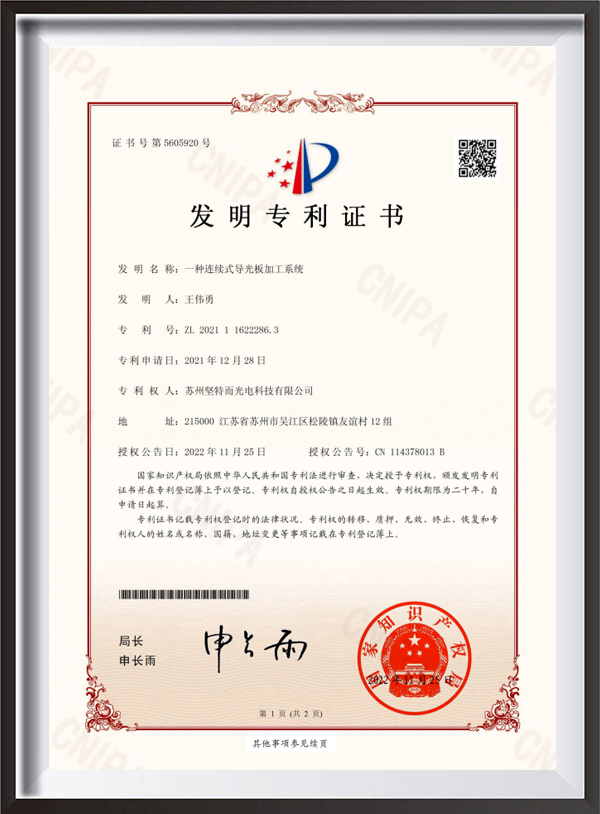
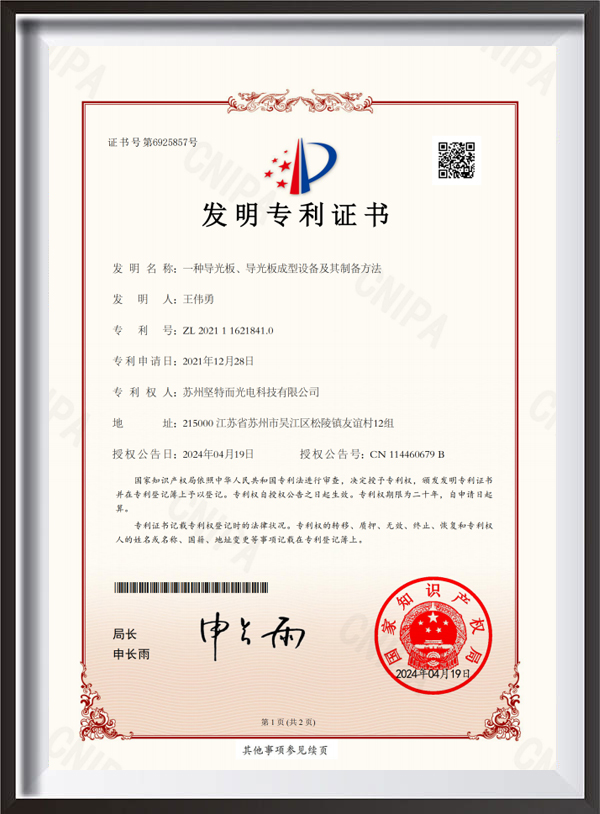
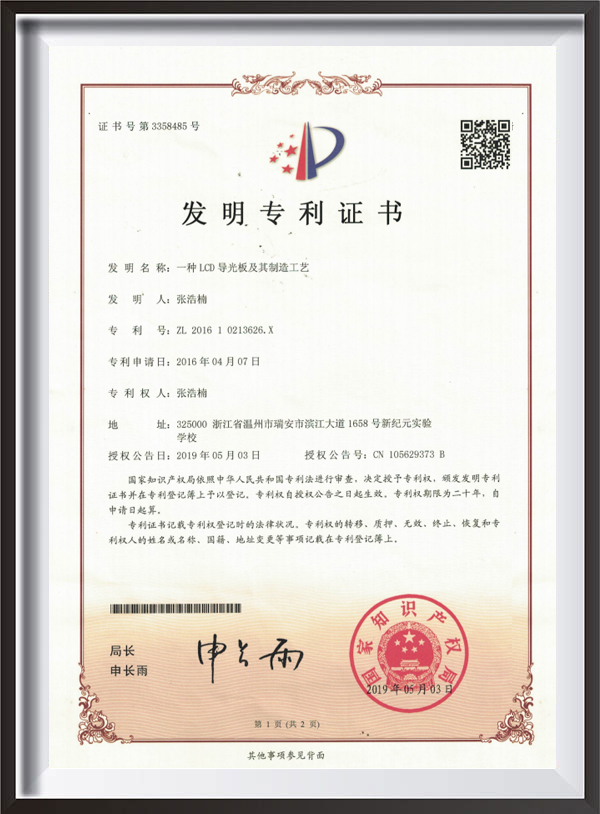
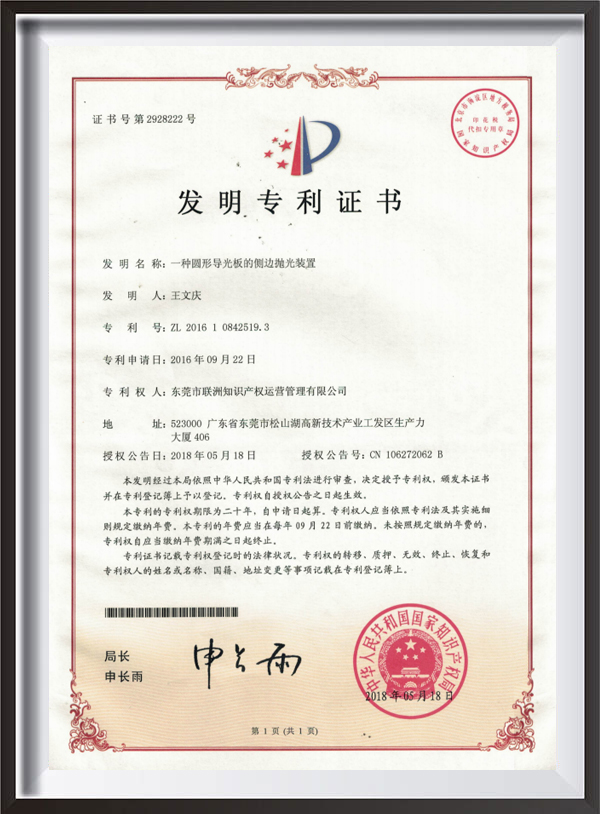
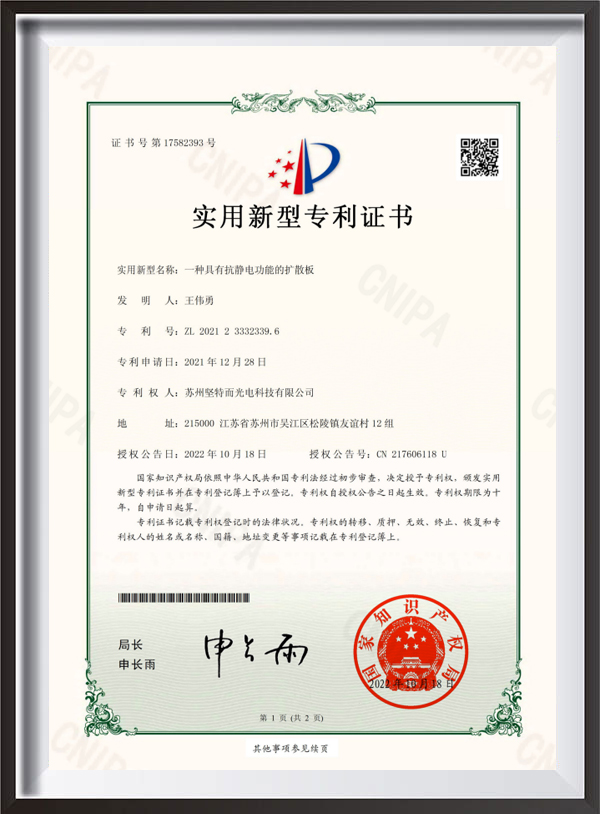
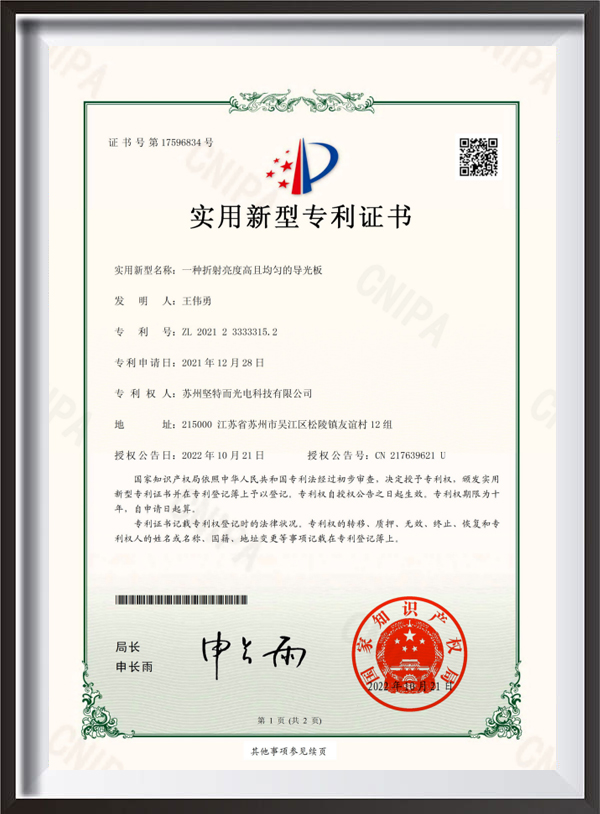
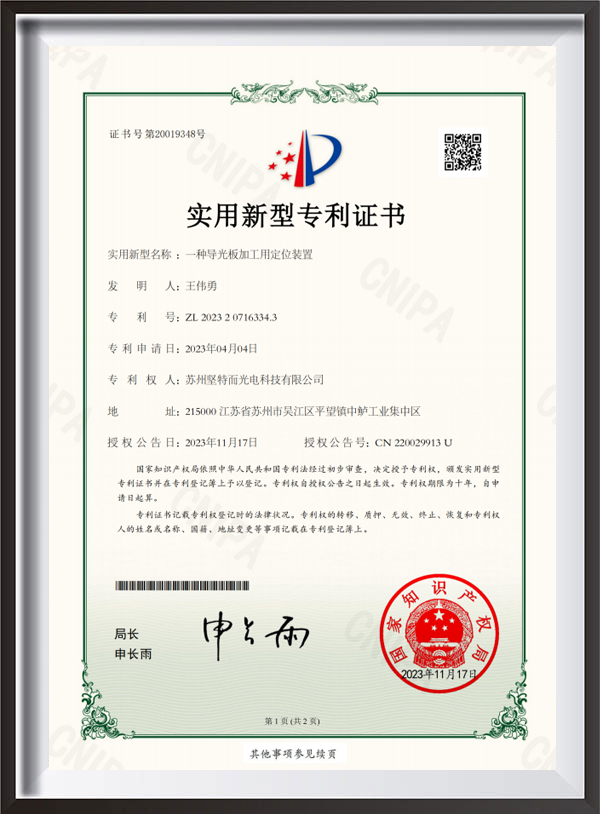
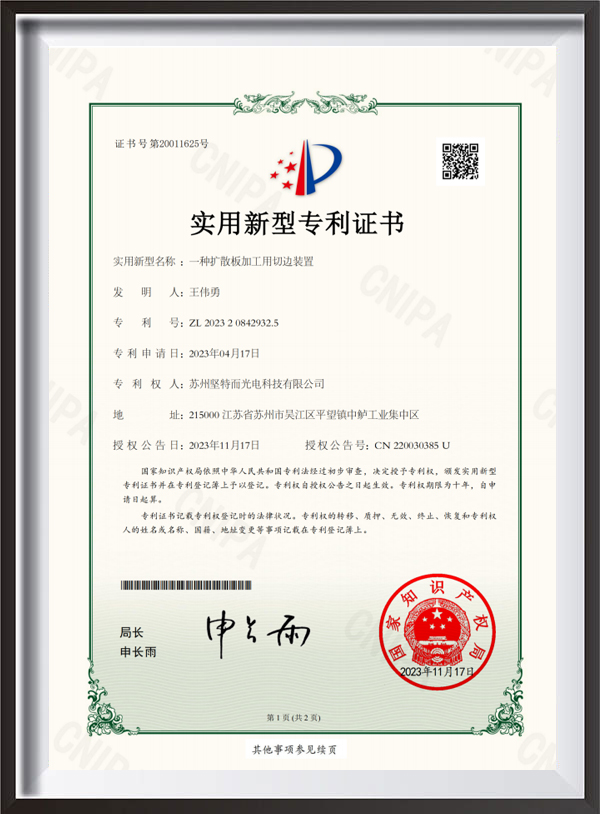
We hold ISO 9001 certification and operate as a National High-Tech Enterprise with 37 patent applications covering optical material and sheet developments. Acceptance criteria for a PS sheet order are agreed against the drawing and the measured values above, not against a generic datasheet.
Configuration Options and Line Integration
A PS sheet specification is normally fixed by four variables: thickness, transmittance or haze target, surface finish on each face, and the delivered format. We build the sheet around those and around how it will be handled downstream.
- Thickness: 0.5–2 mm across the diffusion range, with heavier gauges for light guide plates and formed parts.
- Surface: single- or double-sided frosted, prism, polished light-incident face, or smooth gloss.
- Optical treatment: laser-ablated dots or screen-printed ink patterns to redirect the light path in light guide plates.
- Format: large extruded sheet, precision-cut panel, or protective-film-covered stack on pallet.
- Function: oil-resistant coating, flame-retardant formulation, antibacterial formulation, UV-stabilized outdoor grade.
Drop-in compatibility matters on existing lines: our oil-resistant and standard diffusion sheets are dimensioned to fit common LED panel light assemblies, so a material change does not force a fixture redesign. Where a luminaire combines brightness and glare targets, the high-transmittance diffusion sheet pairs with the prism anti-glare sheet as a two-layer stack.
Related Sheet and Formed-Product Range
PS is one material family in our optical sheet portfolio. Where a project needs higher surface hardness, weather resistance or impact strength, we supply the PMMA Sheet Series and the PC Sheet Series; PP and ABS grades cover chemical resistance, low weight and coloured structural parts. Formed and finished assemblies are available through Vacuum forming products and the Complete Lamp Series.
Information We Use to Configure Your Solution
Our proposal is based on the working point, the material and the production target. The following inputs let us fix thickness, formulation, surface texture and delivered format without a second round of samples.
| Project input |
What it determines |
| Luminaire type and LED pitch |
Haze level and texture needed to suppress hotspots |
| Target transmittance or luminous efficacy |
Grade selection between standard and high-transmittance diffusion |
| Panel dimensions and thickness |
Extrusion width, cutting plan and pallet stacking |
| Environment: kitchen, cleanroom, outdoor, enclosed fixture |
Coating, antibacterial or flame-retardant formulation, UV package |
| Assembly method and cleaning regime |
Surface finish, protective film, scratch and chemical resistance targets |
| Annual volume and call-off pattern |
Production scheduling and packaging scope |
Service, Documentation and Delivery Scope
Custom development runs from material formulation and micro-structured optical design through pilot trials to mass production, with small-batch diversified prototyping available to shorten time to market. Technical support covers material selection, injection molding and coating process optimization, and equipment operation training for instruments such as melt flow indexers and coordinate measuring machines.
Finished sheets are covered with protective film and stacked on pallets before shipment. Spare-part and service questions are handled against the delivered specification, so the sheet grade, thickness and surface treatment remain traceable across repeat orders.
Frequently Asked Questions
Which PS sheet should I choose for a standard LED panel light?
For a general panel light, the double-sided frosted scratch-resistant diffusion sheet at 0.5–2 mm with 30–80% transmittance covers most fixtures. It needs no protective film, which removes a handling step on the assembly line. If the fixture targets 200 lm/W or above, the high-transmittance grade at 63% (0.6–0.7 mm) or 55–80% (0.8–2 mm) is the better starting point.
Can PS diffusion sheets be combined with a prism anti-glare layer?
Yes. The high-transmittance diffusion sheet is designed to work with the PS prism anti-glare sheet as a combined stack, so a luminaire can meet both a brightness target and a glare-control requirement without changing the housing.
How do you handle kitchen and bathroom lighting where grease builds up?
We apply a proprietary surface coating that forms an oil-resistant barrier, so cooking residue does not adhere readily and the panel can be wiped clean. The 0.8–1.2 mm grade at 43% transmittance balances diffusion and brightness, and the coating is formulated to hold optical performance through repeated cleaning with detergents.
What thickness and transmittance combinations are available?
Diffusion sheets run from 0.5 mm to 2 mm with transmittance from 30% to 80%, depending on grade and texture. Light guide plates and formed grades use heavier gauges. We confirm the exact combination against your luminaire drawing rather than quoting a single fixed value.
How is quality verified before shipment?
Inline optical sensors monitor haze, transmittance and surface defects during extrusion. Laboratory checks cover illuminance, luminance and uniformity, dimensional measurement, high/low temperature alternating and aging tests, abrasion and scratch resistance, flame retardancy, hardness and ball drop impact. ISO 9001 certification governs the process.
Can you supply cut-to-size or laser-dotted PS sheets?
Yes. Sheets can be delivered as large extruded panels or precision-cut to your dimensions, with the light-incident face polished and laser-ablated dots or screen-printed ink applied where the light path needs to be redirected. Finished panels are film-covered and palletised for shipment.

 English
 Español