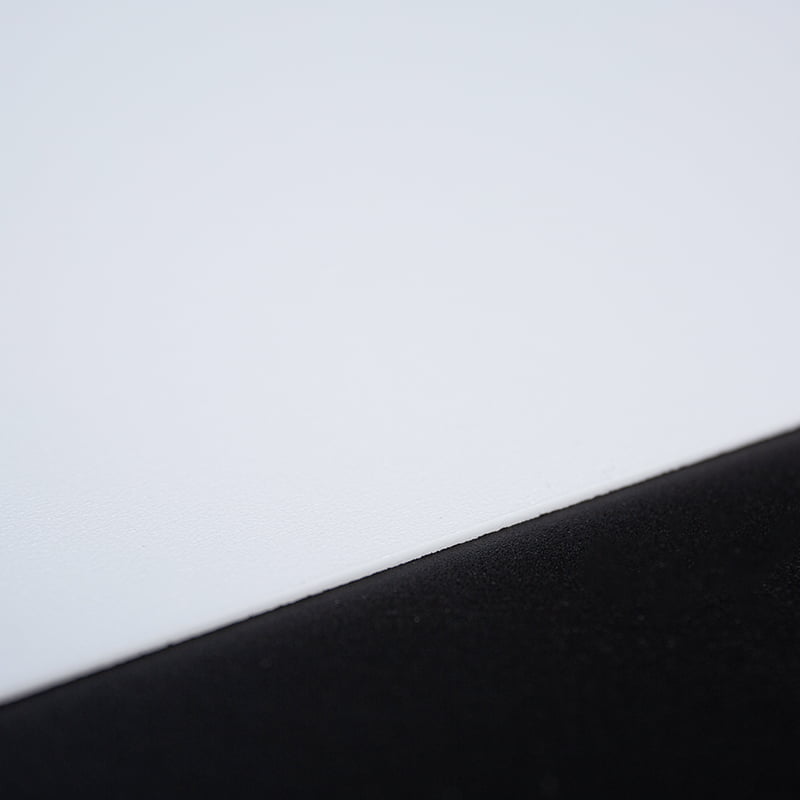
Suzhou Gentle Photoelectric Technology Co., Ltd. is a China-based PP Sheet Series manufacturer producing extruded polypropylene sheets for lighting diffusers, food-contact components, chemical-duty fabrication and industrial thermoforming. Our range covers optical diffusion grades, food-grade formulations and general-purpose structural sheets, supplied as cut-to-size panels or master sheets with documented process control.
We configure each PP Sheet Series order around the working temperature, required light transmittance, chemical exposure, joining method and downstream forming process. Because polypropylene does not require pre-drying and processes at 200–230°C, our extrusion lines deliver stable gauge and surface quality across long production runs.
What Our PP Sheet Series Covers
Polypropylene is a semi-crystalline thermoplastic with the lowest density among general-purpose plastics, at 0.90–0.91 g/cm³. It resists acids, alkalis, salts and most organic solvents, absorbs almost no moisture, and welds reliably by hot-gas or butt-fusion methods. These properties make it the rational material where optical clarity and extreme impact resistance are not the primary requirement.
Our PP Sheet Series is produced by melting, three-roll calendering and shaping, cooling and conveying, then cutting. We supply the range below as standard and customized configurations.
PP Diffuser Sheet
Optical diffusion panels for bath lights, kitchen luminaires and cost-optimized indoor fixtures. Transmittance options of 43–45%, 50–55% and 60–65% at 0.5–2 mm, ultrasonically bondable to PP frames.
Food-Grade PP Sheet
Formulations built on virgin resin with compliant additive packages for cutting boards, prep surfaces, display dividers and cold-storage linings. Thickness typically 0.3–20 mm depending on the application.
Industrial & Chemical-Duty PP Sheet
Weldable sheet for tank liners, scrubber housings, wet benches and wastewater components. Resistant to dilute acids, alkalis, electroplating baths and aqueous salt solutions.
Application Fit Across the Range
We match the PP grade to the process and environment rather than treating polypropylene as a single commodity. The table below shows how we position the main configurations.
| Application |
Typical Thickness |
Key Property |
Joining Method |
| Bath light / kitchen luminaire diffuser |
0.5–2 mm |
Controlled transmittance, toughness |
Ultrasonic bonding |
| Food prep surfaces and cutting boards |
8–20 mm |
Food-contact compliance, low absorption |
Mechanical fastening |
| Thermoformed food packaging trays |
0.3–1.5 mm |
High-clarity grade, formability |
Thermoforming |
| Chemical tank liners and wet benches |
3–10 mm |
Acid/alkali resistance, weldability |
Hot-gas or butt fusion |
| Cold-storage lining panels |
3–10 mm |
Cleaning-agent resistance |
Hot-gas welding |
Critical Specifications We Confirm Before Production
Every PP Sheet Series order is defined by a small set of variables that determine whether the finished part performs as intended. We confirm these with the customer before releasing the extrusion schedule.
- Thickness and tolerance: nominal gauge with cross-web variation controlled during calendering; die-lip adjustment at 50–75 mm intervals keeps variation within ±3% of nominal on production runs.
- Light transmittance and haze: for diffuser grades, we target the specified transmittance band (43–45%, 50–55% or 60–65%) and verify with integrating-sphere and haze-meter measurement.
- Surface finish: chill-roll temperature between 15°C and 40°C controls crystallinity, gloss and surface texture; nip pressure determines replication of textured roll patterns.
- Draw ratio: kept below 1.3:1 for flat-sheet applications to limit internal stress and post-trim curling.
- Chemical exposure: concentration, temperature and duration are reviewed against PP's resistance profile; concentrated sulfuric acid above 70% and chlorinated solvents are excluded.
- Food-contact compliance: resin and additive packages are checked against FDA 21 CFR, EU Regulation 10/2011 or GB 4806.7 as applicable, with overall migration limits typically 10 mg/dm².
Fabrication and Line Integration
PP cannot be solvent-bonded, so welding is the primary joining method and we support customers in selecting the right technique. Hot-gas welding with nitrogen or air at 270–320°C and a PP filler rod typically reaches 80–90% joint efficiency. For sheet above 6 mm, butt fusion gives stronger, more reproducible joints and is the standard method for large tank panels.
Sheets in the 1–5 mm range can be cold-bent over a radius of roughly 150–200 times the sheet thickness. Thicker sheets require line bending with a strip heater bringing a narrow zone to 150–170°C. PP tolerates a wide thermal window during line bending, which suits manual fabrication equipment.
For lighting assemblies, our PP diffuser sheet is formulated for ultrasonic bonding to PP frames, enabling adhesive-free integrated assembly. This simplifies production and improves joint reliability compared with glued or mechanically fastened alternatives.
Quality Control and Acceptance Testing
Our laboratory is equipped with a constant-temperature-and-humidity chamber, integrating sphere, haze meter, melt flow tester, impact tester, illuminance meter, roughness tester, optical tester, coordinate measuring machine and ball-drop impact tester. These instruments support the following acceptance checks.
- Dimensional: 2.5D measurement, thickness analysis, surface composite layer measurement.
- Photoelectric: illuminance, luminance and uniformity testing for diffuser grades.
- Reliability: high/low temperature alternating, aging, abrasion and scratch resistance.
- Material and mechanical: composition analysis, roughness, flame retardancy, hardness and drop testing.
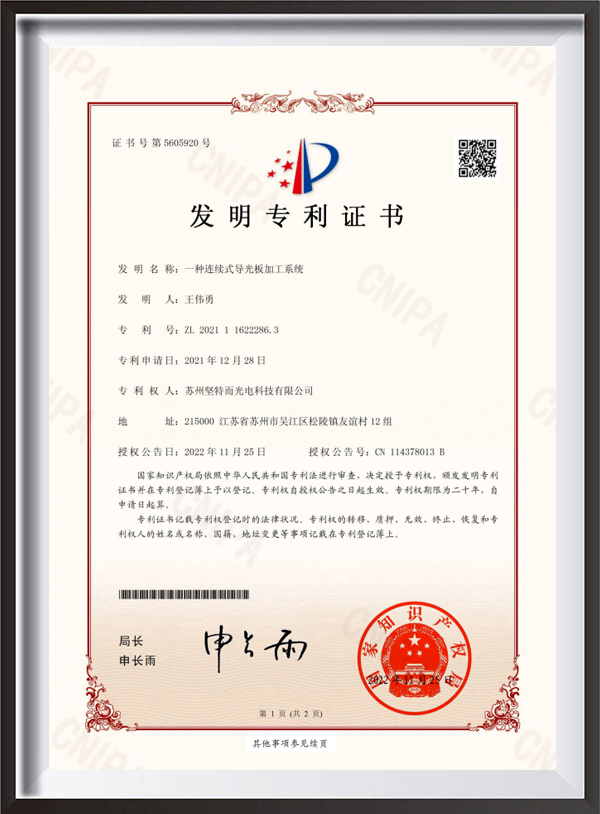
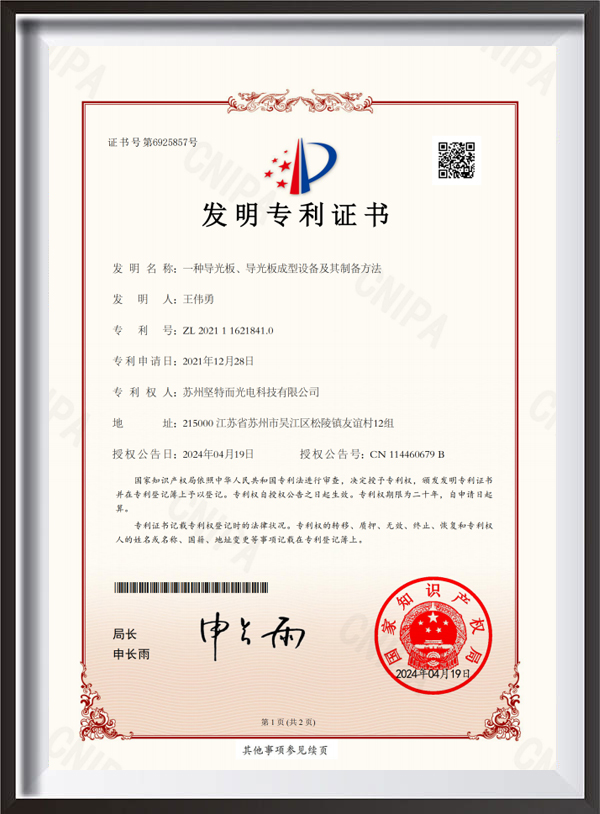
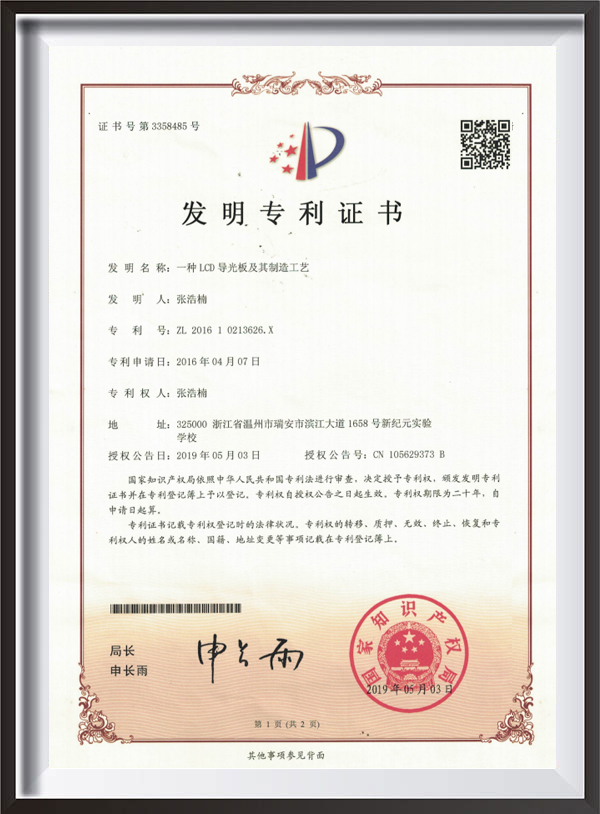
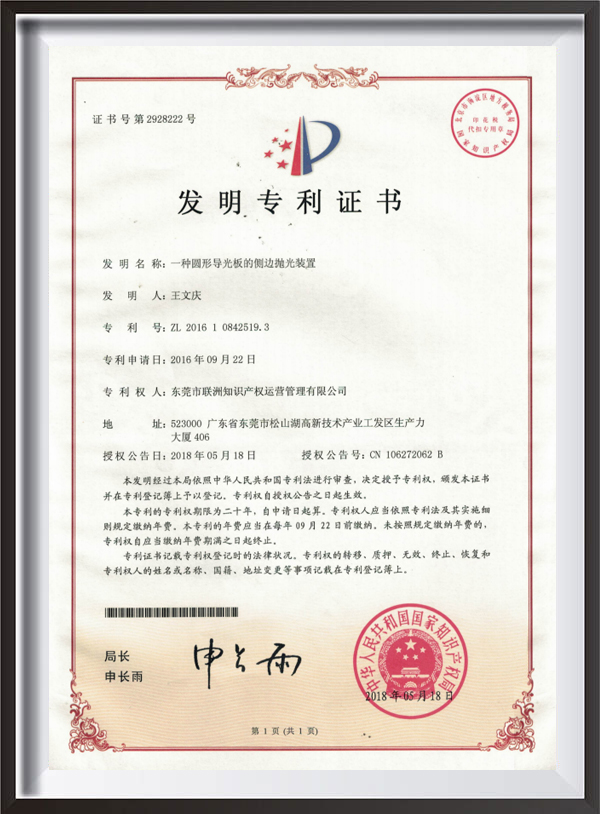
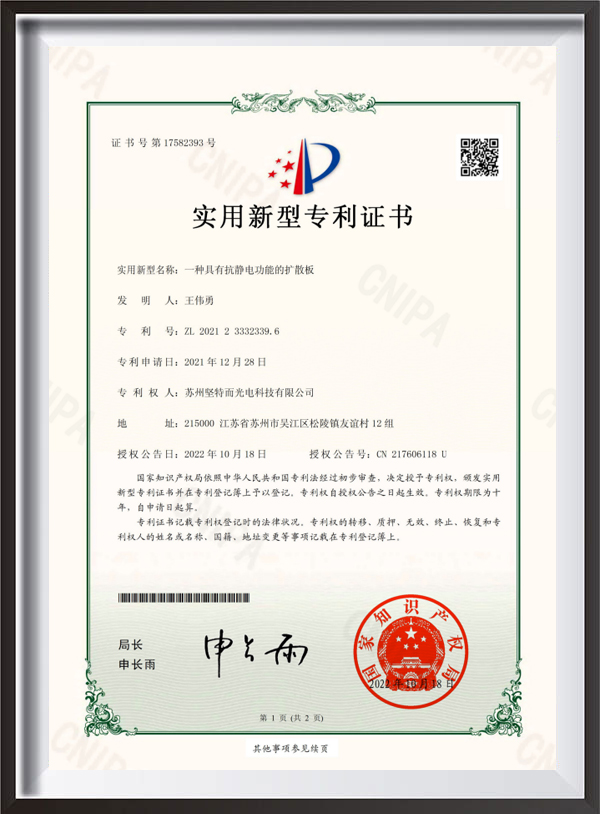
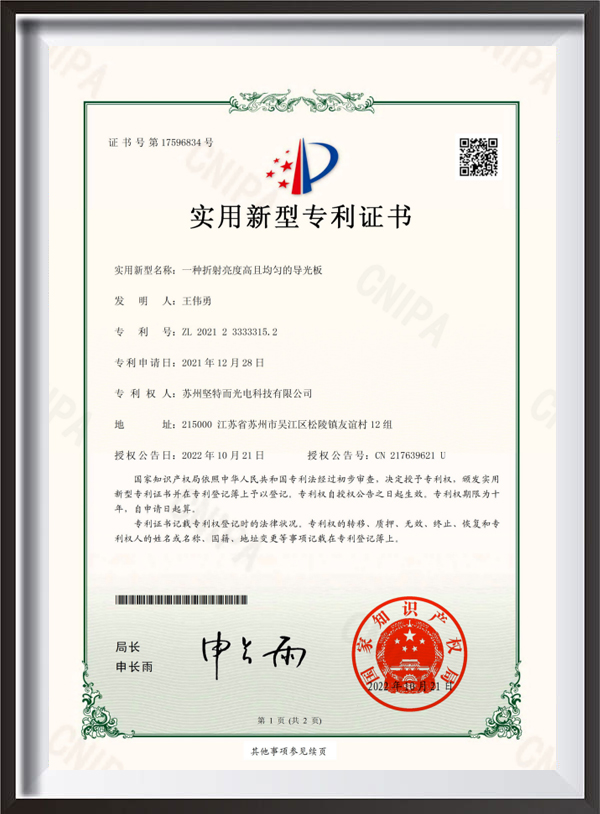
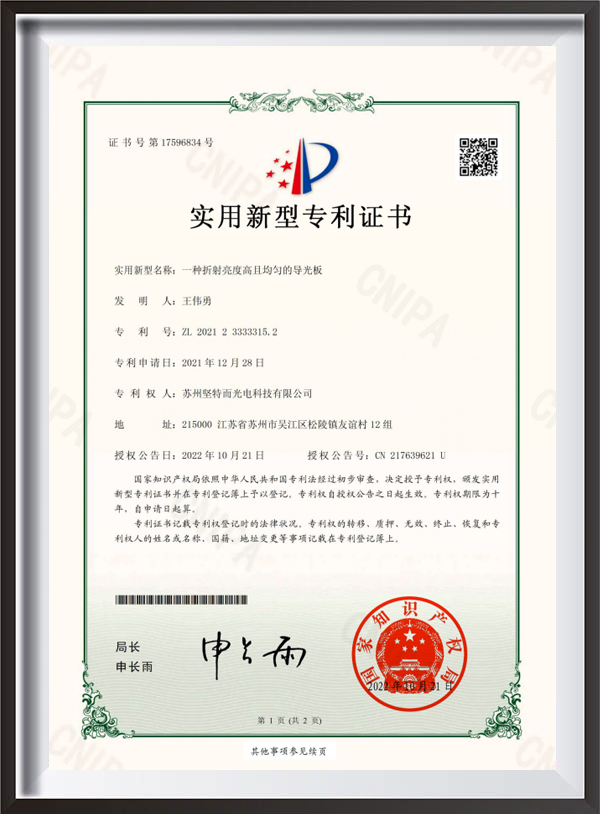
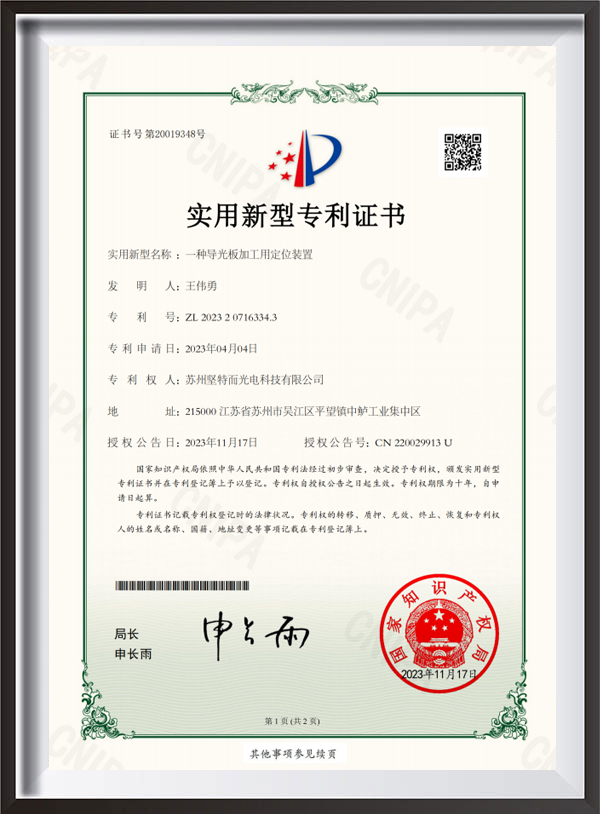
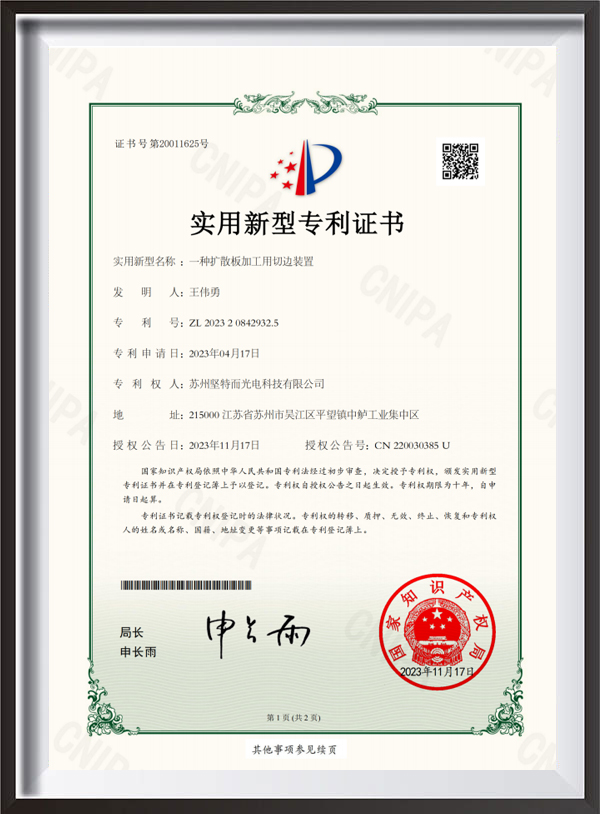
We hold ISO 9001 certification and operate as a National High-Tech Enterprise with 37 patent applications. Certificate of Invention Patent and Utility Model Patent documentation is available for customer review during project qualification.
Information We Use to Configure Your Solution
To prepare an accurate PP Sheet Series configuration and quotation, we work from the following project inputs. Where a value is not yet fixed, we can propose a starting specification based on comparable applications.
| Input |
Why We Need It |
| Finished part drawing or 3D file |
Determines cut size, bend radii and joining zones |
| Required thickness and tolerance |
Sets die gap, draw ratio and gauge control targets |
| Optical targets (transmittance, haze) |
Selects diffuser grade and surface treatment |
| Chemical or food-contact exposure |
Drives resin and additive compliance selection |
| Joining method and equipment |
Confirms weldability or ultrasonic bonding compatibility |
| Annual volume and delivery schedule |
Plans extrusion runs and packaging scope |
Related Sheet Series
Where PP does not meet an optical, impact or temperature requirement, we supply complementary materials from the same manufacturing base. The PS Sheet Series covers light guide plates and diffusion sheets for lighting and displays. The PMMA Sheet Series provides high-transparency, weather-resistant optical components. The PC Sheet Series delivers impact-resistant, flame-retardant diffusers and transparent sheets for demanding fixtures.
For projects that combine sheet supply with finished forming, our Vacuum forming products range includes food-safe microwave-ready PP components produced from the same material family.
Frequently Asked Questions
What thickness range can you supply in the PP Sheet Series?
We extrude PP sheet from 0.3 mm for thermoformed packaging up to 20 mm for food-prep surfaces and structural panels. Diffuser grades for bath lights and kitchen luminaires are typically supplied at 0.5–2 mm. Thickness tolerance is controlled during calendering, with cross-web variation held within ±3% of nominal on production runs.
Can PP diffuser sheet be ultrasonically bonded to PP frames?
Yes. Our PP diffuser sheet is formulated for ultrasonic bonding compatibility with PP frames, enabling adhesive-free integrated assembly. This is the standard joining method for bath light and kitchen luminaire diffusers, and it improves joint reliability while simplifying production.
Is your PP sheet suitable for food-contact applications?
We produce food-grade PP sheet using virgin resin and additive packages checked against FDA 21 CFR, EU Regulation 10/2011 or GB 4806.7 as applicable. Overall migration limits are typically 10 mg/dm². Processing hygiene is maintained with food-grade lubricants and controlled handling after extrusion.
How does PP compare with PC or PMMA for lighting diffusers?
PP costs significantly less than PC and PMMA, has lower density and does not require pre-drying before processing. It is the rational choice where optical clarity and extreme impact resistance are not required. For high-transparency or high-impact lighting applications, our PMMA and PC Sheet Series are more appropriate.
What information do you need to quote a PP Sheet Series order?
We work from the finished part drawing, required thickness and tolerance, optical targets, chemical or food-contact exposure, joining method and annual volume. Where a value is not yet fixed, we propose a starting specification based on comparable applications and confirm it with the customer before releasing the extrusion schedule.
Do you provide test reports with PP sheet shipments?
Our laboratory supports dimensional, photoelectric, reliability, material and mechanical testing, including thickness analysis, transmittance and haze measurement, high/low temperature alternating, aging, abrasion, flame retardancy and drop testing. Test scope is agreed at order confirmation and reported against the specified acceptance criteria.

 English
 Español