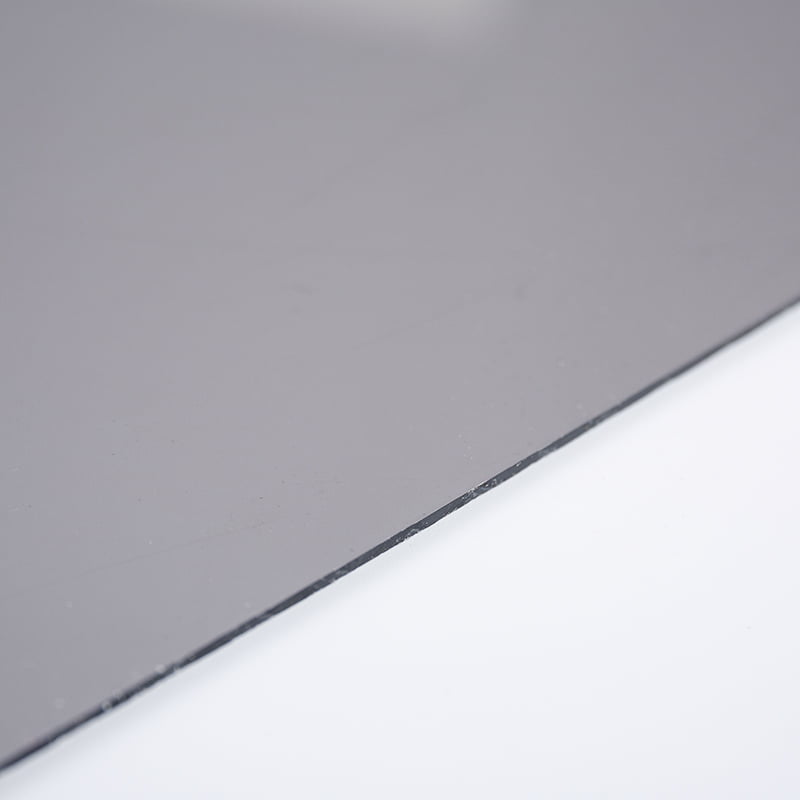
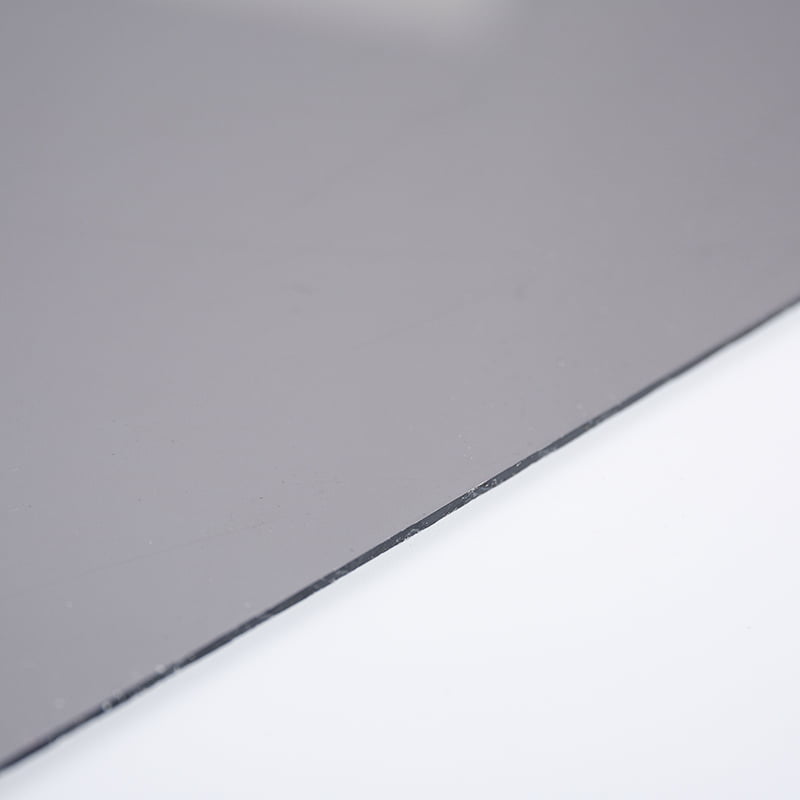
Suzhou Gentle Photoelectric Technology Co., Ltd. is a China-based optical materials manufacturer producing the ABS Sheet Series for equipment panels, instrument housings, display windows, storage products and consumer electronics enclosures. Our ABS range covers transparent high-gloss grades and multi-color wear-resistant grades, supplied as extruded sheet in 2–3 mm thickness and configured around the forming, cutting, printing and bonding route used on your line.
We develop ABS sheet as part of a broader new-optical-material programme that also includes PS, PMMA, PC and PP sheet families, so structural and appearance layers can be matched to the optical layers in the same assembly.
What the ABS Sheet Series Covers
ABS is an acrylonitrile-butadiene-styrene terpolymer — a general-purpose engineering plastic that balances rigidity, toughness and surface quality. Acrylonitrile contributes hardness and chemical resistance, butadiene contributes low-temperature impact strength, and styrene contributes gloss and processability. Extruded ABS sheet keeps that balance in flat form, which is why it suits opaque structural and appearance parts where PC would be over-specified and PP would lack stiffness.
- High-Transparency High-Gloss Shatterproof ABS Transparent Sheet — 2–3 mm, for transparent storage boxes, cosmetic organizers, electronics housings, display windows, remote controls and charger covers.
- Multi-Color Wear-Resistant ABS Color Sheet — 2–3 mm, in black, white, gray, red, yellow, blue, green and beige, for industrial enclosures, instrument control panels, chassis faceplates, display stands and signage.
Both grades are produced on our extrusion lines and cut to the sheet format required by the project. Where a part needs a different balance of impact, heat or optical behaviour, our wider sheet families — PC Sheet Series and PMMA Sheet Series — are available for comparison during material selection.
Material Behaviour That Drives Selection
ABS sheet holds dimensional stability better than semi-crystalline commodity plastics because it is amorphous: shrinkage during cooling is low and roughly isotropic in the flow and cross-flow directions, so as-formed and as-machined dimensions stay predictable across large panels. Heat distortion sits in the region of 90–110 °C, with long-term service generally in the 60–80 °C band, which covers most indoor equipment and luminaire housing environments.
| Property |
Typical ABS Sheet Behaviour |
Practical Effect on the Part |
| Surface hardness |
Higher than PP and PE |
Resists scuffing on panels handled daily |
| Shrinkage |
Low, near-isotropic |
Tighter tolerance stack-ups on snap-fit and bezel parts |
| Impact |
Tough, retains ductility at low temperature |
Fewer cracked housings in transit and service |
| Surface finish |
High gloss, accepts paint, plating, printing |
Colored sheet can be used without secondary coating |
| Chemical resistance |
Resistant to oils, weak acids and alkalis |
Suitable for equipment panels wiped with cleaning agents |
Application Fit Across Equipment and Display Builds
ABS sheet is rarely the light-managing layer in a luminaire or display. It carries the structure and the visible surfaces around that layer: housings, back panels, reflector trays, mounting frames, bezels and faceplates. In these positions the sheet has to hold geometry after assembly and present a consistent surface, because a warped housing or a bezel with patchy gloss undermines the optical sheet it surrounds.
- Industrial and instrument enclosures — colored sheet used directly as the visible panel, eliminating painting steps.
- Consumer electronics and appliance housings — transparent and colored grades for covers, windows and trim.
- Storage, stationery and display products — transparent sheet for boxes, organizers and tabletop containers.
- Lighting and display architecture — structural frames and trays matched to PS, PMMA or PC optical layers.
For projects that combine a formed structural shell with an optical panel, our Vacuum forming products range shows how ABS and other sheet materials behave once thermoformed into finished parts.
Configuration Options We Build Into the Sheet
Sheet supply is configured around the downstream process, not around a single stock size. We confirm the following before releasing a production run:
- Thickness — 2–3 mm for the standard transparent and colored grades, with the target thickness set by required rigidity and forming depth.
- Color — standard black, white, gray, red, yellow, blue, green and beige, or a matched color for branded equipment.
- Surface — high-gloss finish for appearance parts, or a texture suited to wear resistance on handled panels.
- Format — large extruded sheet cut to the panel size your cutting, routing or CNC operation expects.
- Protective film — applied before stacking so sheets arrive free of handling marks.
Where a project needs a specific spectral transmittance, haze level or surface roughness treatment, our engineering team develops the formulation rather than forcing the part onto a catalogue grade.
Processing and Line Integration
ABS sheet runs on standard fabrication equipment, which keeps tooling investment low. The parameters below are the ones that most often decide whether a formed or machined part comes out clean.
- Thermoforming and vacuum forming — form at roughly 150–175 °C; thicker sheet needs longer preheat so the core reaches forming temperature, and drying at about 80 °C before forming prevents surface bubbling.
- Cutting, routing and CNC machining — sheet machines with standard tooling; sharp, clean edges are achievable without special preparation.
- Solvent bonding — ABS can be solvent-bonded with MEK or acetone systems, which supports box-form enclosures and multi-piece assemblies.
- Printing and coating — screen printing, pad printing, spray coating and electroplating all bond reliably to properly prepared ABS surfaces.
- Assembly — compatible with ultrasonic welding for clean, adhesive-free housing assembly near optical surfaces.
Quality Control and Acceptance
Our production flow runs from extrusion plasticizing and roll calendering through cooling, traction, edge trimming and length cutting, then coating, inspection and stacking. Inspection and cleaning are built into the flow rather than added at the end, and finished panels are filmed and stacked on pallets before shipment.
Testing is carried out in our own laboratory, which is equipped for dimensional, photoelectric, reliability, material and mechanical evaluation. Depending on the grade and application, acceptance can draw on:
- Dimensional measurement, 2.5D measurement and thickness analysis
- Illuminance, luminance and uniformity testing for transparent grades
- High and low temperature alternating, aging, abrasion and scratch resistance testing
- Composition analysis, roughness analysis and flame retardancy testing
- Hardness analysis and drop testing
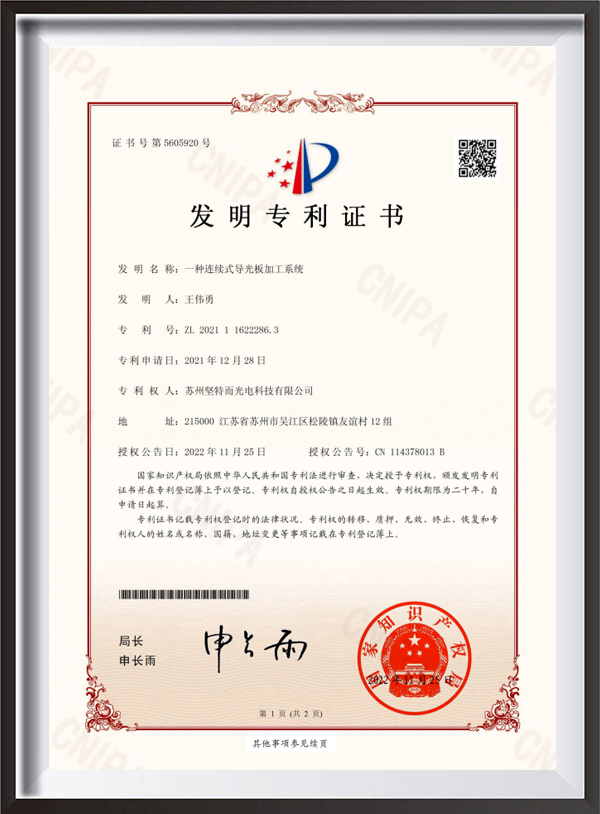
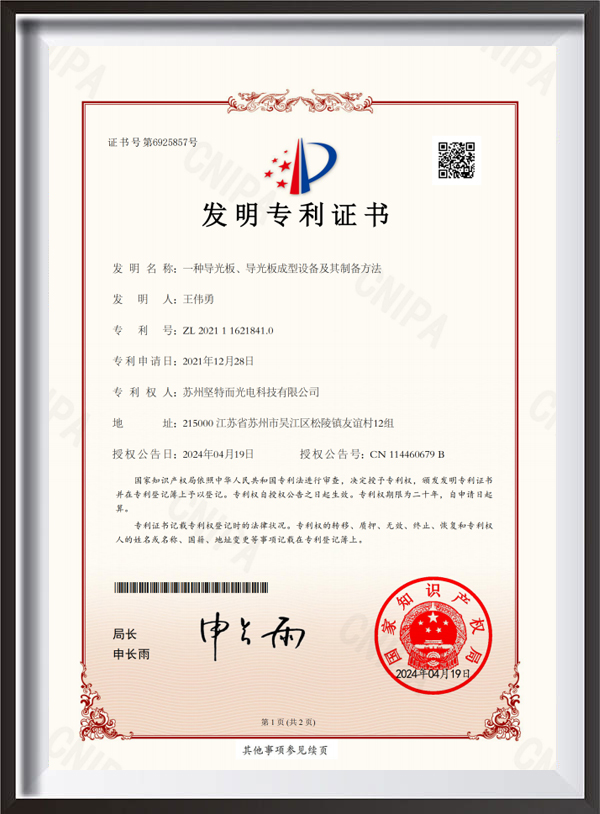
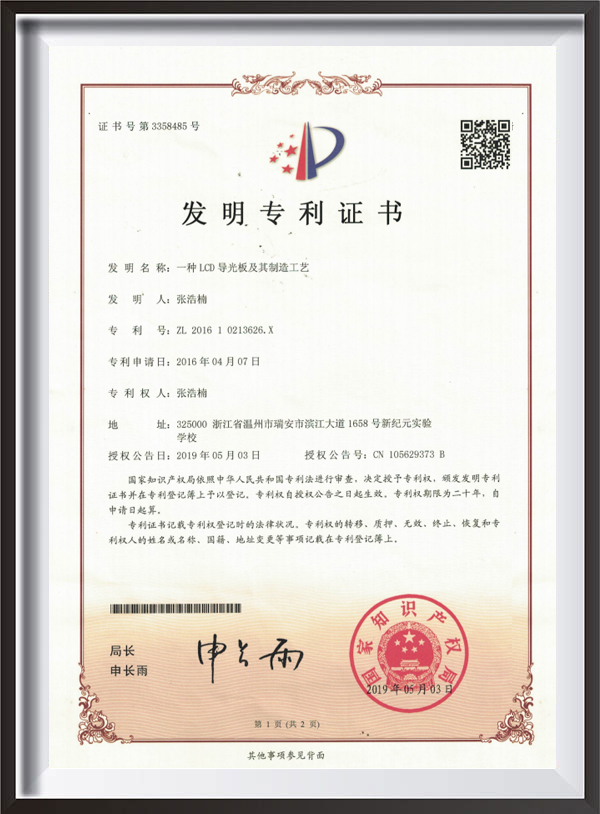
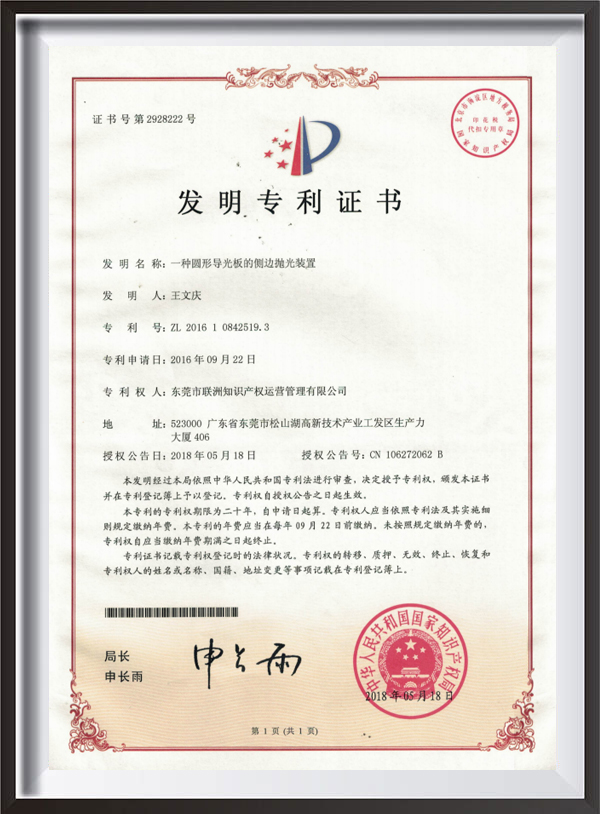
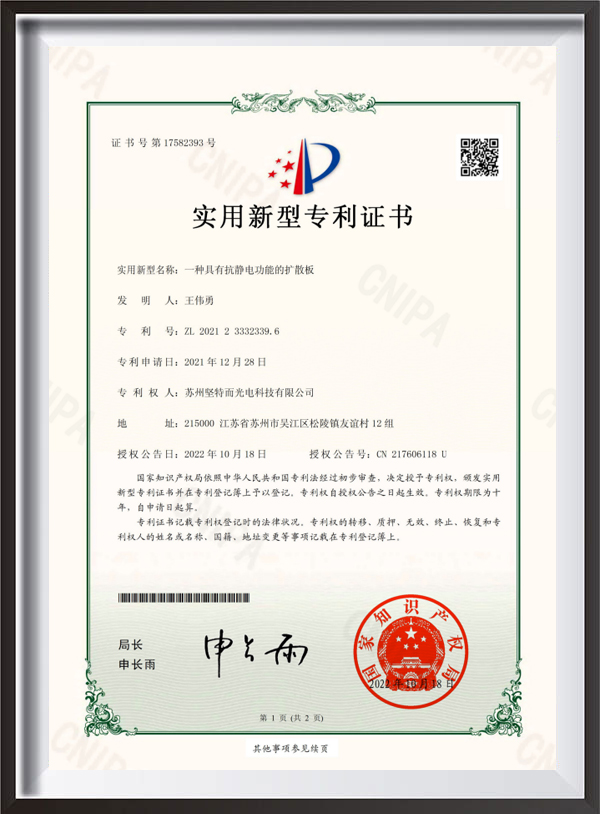
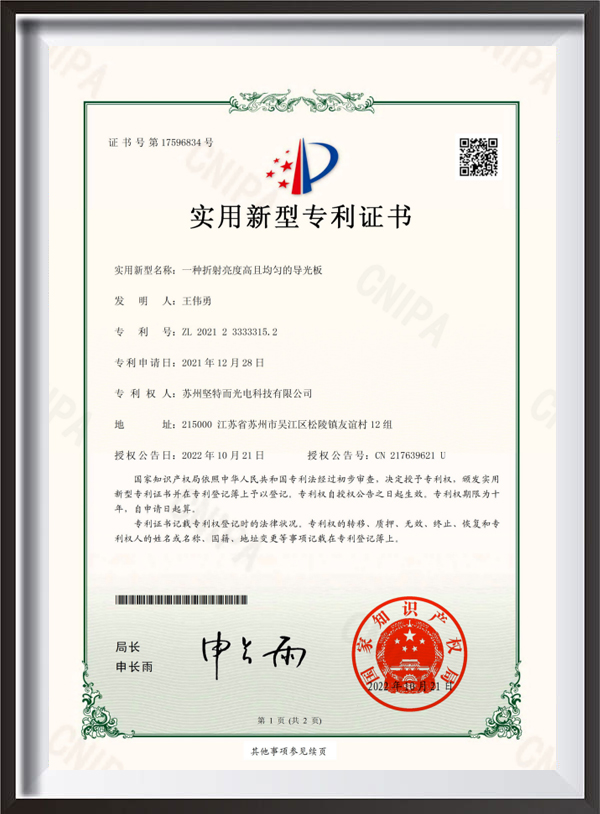
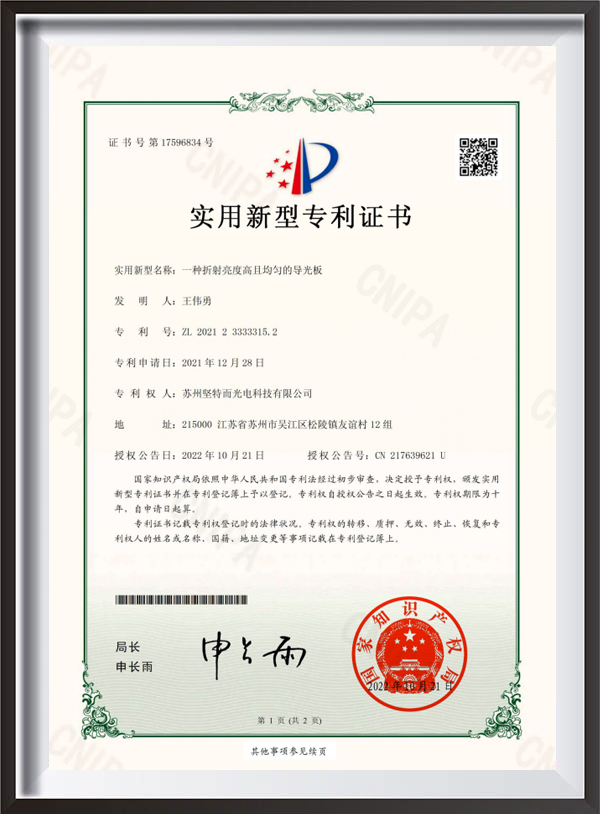
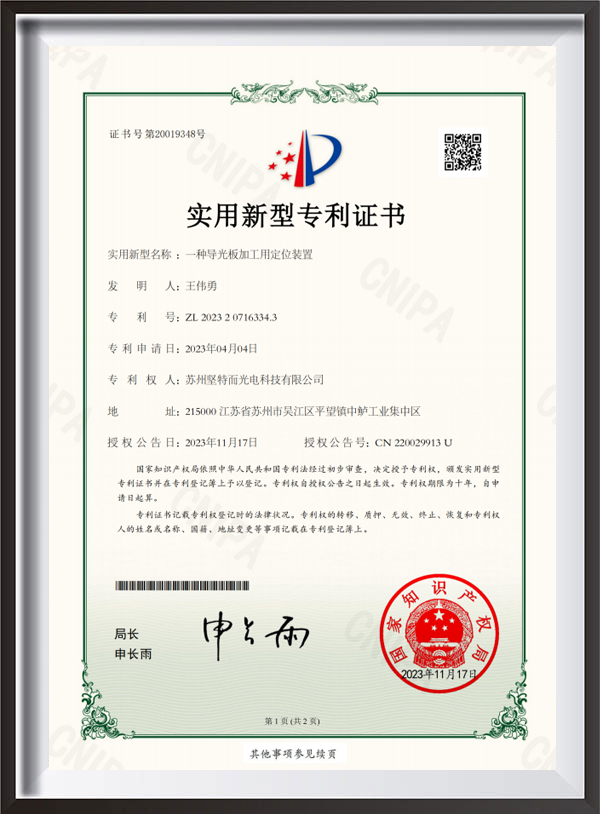
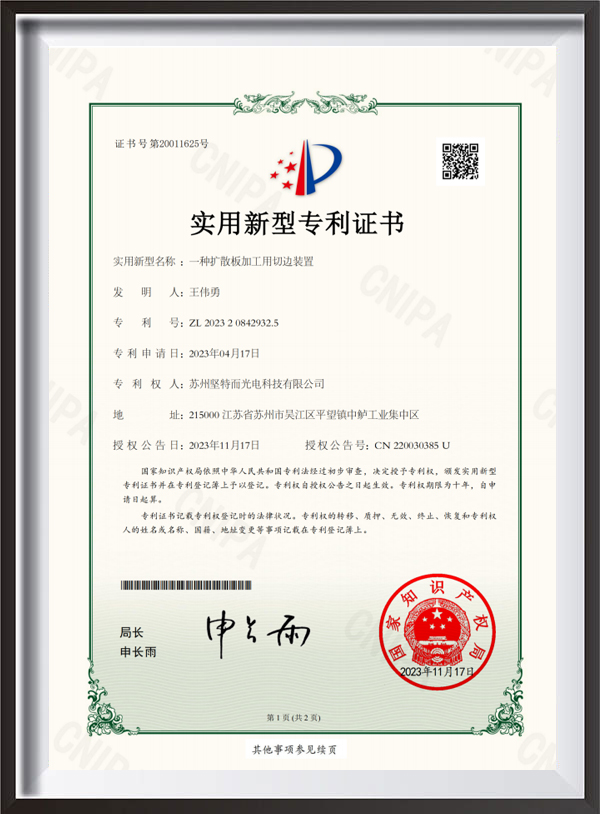
Suzhou Gentle Photoelectric Technology Co., Ltd. holds ISO 9001 certification and National High-Tech Enterprise status, with 37 patent applications covering optical material development.
Information We Use to Configure Your Solution
A workable ABS sheet proposal depends on the part, not only on the material name. We prepare the configuration and quotation from the following inputs.
| Input |
What We Need |
Why It Matters |
| Part drawing |
2D or 3D file with critical dimensions |
Sets sheet format, thickness and tolerance target |
| Application |
End product, indoor or outdoor, service environment |
Drives grade, color and surface choice |
| Process route |
Thermoforming, CNC, printing, bonding or plating |
Determines forming window and surface preparation |
| Optical requirement |
Transparency level, haze, gloss target |
Selects transparent or colored grade |
| Volume and schedule |
Prototype quantity, ramp plan, annual demand |
Sets pilot trial scope and production planning |
| Acceptance criteria |
Test items, sampling plan, documentation needs |
Defines the inspection record issued with the batch |
Development Support, Documentation and Supply
Our in-house R&D system supports full-process development from material formulation and micro-structured optical design through pilot trials to mass production. For ABS projects this means a grade can be adjusted for impact, heat resistance, flame retardancy or antistatic behaviour when a standard sheet does not meet the specification, and small-batch prototyping can run ahead of volume supply.
Technical support covers material selection, process optimisation for forming and coating, and equipment operation training for laboratory instruments. Sheets are supplied with protective film, stacked on pallets and packed for the delivery scope agreed at order stage. Spare capacity across our PS, PMMA and PC lines means ABS parts can be evaluated alongside alternative materials in the same project without changing supplier.
Frequently Asked Questions
What thicknesses does the ABS Sheet Series cover?
Our standard transparent and multi-color ABS sheets are supplied at 2–3 mm. Thickness is confirmed against the rigidity and forming depth the part requires, and other formats can be discussed during configuration.
Can ABS sheet be used for equipment panels without painting?
Yes. The multi-color wear-resistant grade is produced in black, white, gray, red, yellow, blue, green and beige with a finished surface, so many industrial enclosures, instrument panels and faceplates can use the sheet directly and skip a coating step.
How does ABS compare with PC or PP for the same housing?
ABS sits between them: tougher and more dimensionally stable than PP, and less costly than PC where optical clarity and continuous service above 90 °C are not required. For transparent or high-impact parts, our PC and PMMA ranges are the better starting point.
Which processes can be run on the sheet after delivery?
Cutting, routing, CNC machining, thermoforming and vacuum forming, solvent bonding, screen and pad printing, spray coating and electroplating. We confirm the intended route so the grade and surface are matched to it.
What testing can be documented with a batch?
Depending on the specification, records can cover dimensional and thickness measurement, optical tests, high and low temperature alternating, aging, abrasion and scratch resistance, composition and roughness analysis, flame retardancy, hardness and drop testing.
How do we start an ABS sheet project?
Send the part drawing, application description, process route, optical requirement and volume plan. We review the working point and respond with a proposed grade, sheet format, pilot trial scope and quotation.

 English
 Español