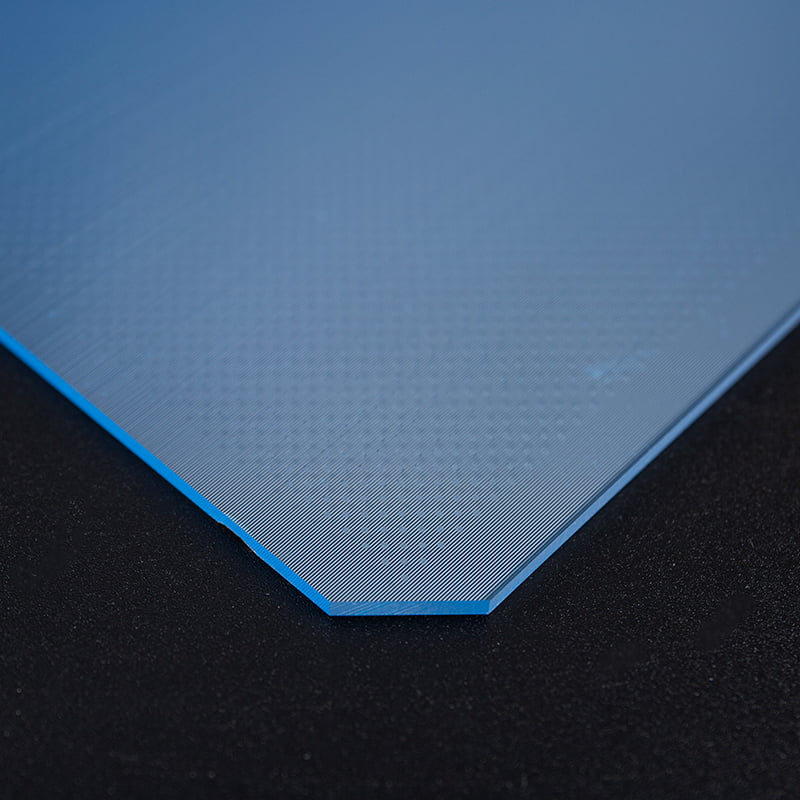
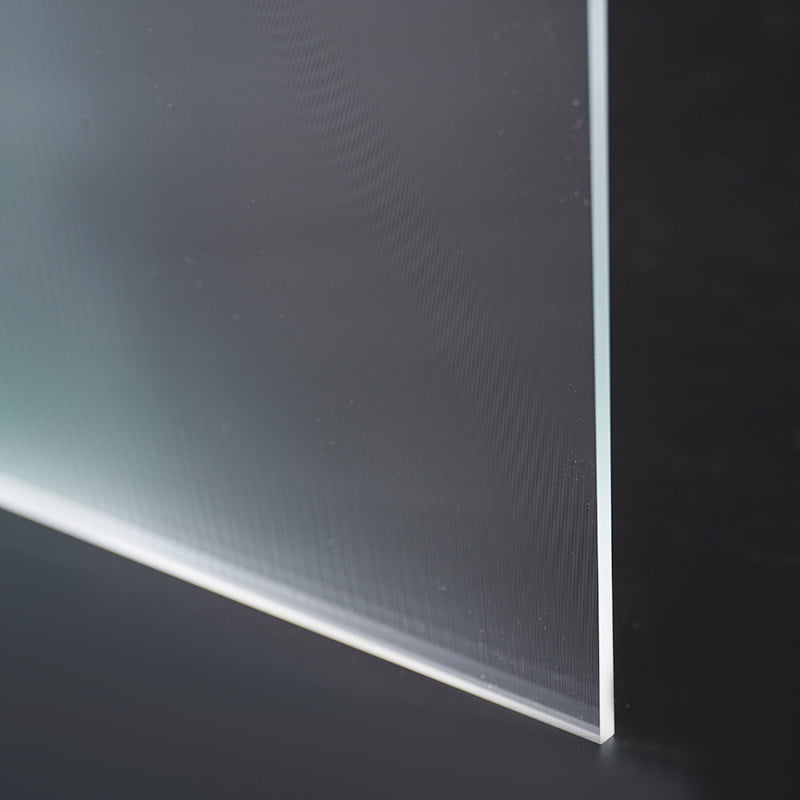
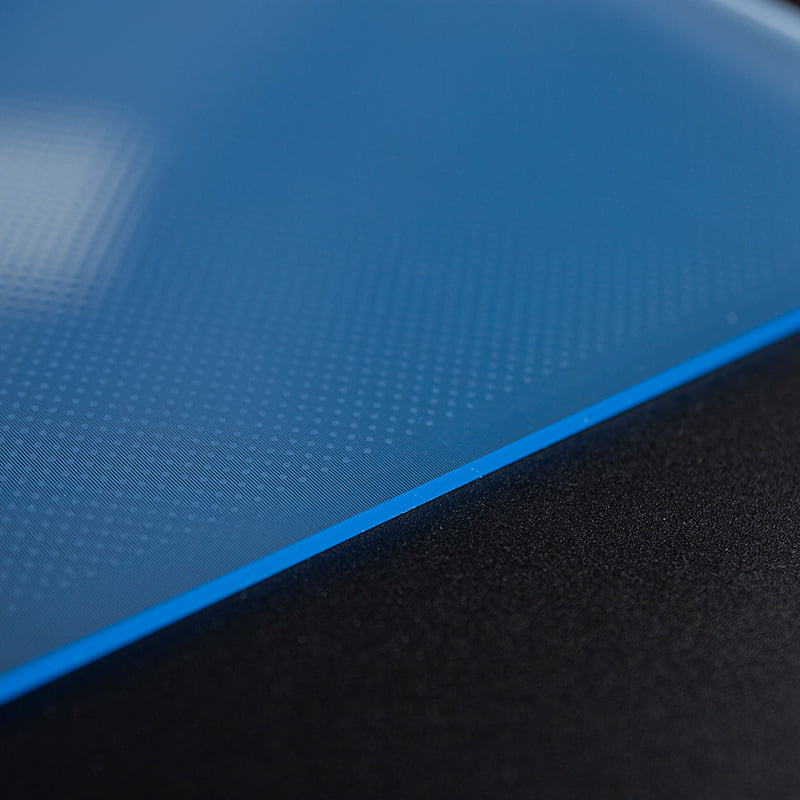
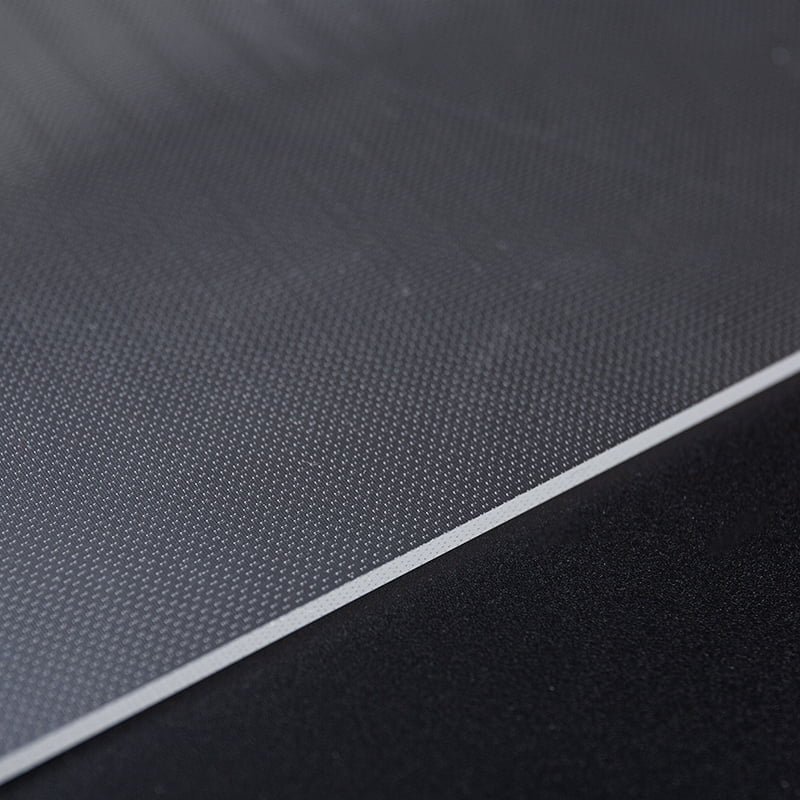
Suzhou Gentle Photoelectric Technology Co., Ltd. manufactures the PMMA Sheet Series — optical-grade acrylic light guide plates and diffuser sheets produced on our own extrusion lines in Suzhou, China. The range covers extruded transparent light guide plate, striped light guide plate, screen-printed light guide plate, laser-dotted light guide plate, hardened light guide plate and anti-yellowing diffuser sheet, supplied as cut-to-size panels or as printed and laser-processed optical components for LED panel lights, backlight modules, signage and appliance lighting.
What We Manufacture in the PMMA Sheet Series
PMMA (polymethyl methacrylate) is the base polymer for the whole series. We extrude optical-grade acrylic pellets into large-format sheet with controlled thickness, then cut, polish, print or laser-engrave the panels in the same plant. Because formulation, extrusion and secondary processing sit under one roof, the light-guide dot pattern, surface finish and sheet thickness are matched to the luminaire rather than assembled from separate vendors.
Two PMMA extrusion lines run in Suzhou with a combined monthly capacity of 550 tons, supported by cutting, polishing, engraving, laser and printing equipment. That capacity is what allows us to run pilot quantities for a new luminaire model and then hold the same process window for volume production.
Our PMMA Range and Where Each Type Fits
| Product type |
Typical thickness |
Light control method |
Application fit |
| Extruded transparent light guide plate |
1–5 mm |
Silk-screen or hot-press dots |
Display backlights, automotive lighting, medical optics |
| Striped light guide plate |
1.6–4 mm |
Striped microstructure |
LED panel lights, lightboxes, monitor backlights |
| Screen-printed light guide plate |
1.6–4 mm |
Custom silk-screen dot array, logos |
Branded luminaires, appliance indicator panels |
| Laser-dotted light guide plate |
Non-standard sizes |
Laser ablation dots |
Specialty and irregular-format luminaires |
| Hardened light guide plate |
Surface-hardened |
4–6H wear-resistant face |
Touch-exposed and high-abrasion fixtures |
| Anti-yellowing diffuser sheet |
High hardness |
Diffusion particle loading |
Frameless panel lights, uniform-emission covers |
Why PMMA for Light Guide and Diffuser Applications
Optical-grade PMMA transmits around 92% of visible light, higher than ordinary float glass, and it does so with a soft, glare-free quality that suits backlit panels. Its density is roughly half that of glass, and its impact resistance is several times higher, so a large panel light or lightbox face carries less weight and fails without sharp fragments.
- Intrinsic UV stability: the acrylic backbone resists yellowing without a sacrificial surface coating, so clarity is maintained through the full sheet thickness.
- Fabrication range: cutting, drilling, hot bending, laser engraving, polishing and bonding are all practical on the same sheet.
- Chemical tolerance: dilute acids, alkalis and standard architectural cleaning agents are handled well; concentrated solvents such as acetone and MEK are not.
- Electrical insulation and non-toxicity: relevant to appliance panels and selected medical-adjacent parts.
Extruded vs Cast Acrylic: How We Position the Series
Our PMMA Sheet Series is built on extrusion. Extruded acrylic holds a tighter thickness tolerance than cast sheet, which matters directly in optical work: transmittance and haze both shift with thickness, so a panel that drifts 10% thick in one region will not match the adjacent area. Tighter tolerance means more predictable uniformity across a large backlight and more stable fabrication yields on a production line.
Cast acrylic still has its place — solvent-cemented structural assemblies, complex thermoformed geometries and thicknesses above 25 mm. Where a project calls for those conditions, we say so during configuration rather than forcing an extruded grade into a cast application.
Secondary Processing We Carry Out In-House
Light guide performance is decided as much by the dot pattern as by the base sheet. Our process flow runs inspection and cleaning, cutting to size, polishing of the light-incident face, then laser ablation or silk-screen printing to create the light-extraction pattern, followed by protective film and palletised packing.
- Laser: concave dots ablated into the panel surface to redirect the light path.
- Printing: ink screen-printed in customer-specified dot arrays, logos and graphics.
- Polishing: converts the cut edge into a smooth light-entry surface and reduces edge loss.
- Cutting: large extruded sheets reduced to the finished panel format.
Because pattern changeover is a setup step rather than a new tooling investment, multi-SKU lighting programmes can move between models without long interruptions. Related optical materials in the same plant include the PS Sheet Series and the PC Sheet Series, which we propose when impact resistance or flame retardancy outweighs the optical advantage of acrylic.
Optical and Mechanical Specifications We Work To
| Parameter |
Typical target |
Test method |
| Total light transmittance |
~92% (clear optical grade) |
Integrating sphere |
| Haze / diffusion balance |
Set by grade and particle loading |
Haze meter |
| Thickness tolerance |
Extruded sheet, tighter than cast |
2.5D dimensional measurement |
| Surface hardness (hardened grade) |
4–6H |
Hardness analysis |
| Impact behaviour |
Ductile break, no sharp fragments |
Ball drop impact tester |
| Colour stability |
Anti-yellowing grade for exposed fixtures |
Aging and high/low temperature cycling |
Uniformity and luminance are measured on finished panels, not only on the base sheet, because the dot pattern determines how the light spreads. Where a luminaire has a defined uniformity target, we evaluate the printed or laser-dotted panel against it before release.
Quality Control and Laboratory Evidence
Our laboratory is equipped for dimensional, photoelectric, reliability, material and mechanical testing. Constant temperature and humidity chambers, integrating spheres, haze meters, melt flow testers, impact testers, illuminance meters, roughness testers, optical testers, coordinate measuring machines and ball drop impact testers support batch evaluation.
- Dimensional: 2.5D measurement, thickness analysis, surface composite layer measurement.
- Photoelectric: illuminance, luminance and uniformity testing.
- Reliability: high/low temperature alternating, aging, abrasion and scratch resistance.
- Material and mechanical: composition analysis, roughness, flame retardancy, hardness and drop testing.
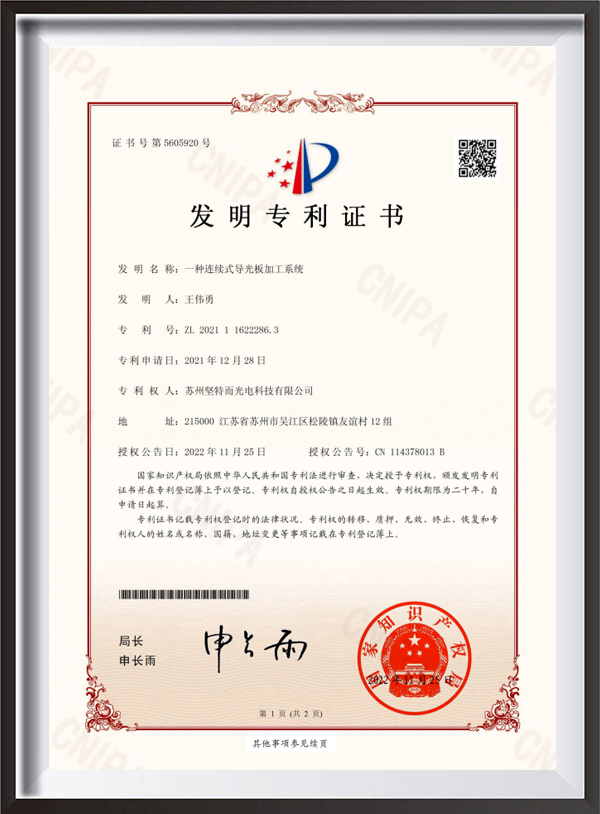
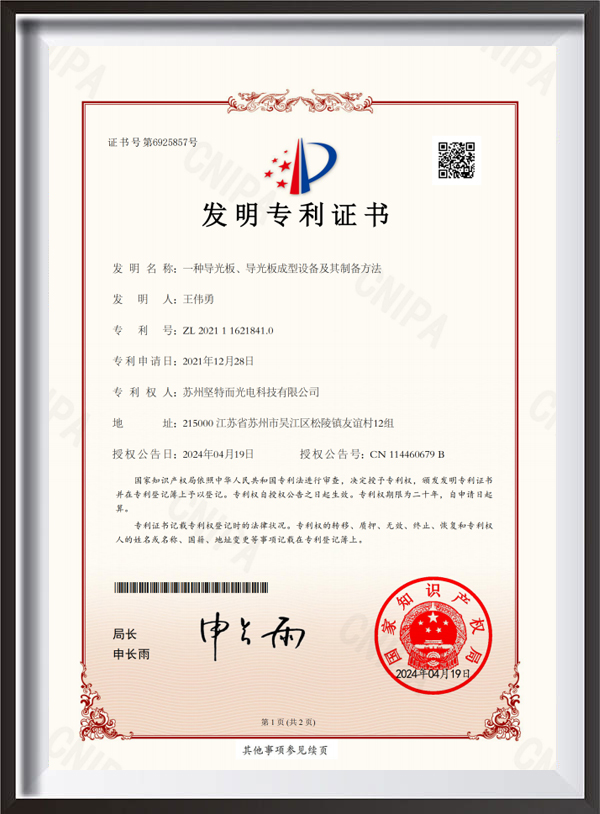
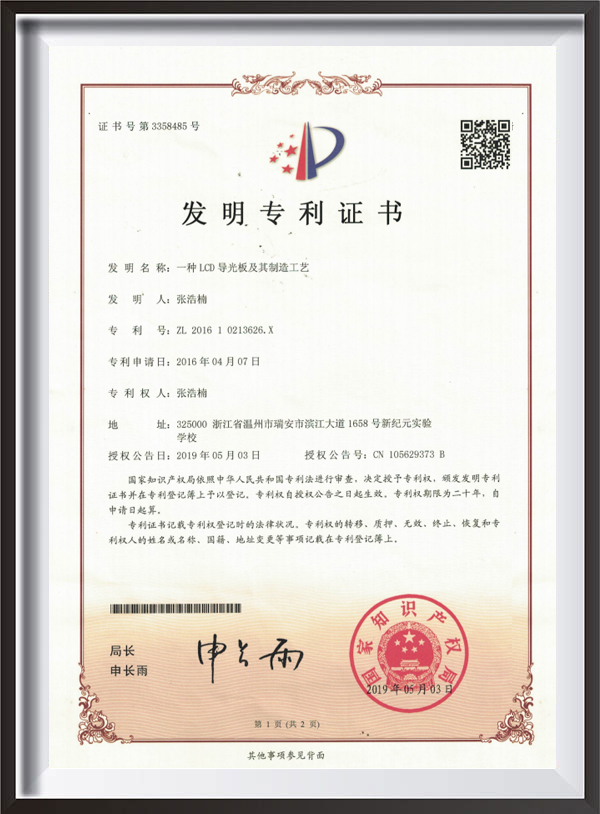
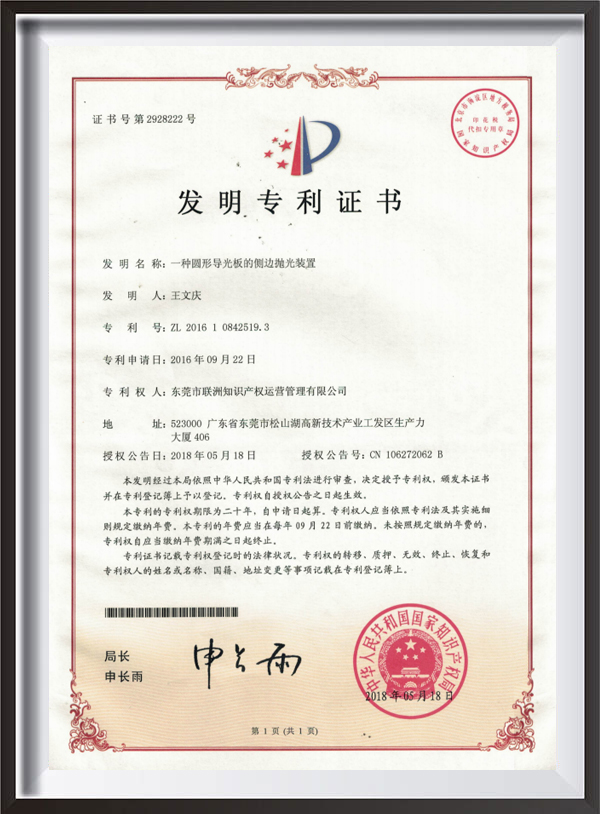
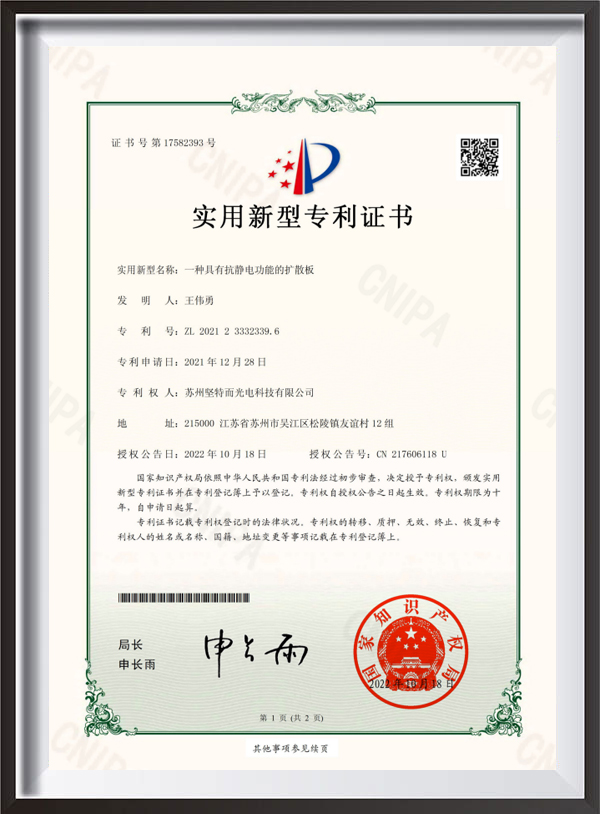
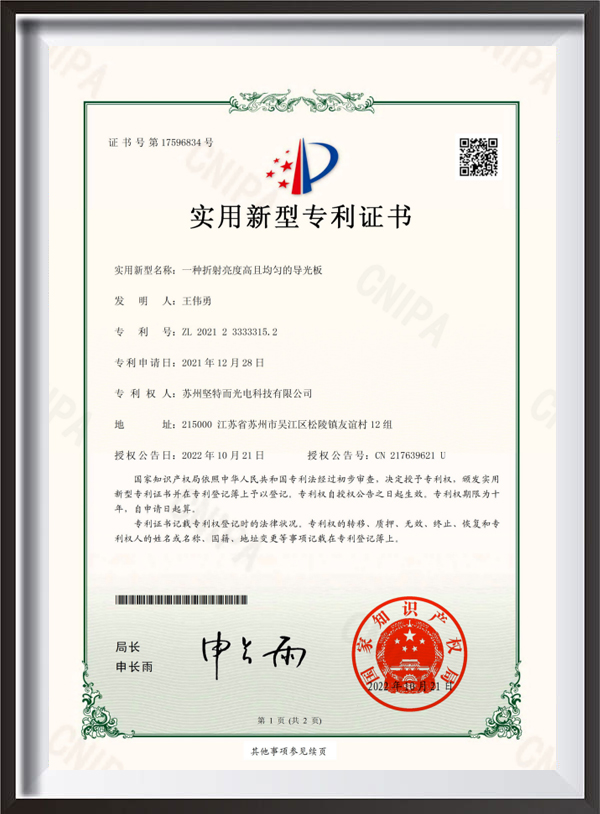
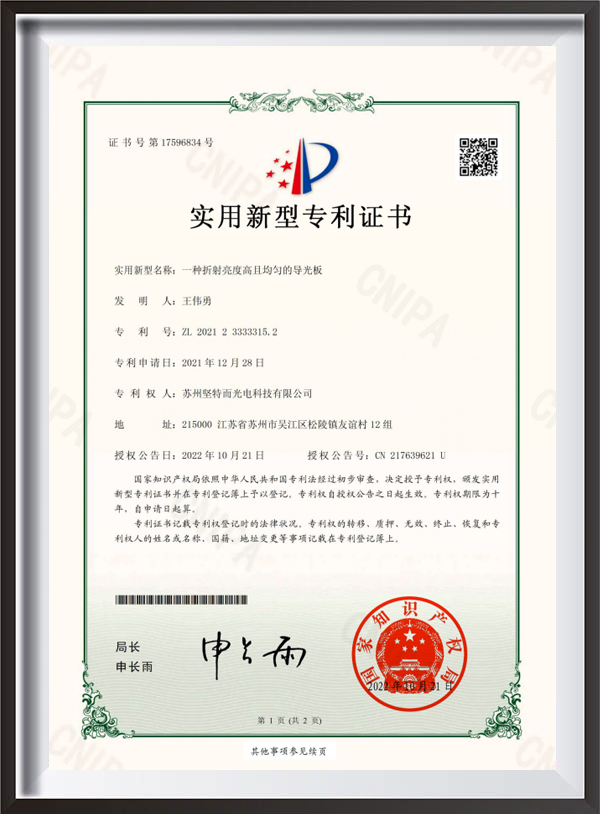
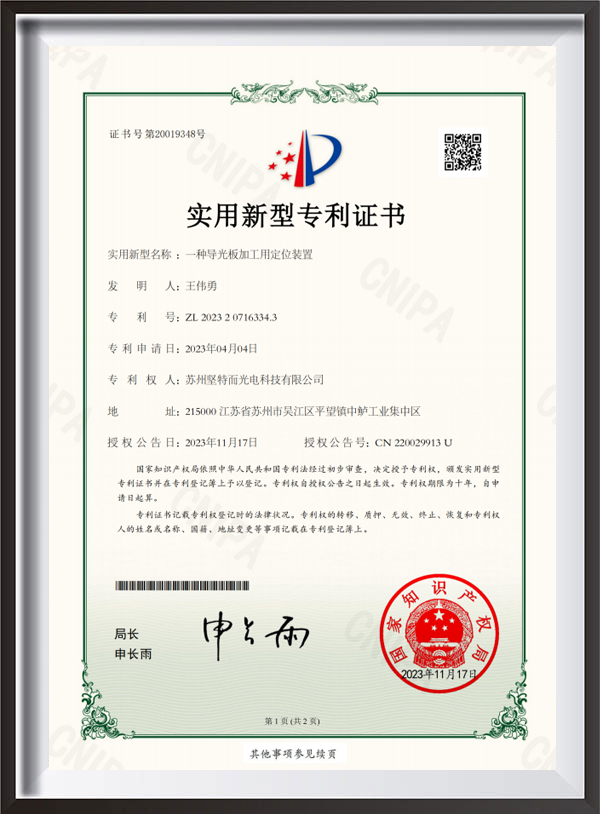
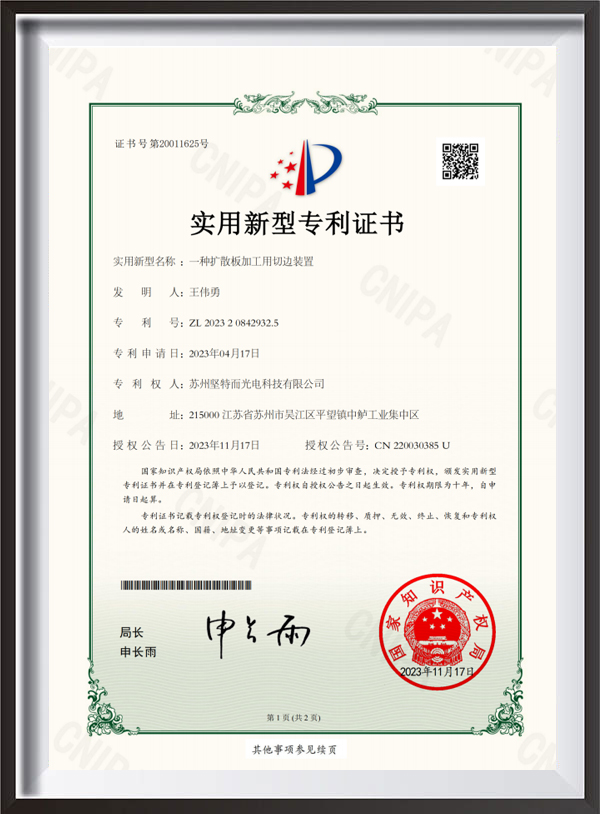
Suzhou Gentle Photoelectric Technology Co., Ltd. holds ISO 9001 certification and became a National High-Tech Enterprise in 2020, with 37 patent applications covering optical material and light guide development. Inspection records and test data for the supplied batch are issued with the shipment so incoming inspection at the customer plant can be matched against the same reference values.
Installation, Thermal Movement and Maintenance
Acrylic expands roughly five to seven times more than glass or aluminium with temperature. On a 1220 × 2440 mm panel, an 80°C service swing moves the long dimension by about 13.7 mm. Fixed frames that ignore this are the most common cause of cracked PMMA panels in outdoor or high-delta installations.
- Allow at least 3 mm clearance per metre of panel dimension on each constrained edge.
- Use oversize fastener holes with rubber grommets; never bond the panel rigidly to a dissimilar frame.
- Specify silicone sealants with ±25% movement capability for outdoor edge sealing.
- Drill with purpose-ground acrylic bits at low speed to avoid residual stress around holes.
- Clean with mild detergent solutions; avoid acetone, toluene and MEK.
Panels ship with protective film on both faces. Store flat, out of direct sun, and remove the film within the recommended window before assembly. Replacement panels are produced from the retained pattern file, so a spare part matches the original light distribution.
Information We Use to Configure Your Solution
We prepare a configuration and quotation from the working point of the luminaire, not from a catalogue number alone. The following inputs let our engineering team select the grade, thickness, pattern and finishing route.
| Input |
What it determines |
| Panel dimensions and thickness |
Sheet format, cutting plan, extrusion gauge |
| LED type, pitch and drive current |
Dot density, pattern geometry, concealment level |
| Target luminance and uniformity |
Grade selection and diffusion balance |
| Light entry configuration |
Edge polishing and entry-face finish |
| Operating temperature and environment |
Anti-yellowing grade, thermal clearance advice |
| Surface exposure and cleaning regime |
Hardened 4–6H face or standard surface |
| Printing artwork or logo files |
Screen layout and pattern changeover |
| Annual volume and model mix |
Pilot quantity, production scheduling, packing |
Custom Development and Project Support
Our service model runs from concept validation to mass production. Material formulation design, micro-structured optical design, pilot trials and volume supply are handled by the same engineering team, which is how a new light guide specification moves from sample to repeatable production without a handover gap.
Small-batch, multi-model prototyping is supported for new luminaire platforms, and volume orders are scheduled against the extrusion and printing capacity shown above. Technical support covers material selection, injection moulding and coating process questions, and equipment operation training on the laboratory instruments used for incoming checks. Documentation supplied with a project typically includes the approved sample record, dimensional and optical test data, packing specification and handling instructions.
Where a lighting programme needs a different polymer balance, our PP Sheet Series and ABS Sheet Series cover flexible diffuser and structural housing requirements, and finished luminaires are available through the Complete Lamp Series for projects that prefer a fully assembled fixture.
Frequently Asked Questions
Which PMMA grade should be used for an LED panel light light guide plate?
For a standard edge-lit panel, extruded optical-grade PMMA at 1.6–4 mm with a striped microstructure or a printed dot pattern is the usual choice. The striped grade conceals the LED row and holds luminous efficacy; the printed grade is preferred when the dot array or a logo must be customised per model. For display backlighting and automotive lighting, the extruded transparent grade at 1–5 mm gives the widest processing compatibility.
Can you supply non-standard panel sizes and irregular formats?
Yes. The laser-dotted light guide plate is produced for non-standard sizes, and our cutting and engraving equipment handles formats outside the standard 4x8 sheet. Send the finished panel outline and the light entry edge, and we will confirm the cutting plan and pattern layout.
How do you prevent yellowing in fixtures that run hot?
PMMA resists UV-induced yellowing intrinsically, without a surface coating, so clarity is maintained through the sheet thickness. For enclosed luminaires where the air around the LED board runs hot, we select the anti-yellowing high-hardness diffuser grade and confirm the thermal clearance in the frame design so the panel is not constrained as it expands.
What testing data accompanies a PMMA sheet shipment?
Depending on the grade and project, we issue dimensional measurements, transmittance and haze values, luminance and uniformity results on finished panels, and reliability data from high/low temperature cycling and aging tests. The test set is agreed at the sample stage so the incoming inspection at your plant references the same parameters.
Do you support pilot runs before volume production?
We do. Small-batch, multi-model prototyping is part of our standard service, which lets a new luminaire platform be validated before tooling and volume commitments. Once the sample is approved, the same extrusion gauge, pattern file and printing setup are retained for the production order.
How should large PMMA panels be mounted to avoid cracking?
Leave at least 3 mm of clearance per metre of panel dimension on each constrained edge, use oversize holes with rubber grommets, and seal outdoor edges with a silicone rated for ±25% movement. Avoid rigid bonding to metal frames and drill at low speed with acrylic-specific bits to prevent stress concentration around fixings.

 English
 Español