 English
 Español


Gentle
Gentle
Gentle
Gentle
Gentle
Gentle
Gentle
Gentle
Gentle
Content
- 1 Read the Sheet Before You Choose the Blade
- 2 Cutting Methods and the Thickness Range Each One Owns
- 3 Cut Quality and Cost Side by Side
- 4 The Numbers Usually Left Out of the Quotation
- 5 Where Cut Acrylic Actually Ends Up
- 6 Selection Walkthrough: From Purchase Order to Finished Part
- 7 Maintenance, Safety and Compliance
An 8 mm cast acrylic panel that has to sit flush inside an aluminium frame rarely fails because of the panel itself. It fails at the cut edge: a blade that grabbed, a feed rate that melted the kerf, or a score line that wandered a millimetre off square. Those defects surface weeks later as a cloudy edge, a 0.4 mm taper across the length, or micro-cracks that open the moment a screw is torqued down.
The short answer
- 1.5–3 mm sheet, straight cuts only: score five or six passes with a hook blade, then snap over a dowel.
- 3–12 mm: table saw with an 80-tooth triple-chip carbide blade, masking film left on both faces, feed slow enough that chips stay cool.
- 12 mm and above, or any edge a customer will see: router or CNC, then anneal to release machining stress.
- Curves, small windows and optical parts: CO2 laser, which leaves a flame-polished edge and a heat-affected zone of roughly 0.1 mm.
Two decisions drive everything that follows: what the sheet is made of, and how the finished edge will be judged.
Read the Sheet Before You Choose the Blade
Cast PMMA behaves like a dense, high-molecular-weight solid. It chips cleanly, resists smearing behind the tooth and holds a square edge on a properly set table saw. Extruded PMMA — the material behind most light guide plates and diffuser panels — carries more frozen-in stress from the extrusion line. It rewelds faster, so a blade that is even slightly dull leaves a gummy line that later crazes under a snap-fit or a drilled hole. If you are unsure which grade is on the bench, the cast versus extruded PMMA comparison is worth five minutes before any cut is made.
Masking film is the second trap. Leave protective film on for sawing, routing and drilling, because it stops chip scratching on the face. Strip it before laser cutting. Ordinary PVC-based film releases hydrogen chloride in the beam, which attacks both the optics and the machine's extraction path. Paper or PE film rated for laser work is the only safe option.
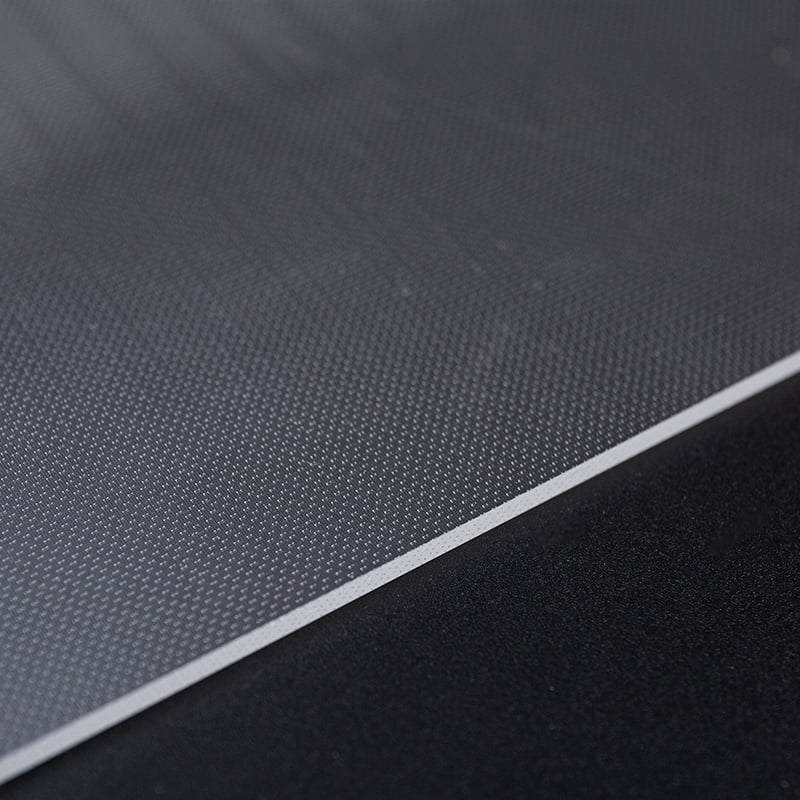
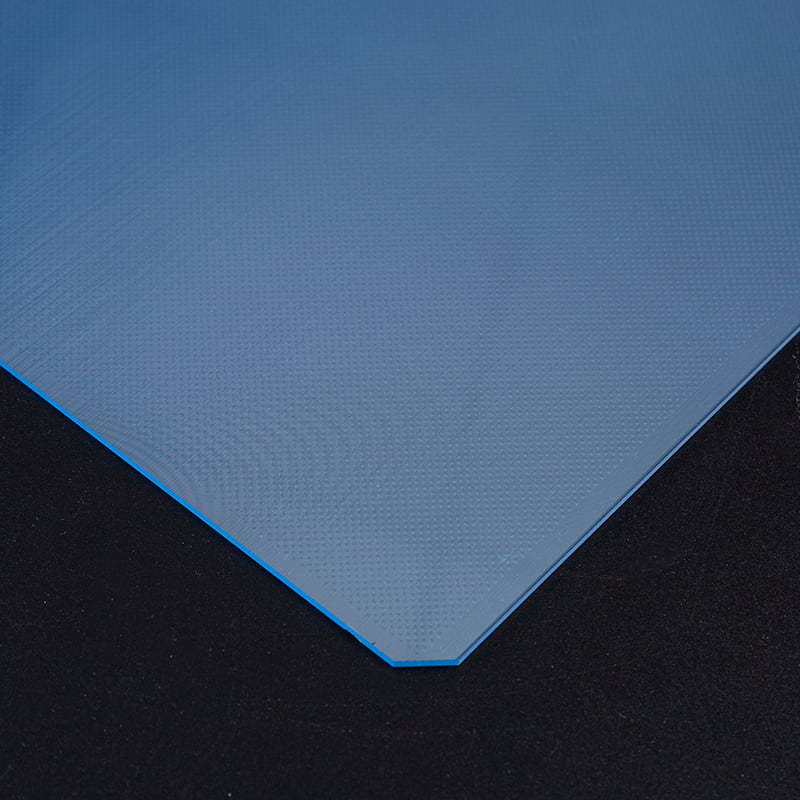 Optical-Grade PMMA Extruded Light Guide PlateExtruded optical-grade PMMA light guide plate in 1–5 mm thickness, suitable for backlighting and custom dot patterns; its standard-sheet format supports edge-referenced cutting setups.View Product →
Extruded optical sheet bought in standard 1220 × 2440 mm formats usually arrives with one factory edge that is already square and stress-relieved. Cutting from that edge, rather than from the middle of the panel, removes one variable from the setup and saves a trimming pass.
Cutting Methods and the Thickness Range Each One Owns
Most cutting failures come from using one tool across every thickness. Each process has a window where it is genuinely the cheapest reliable option, and a margin where it starts costing money in rework.
Score and snap
Up to 3 mm. Five to six firm passes against a steel straight edge, then a clean snap. No kerf loss, no chips, but the break line drifts on anything thicker than 3 mm.
Table saw
3–12 mm straight cuts. 80-tooth triple-chip blade, 3,000–4,000 rpm, blade height just above the sheet. Wax or soap on the blade reduces edge friction.
Jigsaw
Curves and cutouts in 3–10 mm sheet. Down-cut plastic blade, pendulum action off, medium speed, and support on both sides of the line so the offcut cannot drop and crack.
Router and CNC
The best straight edge on any thickness. Two-flute solid carbide bit, 12,000–18,000 rpm, climb cut on the finish pass, 0.2 mm finishing allowance.
CO2 laser
0.1–0.3 mm kerf, polished edge, no tool contact. Best on cast sheet; extruded material can flash or leave a heavier recast layer at slow speeds.
Rotary cutoff wheel
Small openings and repair work. High rpm, light pressure, let the wheel cut. A snagged wheel is the fastest way to crack a brittle panel.
 4–6H Hard-Coated PMMA Light Guide PlateSurface-hardened PMMA light guide plate with 4H–6H scratch resistance for commercial lightboxes and architectural lighting; saw or route coated sheet rather than scoring.View Product →
One exception deserves a note. Hard-coated sheet with a 4–6H surface will blunt a scoring blade before it produces a usable line, and the coating can chip along a snap. On coated material, saw or route every time, and keep the coated face up on the saw so the teeth exit through the uncoated side.
Cut Quality and Cost Side by Side
Ranges reflect typical shop practice on cast PMMA with a masking film; extruded sheet shifts every heat-related column toward higher risk and more rework.
Method
Thickness
Kerf
Edge finish
Heat risk
Scoring knife
1.5–3 mm
None
Matte, visible line
None
Table saw
3–12 mm
2.5–3.2 mm
Smooth, light saw marks
Low
Jigsaw
3–10 mm
1.5–2.0 mm
Rough, needs sanding
Medium
Router / CNC
1.5–25 mm
3.0–6.0 mm
Near-polished
Low
CO2 laser
1–20 mm
0.1–0.3 mm
Glossy, slight taper
High, local
Rotary cutoff
1–6 mm
1.0–1.5 mm
Rough, burnt spots
Medium
Kerf width matters more than most buyers expect. Every 3.2 mm cut on a 1220 mm wide sheet costs a full strip once the job is nested for a panel run, so the saw that looks cheaper per hour can end up consuming more material than a laser with a 0.15 mm kerf.
The Numbers Usually Left Out of the Quotation
Purchase price per cut tells you very little. What affects the invoice is the share of parts that reach the assembly bench without rework, and the pattern is consistent across shops cutting 3–8 mm sheet for visible applications.
3%
Score
5%
Saw
14%
Jigsaw
4%
Router
2%
Laser
11%
Rotary
First-pass reject and rework rate per 100 visible-edge parts, 3–8 mm cast PMMA.
The gap between a jigsaw and a router is rarely a skill problem. It is blade wander, vibration and insufficient support under the offcut, all of which a nested CNC program removes by design. Where a hand tool is unavoidable, clamping a sacrificial backer board under the cut usually halves the break-out rate.
Where Cut Acrylic Actually Ends Up
Cut quality requirements track the end market closely. A retail sign can live with a sanded edge; a light guide plate behind a frameless panel cannot, because every scratch and every cloudy break line shows through the diffuser.
- Lighting and light guides — 30%
- Signage and display — 26%
- Construction and glazing — 17%
- Automotive and transport — 12%
- Machine guards and industrial — 9%
- Retail POS and fixtures — 6%
Signage and display work dominates volume, which is why scoring and table saws remain the most common tools in small shops. Lighting is the segment with the tightest tolerance and the highest hidden cost: a light guide with a rough edge scatters light at the entry face and shows as a bright band on the finished panel. Shops moving into that market usually compare signage and diffusion grades before they invest in a router table.
 Laser-Dotted PMMA Light Guide Plate for Custom SizesOptical-grade PMMA light guide plate in 2–10 mm thickness, laser-etched for custom dot arrays, irregular shapes and fast changeover; suited to tight-tolerance lighting projects.View Product →
Selection Walkthrough: From Purchase Order to Finished Part
1. Confirm grade, thickness and tolerance
A nominal 5 mm extruded sheet may measure 4.8 mm. Check the actual figure before setting a blade height or a laser focus offset.
2. Decide the edge specification
Visible, bonded or light-transmitting edges justify routing or laser. Hidden edges inside a frame do not.
3. Pick the narrowest capable process
Do not run a 2 mm trim through a CNC cell if a scoring knife holds ±0.5 mm on that part.
4. Set up support and film
Film on both faces for mechanical cutting, backer board under jigsaw work, and a clean, flat table for laser so the sheet does not rock.
5. Cut the first part and measure
Measure taper, squareness and edge chip width on three points. If the taper exceeds 0.3 mm over 500 mm, the feed is too fast or the blade is dull.
6. Finish the edge
Sand 400 to 1200 grit wet, then flame or vapour polish only where the edge is decorative. Never polish an edge that will be bonded with solvent.
7. Anneal stress-critical parts
Two hours at 80 °C, then slow cooling at roughly 10 °C per hour, removes most machining stress and prevents the crazing that appears after assembly.
Maintenance, Safety and Compliance
Acrylic is unforgiving in ways that wood is not: fine dust from cutting is combustible, the polymer burns with a hot flaming drip, and the monomer vapour from a scorched kerf is an irritant. A few habits keep a shop out of trouble.
- Clean blades with an acrylic-appropriate solvent, not a pitch and resin remover, which can attack the tooth brazing and transfer residue to the cut.
- Extract chips at the source. Never blow fine acrylic dust with compressed air near an ignition point.
- Fit laser cutters with filtration rated for the polymer; PVC film in the beam produces hydrogen chloride and shortens optics life.
- Store sheet flat and out of direct sun. A stack that bows in a warm store will never cut square again.
- Keep thickness and property documentation with the job: tolerance statements, RoHS and REACH declarations, and a UL94 rating where the part sits inside a luminaire.
- Retire a blade after roughly 400 linear metres on 5 mm sheet, or earlier if the cut starts to smell warm.
Compliance paperwork is easier to issue at the start of a project than to reconstruct afterwards, especially for parts destined for lighting fixtures or equipment panels where a flammability claim will be requested by the end customer's engineer.