 English
 Español


Gentle
Gentle
Gentle
Gentle
Gentle
Gentle
Gentle
Gentle
Gentle
Content
- 1 Six Properties That Decide Almost Every Specification
- 2 Side-by-Side Data and What Each Row Actually Changes
- 3 Three Hidden Indicators the Datasheet Leaves Out
- 4 Where Each Material Ends Up in Real Projects
- 5 A Five-Step Selection Route From Requirement to Purchase Order
- 6 Maintenance and Compliance Notes Worth Writing Into the Contract
A stack of 1,200 × 600 mm glass diffusers survives three truck journeys and breaks on the fourth. The sheet cost is trivial next to the two-day line stop it causes. That asymmetry is why lighting, appliance and equipment-panel teams keep reopening the glass vs polycarbonate question, even when both datasheets show nearly the same light transmission figure.
Short answer: specify polycarbonate when impact, weight or cold forming drive the decision; keep glass when non-combustibility, scratch life or sustained heat above 120 °C dominate. Below roughly 1.2 m² per part, PC usually wins on five-year total cost. For fire-rated windows, oven doors and hot-side lamp covers, glass still has no practical substitute.
What follows explains where those numbers come from, which ones buyers commonly misread, and how to turn them into a purchasing decision rather than a debate.
Six Properties That Decide Almost Every Specification
The list is ordered by how often a property changes a purchase order, not by how often it appears in marketing copy.
1. Impact resistance
Polycarbonate is commonly quoted at up to 250 times the impact resistance of ordinary glass, and roughly 30 times that of acrylic. The mechanism matters more than the multiplier: glass fractures in a brittle mode and releases stored energy as shards, while PC yields locally around the impact point and holds together. That difference is what removes laminated or toughened glass from machine guards, vandal-prone glazing and thin luminaire diffusers. The advantage is not unconditional, though. A drilled hole without edge relief, a sharp routed corner or contact with an amine-based cleaner can cut the effective toughness sharply, so the frame design deserves as much attention as the sheet grade.
2. Weight and structural load
At equal 3 mm thickness, polycarbonate weighs about 3.6 kg/m² against roughly 7.5 kg/m² for soda-lime glass. On a 40-panel ceiling array that is close to 150 kg removed from the building structure, the mounting rail, the hinges and the installer's afternoon. Freight also changes shape: lighter crates, fewer handling injuries, and a much lower probability that a corner impact becomes a claim.
3. Heat and thermal movement
Standard polycarbonate holds continuous service around 115–120 °C; glass is non-combustible and usable far above that. The reverse side of the comparison is expansion. PC moves at roughly 65–70 × 10⁻⁶/K against about 9 × 10⁻⁶/K for glass, so a metre of sheet grows 2.5–3 mm across a 60 °C swing. Frames that clamp PC rigidly produce oil-canning at first and stress cracking later. Glass tolerates expansion better but fails from thermal shock when one edge is heated and the other is not.
4. Optical performance
Clear PC transmits roughly 88–90% of visible light, soda-lime glass 90–91%, and low-iron glass 91–92%. One or two points rarely decide a project, but they must be recovered somewhere in the optical budget, usually through LED count or diffuser haze. The real optical risk with PC is colour shift over time: unstabilised sheet yellows measurably after accelerated weathering, so UV co-extrusion and a stated retention limit belong in the specification, not in the brochure.
5. Surface and chemical resistance
Glass sits at Mohs 5.5–6 and shrugs off most solvents. PC runs around 2B–HB pencil hardness, or 2–3H with a hard coat, and stress-cracks on contact with ammonia, amines and some alcohol blends. In practice this means PC parts need a written cleaning procedure before they leave the factory, because the first maintenance shift will otherwise use whatever is under the sink.
6. Fire and compliance
Glass is A1 non-combustible without additives. Flame-retardant PC can reach UL94 V-0, but the rating is thickness-dependent and must be confirmed at the delivered gauge. Escape routes, fire-rated windows and certain public-transport interiors still mandate glass, and no certificate changes that.
Impact-critical parts
Machine guards, transport covers, thin luminaire diffusers: polycarbonate, with relieved edges.
Heat above 120 °C
Oven doors, high-bay lamp covers close to the source: glass, no compromise.
Optical uniformity
Diffusion-grade PC with controlled haze beats clear glass plus a separate diffuser film.
Scratch-facing surfaces
Glass, or hard-coated PC where breakage risk outweighs abrasion risk.
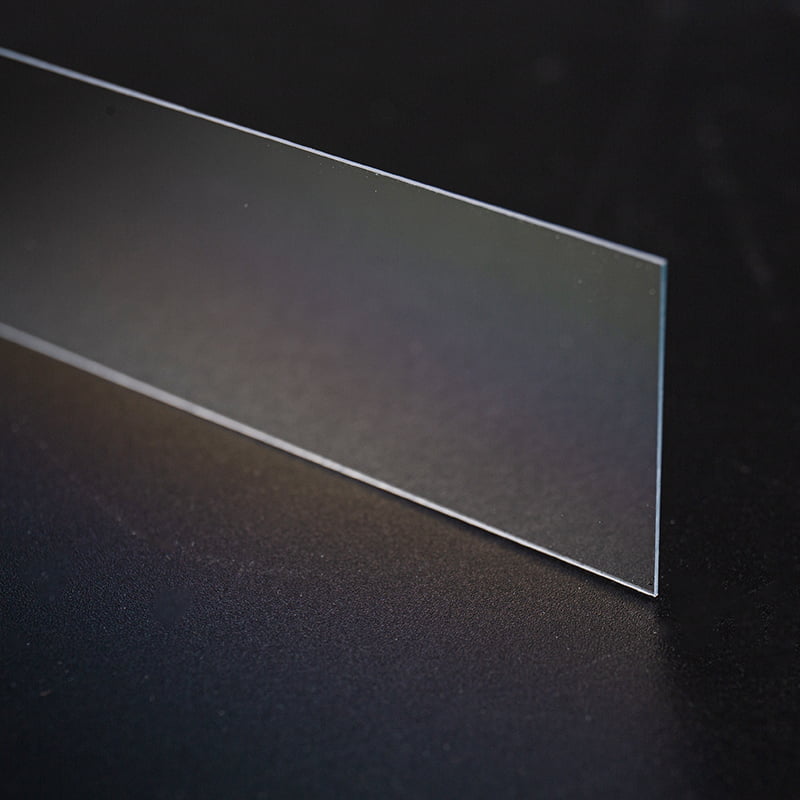
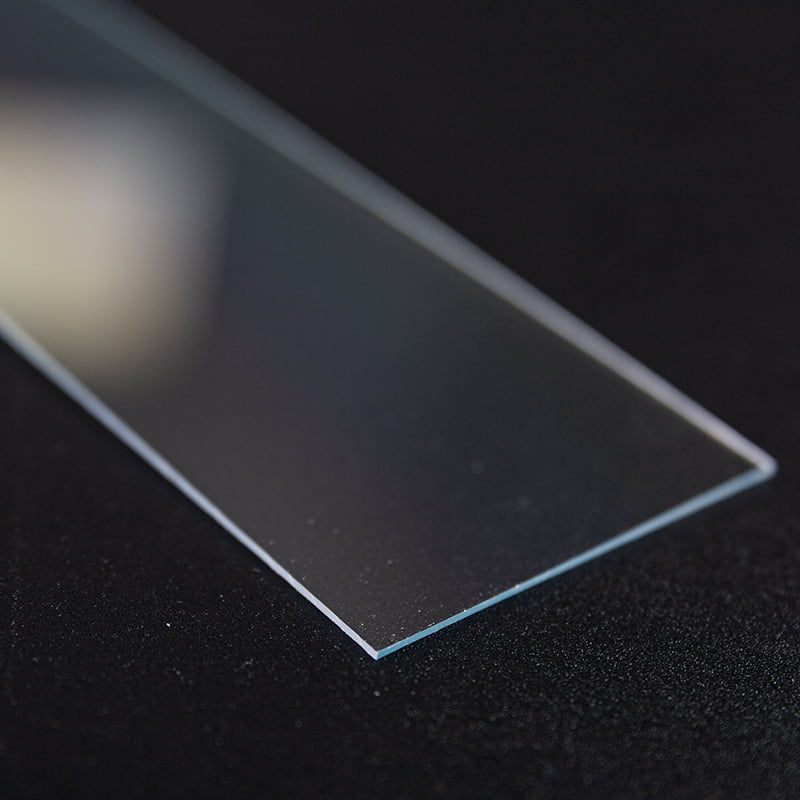 Shatterproof Optical-Grade Polycarbonate Transparent SheetOptical-grade polycarbonate sheet, 0.5–3 mm, combines impact resistance, flame retardancy, and light weight for glazing and displays; verify clamping and heat clearance.View Product →
Side-by-Side Data and What Each Row Actually Changes
Indicative values for unfilled standard grades; confirm the delivered thickness, colour and flame class with your sheet supplier before release.
Read the expansion and service-temperature rows together. Most field failures blamed on "cheap PC" are actually a clamping or heat-clearance mistake: the sheet was correct, the frame allowed 0.5 mm of movement, and the first summer did the rest. Conversely, a glass specification that looks safe on paper can fail because a single fastener hole was drilled after tempering.
Three Hidden Indicators the Datasheet Leaves Out
Transmission at day zero is the least interesting optical number. What separates two suppliers is what remains after a year on a roof or under a 40 W LED strip.
Glass 100%
UV-PC 96%
Coated PMMA 95%
Unstabilised PC 82%
- Yellowing retention. Ask for a transmission curve after 1,000 hours of accelerated weathering, not a "UV resistant" label. A shift of three yellowness index units is visible beside white trim.
- Edge quality. A diamond-polished PC edge resists crack initiation far better than a saw-cut one. On parts thinner than 2 mm, edge finish is often the real impact specification.
- Freight damage rate. Track it for one quarter. If it exceeds 1.5% on glass, the conversion case pays for itself before any optical argument is settled.
Where Each Material Ends Up in Real Projects
Demand for polycarbonate sheet clusters in applications where breakage or weight is the dominant cost. That split is a useful sanity check when a specification starts drifting.
- Construction and architectural glazing: 30%
- Lighting and optical components: 20%
- Automotive and transport: 15%
- Safety guards and machine windows: 13%
- Signage and displays: 12%
- Other: 10%
Lighting is the segment where the glass vs polycarbonate decision is most often made on optics alone, and most often regretted. A 0.8 mm PC diffuser replaces a glass pane plus a separate film, removes a lamination step and survives the drop test that a glass sandwich fails. The optical design has to be reworked around haze and hiding power rather than transmission, which is exactly where a material guide for LED diffusion panels saves a prototype round.
Privacy glazing follows the same logic at a lower technical pitch: frosted glass is heavy, chips at the frame and cannot be cut on site. A milky white PC panel delivers the same light blocking with a fraction of the mass, which matters when a partition is retrofitted into an existing aluminium frame.
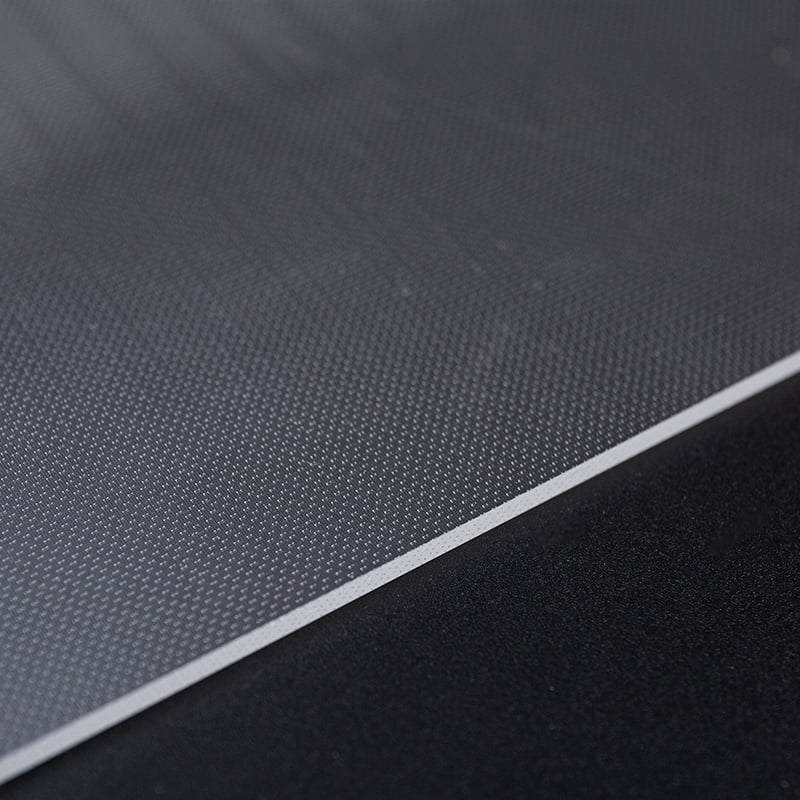
 Uniform-Lighting Flame-Retardant PC Diffuser SheetOptical-grade PC diffuser, 0.8–2 mm, hides LED dots and supports uniform illumination with flame retardancy and -40°C to 120°C service; review before cost-led lighting choices.View Product →
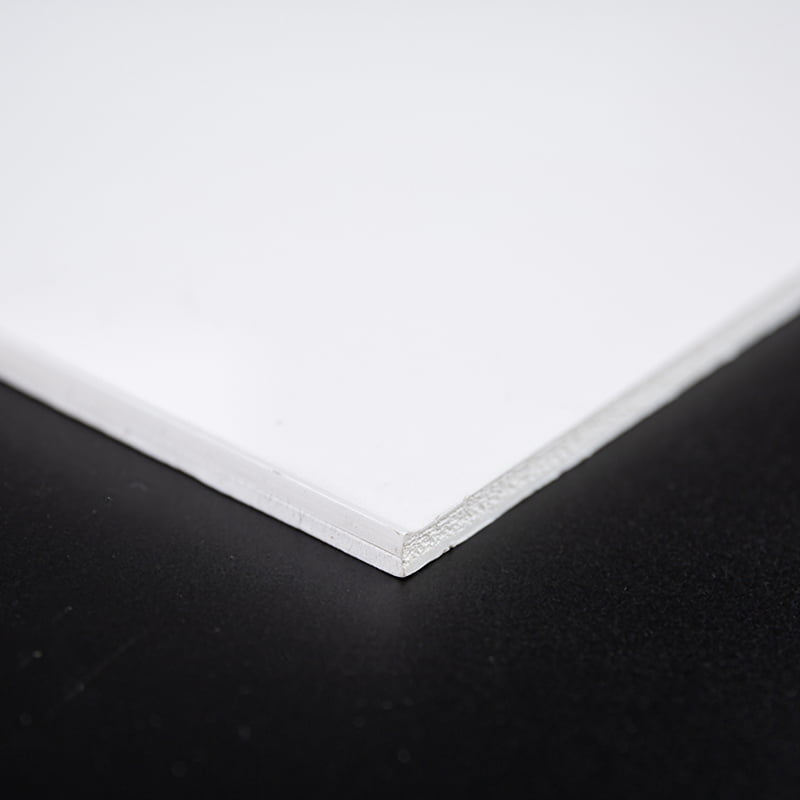
 Light-Blocking Milky White PC Sheet for Indoor PartitionsTranslucent milky white PC panel, 1–10 mm, provides light diffusion and impact strength for retrofitted partitions; keep cost visible without letting it drive technical choices.View Product →
A Five-Step Selection Route From Requirement to Purchase Order
The sequence below keeps cost visible without letting it lead the technical decision.
Step 1. Name the governing load: impact energy, sustained temperature, wind, vandalism or cleaning chemistry. If service temperature exceeds 120 °C, the evaluation ends here.
Step 2. Fix the optical budget: allowable transmission loss, haze target, colour shift limit and a five-year yellowness ceiling written into the drawing.
Step 3. Prototype inside the real frame: 2.5–3 mm clearance per metre, relieved holes, no solvent-based sealants or plasticiser-heavy gaskets.
Step 4. Validate by test: falling dart at −20 °C, thermal cycling from −30 to 80 °C, and a cleaning test with the detergent the customer actually uses.
Step 5. Lock the supply chain: gauge tolerance, masking film type, flame certificate at the delivered thickness, and lot traceability from extrusion line to crate.
On payback, the sheet price is rarely the deciding line. Model breakage replacement, line-stop exposure and freight per year instead; for indoor luminaires and equipment windows, the crossover against glass typically arrives somewhere between 2% and 3% annual breakage, long before any energy argument is needed.
Maintenance and Compliance Notes Worth Writing Into the Contract
- Clean PC with pH-neutral detergent and a microfibre cloth; no ammonia, no abrasives, no dry wiping on dusty surfaces.
- Never apply cold water to hot glass; thermal shock cracks panels that pass every mechanical test.
- Record the flame class at the supplied gauge. A V-0 result at 3 mm does not transfer to 1.5 mm.
- For medical, food-contact or cleanroom equipment, confirm the material appears on the equipment builder's approved list before quoting.
- Keep a weathering retention report on file. "UV resistant" without a curve is a claim, not a specification.
- Separate waste streams at end of life: PC falls under resin code 7, glass under its own cullet route.
The honest conclusion is that glass and polycarbonate are not competing for the same job. Glass wins wherever heat, abrasion or non-combustibility is the binding constraint; polycarbonate wins wherever a broken panel stops a line, adds structural load or makes an installer hesitate. Teams that state the governing load first, then size the optical budget around it, usually settle the glass vs polycarbonate question in a single meeting instead of three prototype rounds.