 English
 Español


Gentle
Gentle
Gentle
Gentle
Gentle
Gentle
Gentle
Gentle
Gentle
Content
Two quotations for the same part land on the same desk in the same week: a 3 mm opal PMMA diffuser for a 600 x 600 mm backlit panel. The cheaper sheet is 32% less per kilogram, and it is the extruded one. Neither supplier is cutting corners. The gap comes from how the sheet was made, and that difference decides what the panel looks like after five years at 60 °C with a weekly wipe-down.
Short answer. Cast acrylic is polymerised in a glass mould from MMA monomer, so it keeps long polymer chains: it thermoforms deeply, resists solvent attack and engraves with a frosted white mark, but costs 20–40% more and holds a looser thickness tolerance. Extruded acrylic is melted from pellets and pushed through a flat die between polished rolls, so it delivers tight gauge and even optics at lower cost, with a narrower forming window and more sensitivity to solvent crazing. Flat lighting parts, light guide plates and volume diffusers go extruded; thick sections, deep draws and chemically exposed parts go cast.
How the Two Processes Actually Differ
Both products are PMMA with the same chemical identity. What separates them is chain length, molecular orientation and how tightly the supplier can hold gauge. If you need the material background first, it helps to know what PMMA actually is before comparing grades.
Chain length and melt strength
Cell casting lets monomer polymerise slowly in a mould, so chains grow long. Long chains raise melt strength: the sheet sags less in the oven and holds a deep draw without thinning out. Extrusion re-melts reactor-made pellets with shorter chains, which flow at lower temperature — exactly what lets a die and roll stack hold gauge to a few hundredths of a millimetre.
Thickness and gauge control
Cast sheet runs from 2 mm to 50 mm and beyond, though ±0.2 mm is a realistic window on a 3 mm sheet. Extruded sheet usually sits between 1 mm and 12 mm, and a well-run line holds ±0.05–0.1 mm at 3 mm. On a light guide plate that single number decides between bright bands and an even light field.
Orientation and locked-in stress
Extrusion pulls the polymer along the machine direction. The sheet becomes slightly birefringent and carries stress that shows up when a laser cuts it or when solvent touches a machined edge. Cast sheet is closer to isotropic, which is why engraved cast acrylic turns frosted white while extruded sheet often engraves a dull grey.
Cost, yield and recycling
Cell casting spends monomer, glass-mould handling and hours of oven time per batch. Extrusion runs continuously, trims the edges and returns the regrind to the same line. That accounts for most of the 20–40% price gap, and it is also why extruded sheet varies less from order to order.
Cast vs Extruded Acrylic: Side-by-Side Numbers
Procurement teams usually need one comparison that reaches the drawing. This is that comparison.
Indicative industry ranges, not a specification. Tolerance, haze, shrinkage and price move with grade, line calibration and order volume.
The Numbers the Data Sheet Leaves Out
Suppliers publish transmission and haze. They rarely publish gauge spread across a whole sheet, the forming depth a grade reaches before it thins, or how a part looks after 1,000 hours of UV. Below are the four comparisons that decide most projects, normalised so the taller bar in each pair leads.
135
100
Unit cost index
0.20
0.05
Thickness tolerance, ± mm at 3 mm (lower is better)
50
12
Maximum standard thickness, mm
100
70
Achievable draw depth index
Cell cast Extruded
What the Application Mix Says About Your Choice
Acrylic sheet demand is not spread evenly, and each segment leans toward one process.
- Signage and display: 28%
- Lighting, light guides and diffusers: 26%
- Construction and glazing: 16%
- Automotive and transport: 12%
- Medical, laboratory and sanitary: 10%
- Aquarium and specialty: 8%
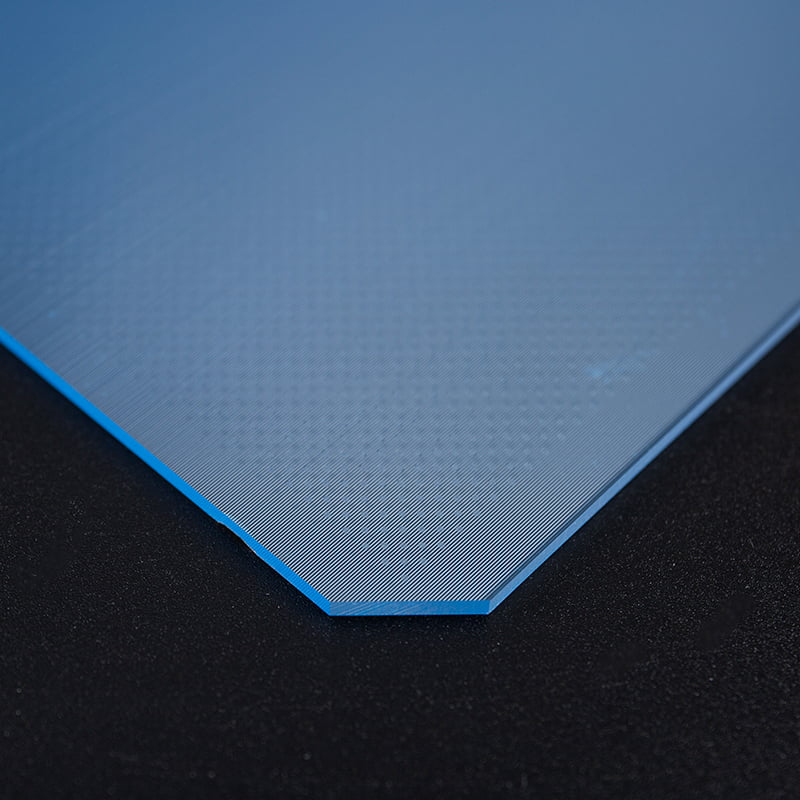
Lighting is the largest process-sensitive block. A light guide plate inside an edge-lit panel depends on thickness uniformity and low birefringence: light enters from the edge, scatters off printed or laser-dotted patterns and leaves through the front face. Gauge drift of a few hundredths of a millimetre shows up as bright bands across the panel, which is why extruded PMMA dominates light guide plates and volume diffusers.
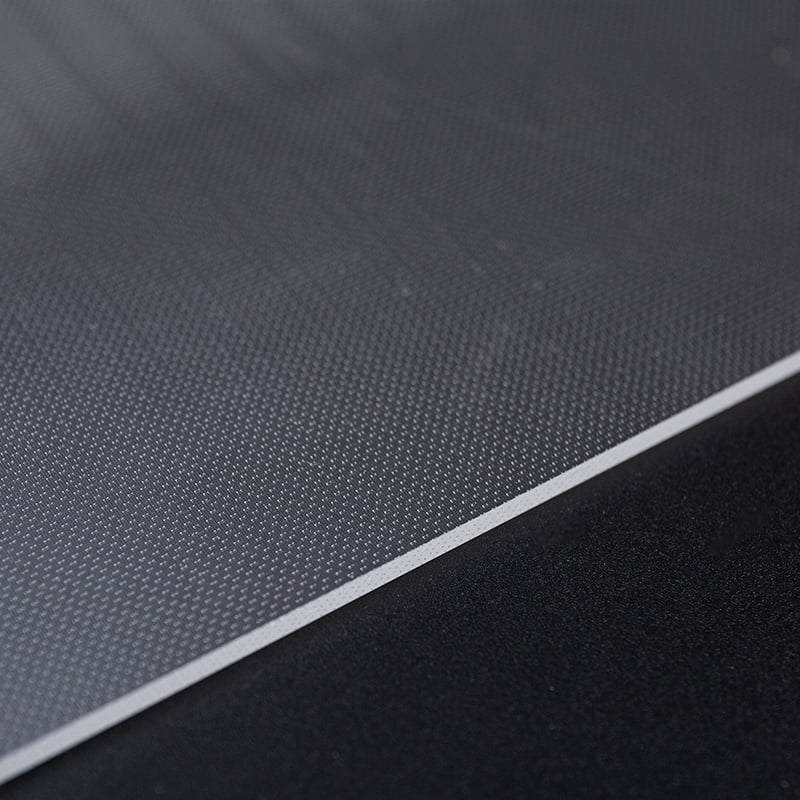
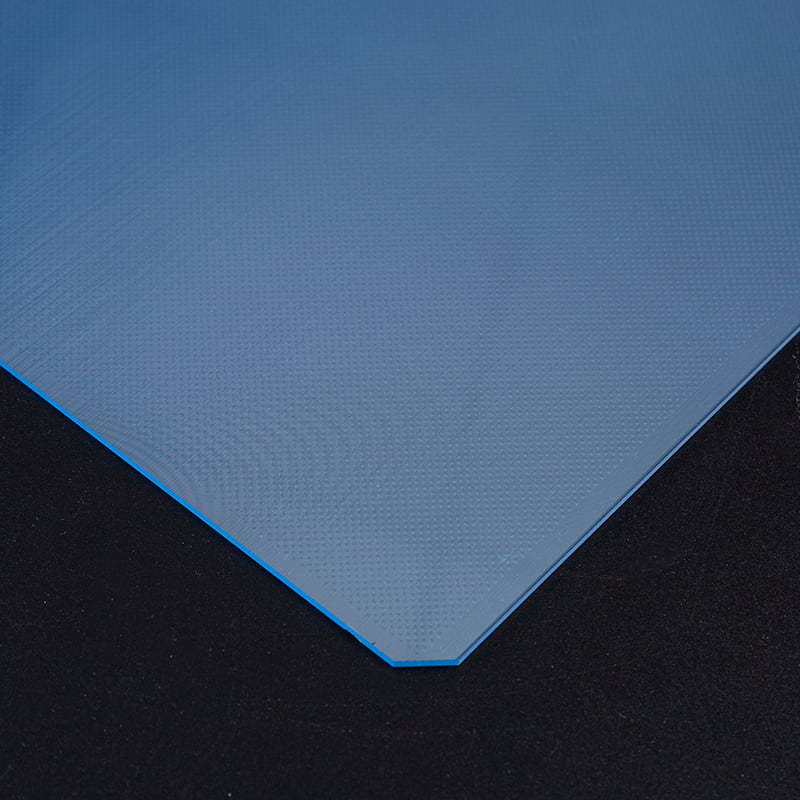 Optical-Grade Extruded PMMA Light Guide Plate for Edge-Lit PanelsExtruded optical-grade PMMA light guide plate with high clarity supports edge-lit display backlights, automotive lighting and medical optics where thickness uniformity and low haze matter.View Product →
Selection Guide: Six Steps From Spec to Shipment
1
Fix the optical target first
Set transmission, haze and the colour-shift limit after ageing before debating process. Both materials clear 90% transmission on clear 3 mm sheet; the difference appears in uniformity after forming.
2
Pin the gauge tolerance
Ask for a thickness map across a full sheet, not one value at the centre. On 3 mm sheet, ±0.1 mm is a fair extruded target; ±0.2 mm is typical for cast.
3
Match the sheet to the forming route
Draws deeper than roughly 3:1, thick sections and bonded assemblies favour cast. Flat parts, small radii and short cycles favour extruded.
4
Trial the finishing operations
Engrave, laser cut, screen print and dot samples of both grades. Engraving contrast and cut edge haze differ enough to change how a finished product reads.
5
Run ageing and chemical exposure
500–1,000 hours of QUV, a wipe test with the cleaner your end user really uses, and a solvent soak on a stressed sample settle most arguments.
6
Qualify two sources and inspect lots
Measure thickness at five points and check haze and flatness on a granite table. Two qualified suppliers protect a line better than one perfect one.
For frameless panel lights, an anti-yellowing, higher-hardness diffuser grade is usually the safer default than a generic opal sheet, because the visible face has nothing to hide behind it.
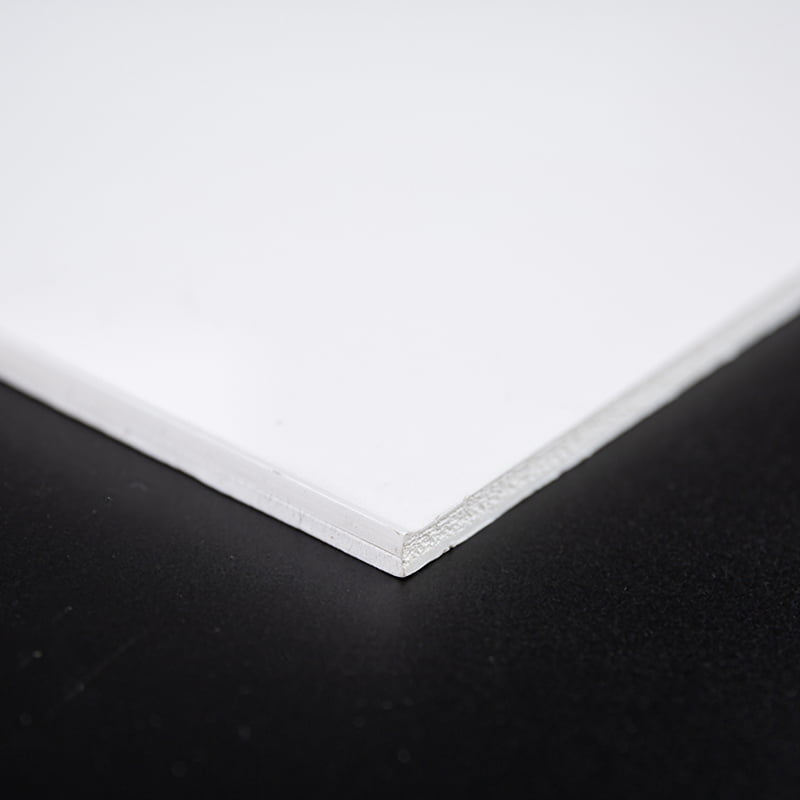
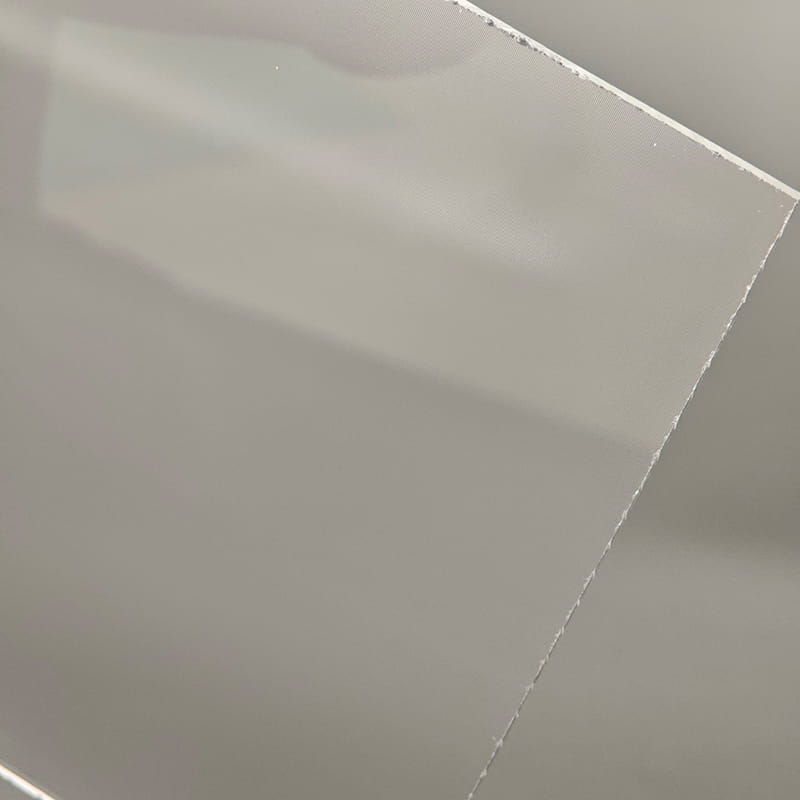 Anti-Yellowing High-Hardness PMMA Diffuser Sheet for Frameless Panel LightsAnti-yellowing, higher-hardness optical acrylic diffuser for frameless LED panel lights and outdoor lightboxes; gentle cleaning helps preserve its clear surface.View Product →
Maintenance, Compliance and the Cost of Switching
Cleaning is where most acrylic failures start. Ammonia-based glass cleaners and alcohol wipes attack the surface of a stressed diffuser and trigger crazing: a fine network of cracks that looks like fog and never clears. Mild soap, lukewarm water and a soft cloth, rinsed and dried with microfibre, keep a panel clear for years. Dust should never be wiped off dry.
Thermal limits matter more inside a luminaire than on a data sheet. PMMA softens near 100 °C, and a diffuser pressed against an LED board or driver housing will yellow long before the rated life of the fitting. A few millimetres of air gap is cheap insurance and also keeps a flame-retardant grade below the temperature at which its rating was tested.
On compliance, REACH and RoHS declarations are routine. Flammability ratings are thickness-dependent, so moving from 3 mm to 1.5 mm sheet invalidates the earlier test, and food-contact or medical claims apply only to specific grades with the paperwork to match them.
Switching processes mid-project is the quiet risk. Cast and extruded sheet shrink differently during forming, so a tool set up for one will turn out parts outside tolerance with the other; a solvent-cement joint that holds on cast may craze on extruded. Treat the change as a new part and re-qualify it.
 4–6H Surface-Hardened Wear-Resistant PMMA Light Guide PlateHard-coated PMMA light guide plate with 4H–6H surface hardness for high-traffic commercial lightboxes and architectural lighting, preserving transparency and light guide performance.View Product →