 English
 Español

Gentle
Gentle
Gentle
Gentle
Gentle
Gentle
Gentle
Gentle
Gentle
Content
- 1 Why This Number Matters in Real Parts
- 2 Reference Index Values Across the Spectrum
- 3 How PC Compares with Other Optical Plastics
- 4 Hidden Metrics Datasheets Do Not Always Show
- 5 Where Refractive Index Drives the Choice of PC
- 6 Selection Guide: Working with Polycarbonate Optics
- 7 Maintenance, Handling, and Compliance for PC Optics
During a prototype run of an LED panel light, the engineering team swapped the PMMA diffuser for a polycarbonate version to gain impact resistance and flame retardancy. The transmitted light dropped by roughly one percentage point, and the supplier was blamed at first. The cause, however, was not material quality but the index of refraction of polycarbonate, a number that silently governs reflection, refraction, and extraction efficiency in almost every transparent optical component.
Polycarbonate has a refractive index of approximately 1.586 at 589 nm (the sodium D line), the value printed on most datasheets. At 632.8 nm it falls to about 1.58132. Because the index sits between PMMA (about 1.491) and polystyrene (about 1.59), PC offers impact strength with moderate Fresnel reflection, a critical angle near 39 degrees, and enough dispersion to matter in precision optics.
Why This Number Matters in Real Parts
Refractive index n is the ratio of the speed of light in vacuum to its speed inside the material. For polycarbonate, n = 1.586 means light travels at roughly 1.9 x 10^8 m/s through the sheet, about 37% slower than in vacuum. That slowdown changes three things in practice:
Surface Reflection
An air-to-PC interface reflects about 5.1% of normally incident light per surface. Two surfaces mean roughly 10% loss before absorption is counted, which directly affects luminaire efficiency.
Total Internal Reflection
Light traveling from PC toward air hits the critical angle at about 39.1 degrees. This is what allows edge-lit light guide plates to trap and distribute light across a panel.
Refraction at Angles
A lens or prism made from PC bends light noticeably more than PMMA does. That is useful for compact optics, but it also increases chromatic separation in white-light systems.
Reference Index Values Across the Spectrum
It is a mistake to treat any plastic as having a single refractive index. PC is dispersive: the index falls as wavelength increases. The values below are typical published reference points, and exact figures vary slightly with resin grade, additive package, and measurement method.
Published PC refractive index data cluster near 1.58 to 1.59 in the visible range. Sultanova et al. (2009) provide a continuous dataset from 0.437 to 1.05 um; always confirm against your material datasheet.
Wavelength
Refractive index
Reference note
486.1 nm (F line)
~1.594
Typical high-dispersion reference point
589.3 nm (d line)
1.585 to 1.586
Most commonly cited value on datasheets
632.8 nm
1.58132
KLA/Filmetrics reference measurement
656.3 nm (C line)
~1.575
Typical low-dispersion reference point
How PC Compares with Other Optical Plastics
When the index of refraction of polycarbonate is compared with other transparent thermoplastics, the design trade-offs become clearer:
Surface reflection is calculated for normal incidence in air using the Fresnel equation. Actual values shift with wavelength, angle, and surface texture.
Material
n at 589 nm
Abbe number
Reflection/surface
Polycarbonate
1.586
~30
5.1%
PMMA
1.491
~58
3.9%
Polystyrene
1.590
~31
5.2%
COC
1.533
~56
4.4%
PET film
1.575
~24
5.0%
PMMA and COC have far lower dispersion (higher Abbe numbers), which is why they are preferred for imaging lenses. PC and PS have nearly identical index and dispersion, but PC wins on impact strength, heat resistance, and flame-retardant options. PET film's lower Abbe number matters less in thin backlight films where the optical path is short.
Hidden Metrics Datasheets Do Not Always Show
Datasheet index values answer the first question, but three hidden parameters determine real-world performance.
Birefringence
Extruded PC can develop molecular orientation during production, creating birefringence: the refractive index then differs by axis. For display-grade light guide plates, this can create uneven brightness. Annealing or choosing a properly controlled extrusion line reduces the effect.
Temperature Dependence
PC's thermo-optic coefficient is on the order of -1 x 10^-4 per K. Over a typical indoor temperature swing of 40 K, the index shifts by roughly 0.004. That is irrelevant for diffusers but can matter for interferometric systems or tightly toleranced AR-coated optics.
Per-Surface Fresnel Reflection
Calculated from n at normal incidence, the reflection loss shows where PC sits among common materials:
PC 5.1%
PS 5.2%
PMMA 3.9%
COC 4.4%
PET 5.0%
Where Refractive Index Drives the Choice of PC
A practical way to read the index of refraction of polycarbonate is through the applications that rely on it. The distribution below reflects how optical-grade PC sheets are typically consumed across lighting and display industries:
- LED panel light diffusers - 35%
- Light guide plates - 25%
- Lenses and protective windows - 20%
- Automotive lighting - 12%
- Signage and display covers - 8%
PC is selected for impact resistance and heat tolerance more often than for minimum reflection. Its index is high enough to enable efficient light extraction with microstructures, which is why flame-retardant wide-temperature PC diffuser sheets are common in fixtures that combine optical diffusion with UL-rated flammability. For a broader material-level comparison, see our diffuser materials guide for LED lighting.
Selection Guide: Working with Polycarbonate Optics
Use the refractive index data as a screening tool, not the final answer. Practical optical design with PC works best when the index is treated together with mechanical, thermal, and processing data.
1
Define the wavelength
Choose the LED peak wavelength. If a 450 nm royal blue pump is used, the index is higher than at 589 nm; use the measured dispersion curve when available. If impact resistance and clarity are both required, an optical-grade PC transparent sheet is the practical starting point.
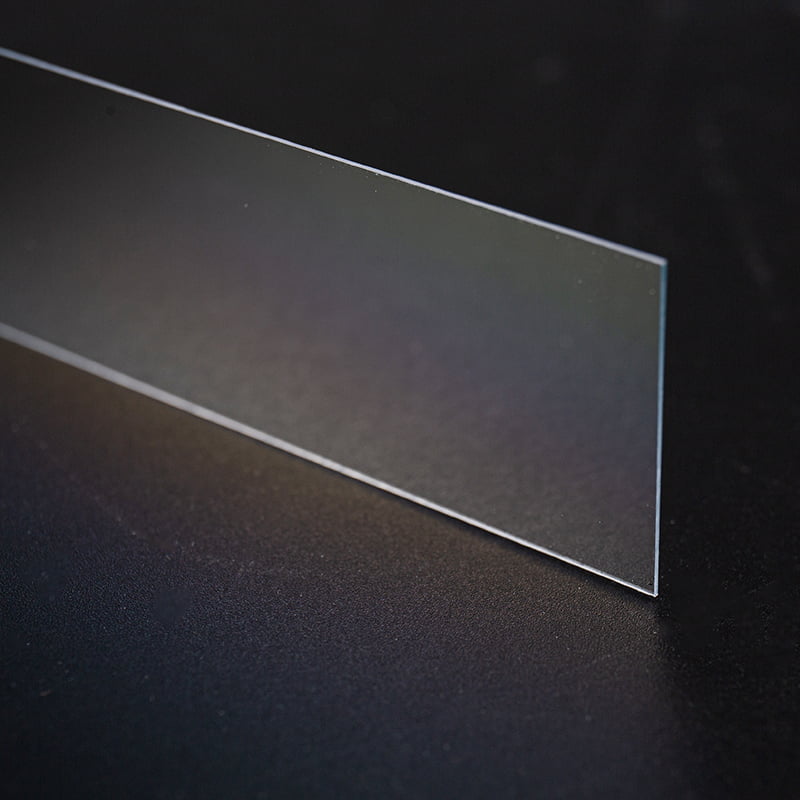
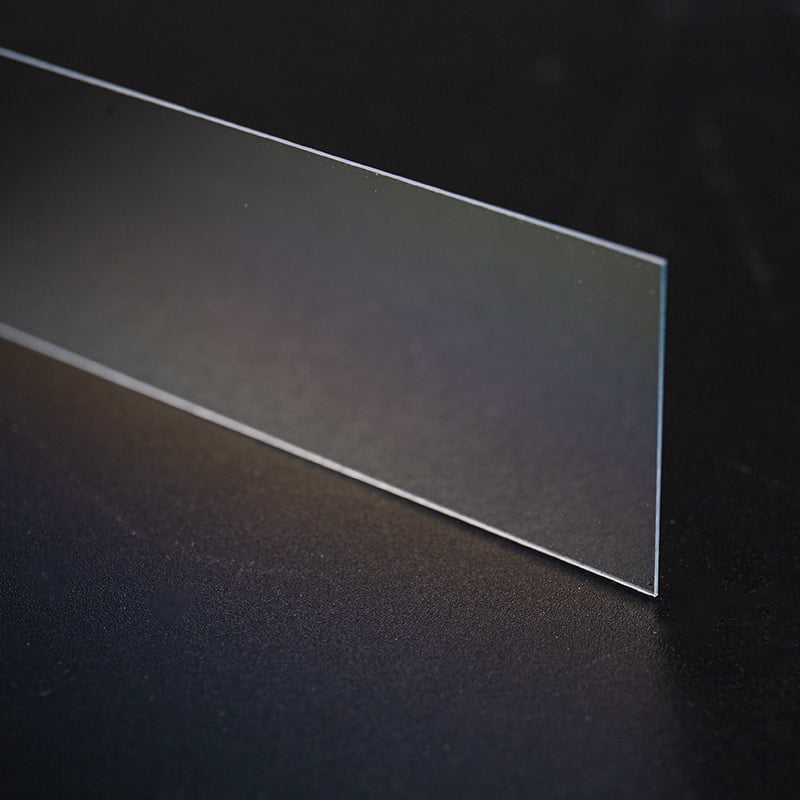
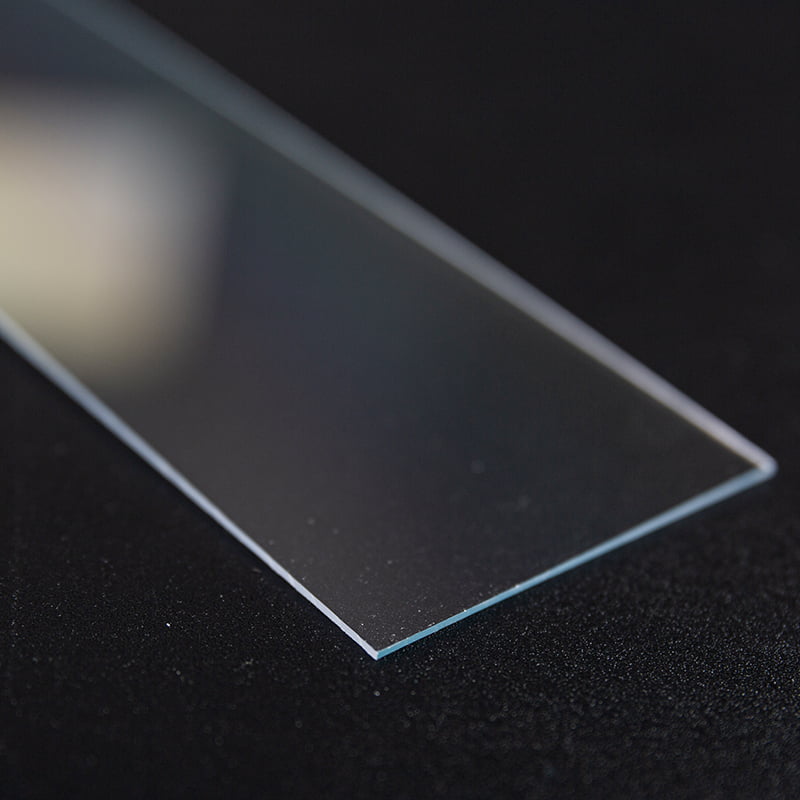 Shatterproof Lightweight Flame-Retardant Optical-Grade PC Transparent Sheet ManuGentle is Shatterproof Lightweight Flame-Retardant Optical-Grade PC Transparent Sheet Suppliers and Manufacturers, Wholesale Shatterproof...View Product →
2
Estimate Fresnel losses
For uncoated PC optics, count 5.1% reflection per surface and multiply by the number of air interfaces. If total loss exceeds the budget, consider an AR coating or a lower-index material such as PMMA.
3
Check dispersion for imaging
If the part images broad-spectrum white light, an Abbe number around 30 means noticeable chromatic aberration. PC is better suited to lighting and illumination optics than to high-end imaging lenses.
4
Manage birefringence
For edge-lit light guide plates, choose extrusion lines with tight thickness control and annealing. A silk-printable PC light guide plate for automotive lightboxes is a practical option when the printed pattern must stay aligned over large areas.
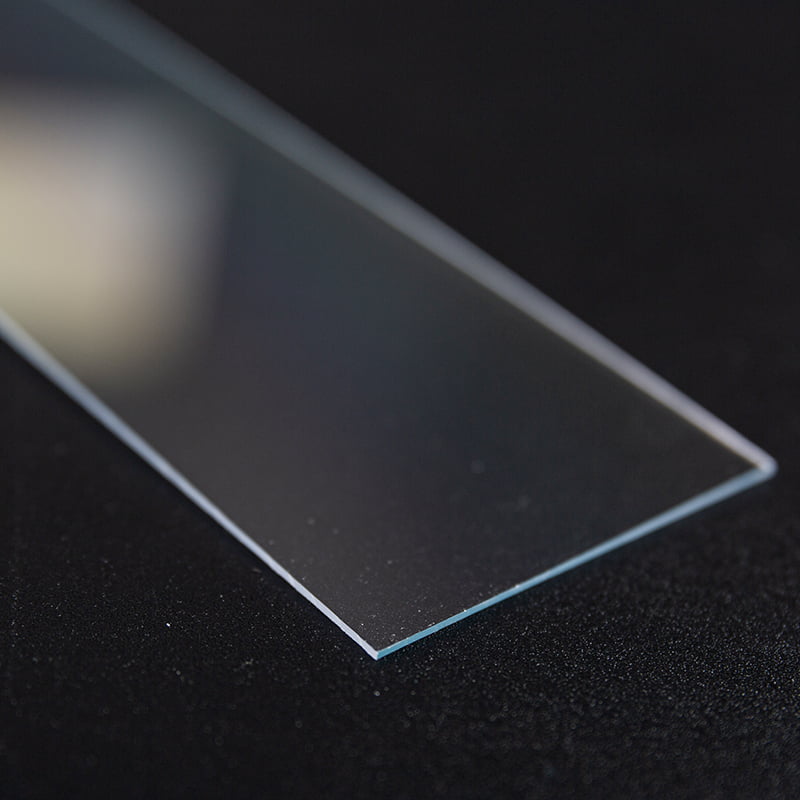 Silk-Printable PC Light Guide Plate for Automotive & Lightboxes Manufacturers, SGentle is Silk-Printable PC Light Guide Plate for Automotive & Lightboxes Suppliers and Manufacturers, Wholesale Silk-Printable PC Light ...View Product →
5
Validate with a refractometer
Measure incoming material per ASTM D542 or ISO 489. Comparing measured index against the datasheet is a low-cost incoming inspection that catches resin substitutions before they reach production.
Maintenance, Handling, and Compliance for PC Optics
Polycarbonate optics keep their optical properties only when handled and maintained correctly. Three areas deserve attention:
Cleaning and Solvent Resistance
Wipe PC surfaces with a soft microfibre cloth and mild soapy water. Solvents such as acetone, benzene, and many degreasers can cause stress cracking or surface haze. Never wipe a hot PC diffuser with solvent-laden wipes, because elevated temperature accelerates crazing.
UV and Weathering
Unprotected PC yellows under prolonged UV exposure. If the application is outdoors or near high-CCT LEDs, use UV-stabilized grades and verify transmission retention after accelerated weathering. The refractive index shift caused by UV degradation is a late-stage warning sign; monitor it if the part is optically critical.
Flammability and Chemical Compliance
For lighting fixtures, confirm the UL94 rating (V-2 or V-0) and check REACH, RoHS, and the applicable IEC 60598 requirements. Flame-retardant PC grades exist in both transparent and diffuser forms, but the additive package can shift the refractive index slightly, so re-verify optical data for FR grades. For architectural or building-related PC and PMMA choices, see our material guide for construction.
The index of refraction of polycarbonate is not a fixed constant to memorize; it is a design input to measure, compare, and verify. Used correctly, that one number makes the difference between a light fixture that merely transmits light and one that manages it efficiently.