 English
 Español

Gentle
Gentle
Gentle
Gentle
Gentle
Gentle
Gentle
Gentle
Gentle
Content
- 1 Plastic Sheets for Construction Are Gaining Ground as Architects Demand More From Building Envelopes
- 2 Why Polycarbonate Is Pulling Ahead in Structural Glazing and Roofing
- 3 PMMA Sheets: Where Optical Clarity Defines the Application
- 4 Material Selection Guide: Matching Plastic Sheet Type to Construction Application
- 5 Asia-Pacific Manufacturing Capacity and the Supply Chain Advantage for Construction Projects
Plastic Sheets for Construction Are Gaining Ground as Architects Demand More From Building Envelopes
The global market for acrylic and polycarbonate sheets is on a clear upward trajectory. optical-grade plastic sheets for construction, lighting, and display applications are increasingly being chosen over conventional glass and metal in building envelopes, driven by measurable performance advantages and a construction industry that is prioritizing weight reduction, energy efficiency, and design flexibility simultaneously. According to market analysis, the acrylic and polycarbonate sheets segment is projected to grow from USD 10.74 billion in 2024 to USD 14.49 billion by 2029 at a compound annual growth rate of 6.2% — a figure that reflects structural shifts in how architects and engineers approach translucent building elements, not just short-term demand spikes.
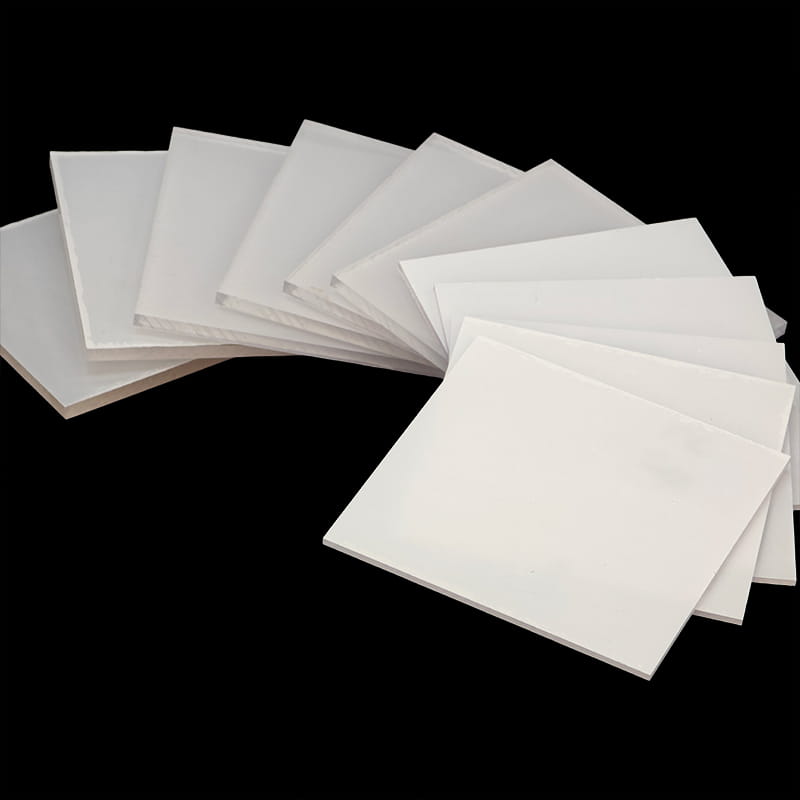
At the center of this shift is a broadening range of applications. Polycarbonate sheeting is now specified for roofing, skylights, façade cladding, and safety glazing across residential, commercial, and industrial projects. PMMA (acrylic) sheets are gaining traction in interior partitions, signage, and daylighting systems where optical clarity is non-negotiable. For manufacturers like Suzhou Gentle Photoelectric Technology Co., Ltd. — a high-tech enterprise specializing in the R&D, production, and sales of new optical materials — construction represents one of the fastest-growing end markets for their customized plastic sheet product lines, which span PS, PMMA, PC, PP, and ABS series.
Why Polycarbonate Is Pulling Ahead in Structural Glazing and Roofing
Polycarbonate's rise in construction is not accidental. The material delivers an impact resistance roughly 250 times that of glass at approximately half the weight — a combination that dramatically simplifies structural engineering for skylights, canopies, and translucent roofing panels. For large-span commercial projects, this weight differential reduces load calculations on the supporting framework and can lower total project cost even when the sheet itself carries a premium over float glass on a per-square-meter basis.
Multiwall polycarbonate sheets — those with internal rib structures creating sealed air chambers — add thermal insulation to the equation. The trapped air layers reduce U-values significantly compared to single-skin glazing, making multiwall panels relevant not just for greenhouses and agricultural buildings but for commercial façades in climate zones where energy code compliance is increasingly stringent. The multiwall polycarbonate sheet segment alone is projected to reach USD 2.4 billion globally by 2034, with the building and construction sector as the primary driver.
UV resistance is the third pillar of polycarbonate's construction case. Co-extruded UV-blocking cap layers — standard on quality construction-grade sheets — prevent the surface yellowing and embrittlement that limited earlier generations of polycarbonate glazing to short-lifecycle applications. Properly specified sheets now maintain their optical and mechanical properties for 10–15 years of outdoor exposure, making lifecycle cost comparisons with glass increasingly favorable, particularly when installation and structural support savings are factored in.
PMMA Sheets: Where Optical Clarity Defines the Application
While polycarbonate commands the heavy-duty structural segment, PMMA — polymethyl methacrylate, widely known as acrylic or plexiglass — holds its own where visual performance is the primary specification criterion. With a light transmittance of up to 92–93%, PMMA sheet outperforms polycarbonate in raw optical clarity and carries intrinsic UV stability without requiring a co-extruded protective layer. These properties make it the preferred choice for interior daylighting systems, decorative partitions, retail display installations, and architectural signage where color rendering and long-term color stability are essential.
In construction contexts, PMMA's lower impact resistance compared to polycarbonate is rarely a limiting factor. Interior partitions, display windows, and decorative cladding panels face far less mechanical stress than roofing or façade glazing. What matters in these applications is dimensional stability, resistance to indoor UV exposure from fluorescent and LED sources, and machinability — areas where PMMA performs consistently. Its ease of thermoforming also allows fabricators to create curved architectural elements without complex tooling, a capability that has made acrylic sheets a recurring material in high-end hospitality and retail interiors.
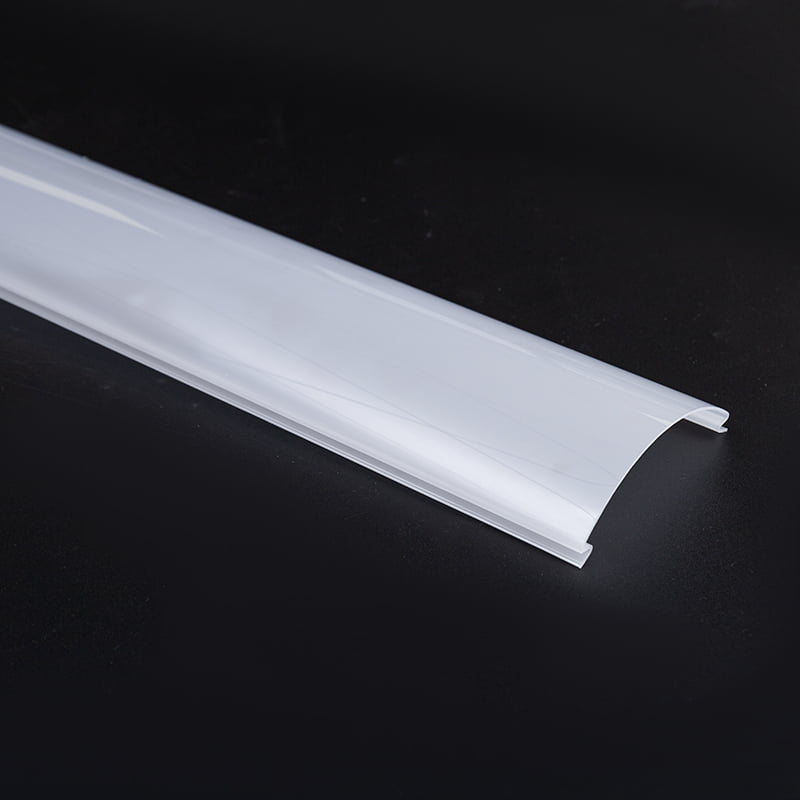
Suzhou Gentle Photoelectric Technology Co., Ltd. produces PMMA sheet series optimized for these applications, with formulations that support both standard clear grades and light-diffusing variants used in LED luminaire covers, backlit signage panels, and decorative ceiling systems — demonstrating how a single material series can serve both the construction and lighting industries simultaneously.
Material Selection Guide: Matching Plastic Sheet Type to Construction Application
Specifying the right plastic sheet for a construction application requires matching material properties to the mechanical, optical, and environmental demands of each use case. The table below summarizes the primary construction applications and the recommended sheet materials:
| Construction Application | Recommended Material | Key Reason |
| Skylights & translucent roofing | PC (Multiwall or Solid) | Impact resistance, thermal insulation, UV stability |
| Façade cladding & canopies | PC (Solid or Corrugated) | Weather resistance, lightweight, shatter-proof |
| Interior partitions & screens | PMMA (Acrylic) | Optical clarity, dimensional stability, formability |
| Decorative ceiling panels & LED covers | PMMA (Diffusion grade) / PS | Light diffusion control, color rendering |
| Greenhouse panels | PC (Twin-wall) | Light transmission + thermal insulation balance |
| Safety glazing & security barriers | PC (Solid, high-impact grade) | Impact strength 250× that of glass |
| Retail display & interior signage | PMMA (Clear or tinted) | 92%+ clarity, color options, easy fabrication |
| Low-cost temporary enclosures | PP Sheet | Cost efficiency, chemical resistance |
The overlap between materials in some applications is real — and it is precisely why working with a manufacturer capable of producing and customizing multiple sheet series matters. Suzhou Gentle Photoelectric Technology Co., Ltd. covers PS, PMMA, PC, PP, and ABS series under one roof, which means specification teams can request comparative samples and optical test data across material types without sourcing from multiple suppliers.
Asia-Pacific Manufacturing Capacity and the Supply Chain Advantage for Construction Projects
Asia-Pacific held over 36.7% of the global multiwall polycarbonate sheet market in 2024 — a position driven not just by domestic construction demand but by the region's concentration of optical-grade polymer sheet manufacturing infrastructure. For construction projects sourcing plastic sheets for construction globally, this regional concentration has practical implications: lead times, minimum order quantities, and the ability to customize sheet dimensions, surface finishes, and optical grades are all more favorable when sourcing from established Chinese manufacturers with dedicated extrusion lines and in-house R&D.
Founded in 2017 and covering a 17,600 m² manufacturing base, Suzhou Gentle Photoelectric Technology Co., Ltd. exemplifies this capability profile. With over 37 patent applications, recognition as a National High-tech Enterprise, and export reach across 50+ countries, the company serves construction-related customers alongside its core display, lighting, consumer electronics, automotive, and medical equipment sectors. The full-process customization model — spanning material formulation, micro-structured optical design, pilot trials, and mass production — is directly applicable to construction material procurement where sheet thickness tolerance, surface texture, fire-rating requirements, and batch-to-batch optical consistency all need to be controlled to project specification.
For project developers, distributors, and procurement teams sourcing PC sheets for construction roofing, skylights, and glazing or PMMA sheets for architectural interiors and display applications, the combination of manufacturing scale, technical depth, and multi-material capability from a single source is increasingly valuable as construction timelines tighten and specification requirements become more demanding.