 English
 Español

Gentle
Gentle
Gentle
Gentle
Gentle
Gentle
Gentle
Gentle
Gentle
Content
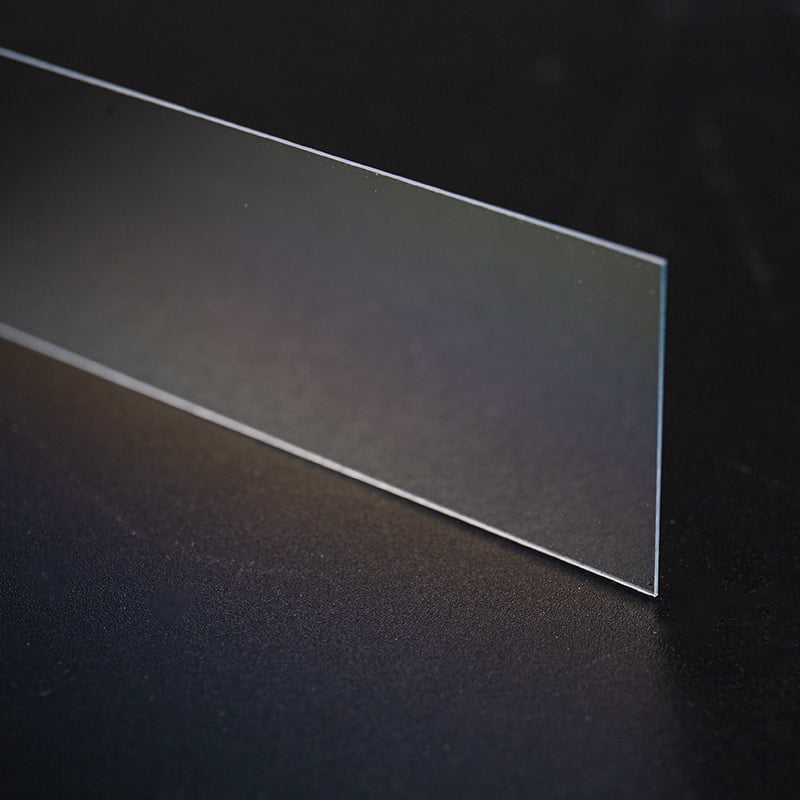
PC material (Polycarbonate) is an exceptionally high-performance engineering thermoplastic. You can think of it as a transparent material that is lighter than glass, stronger than ordinary plastics, and extremely tough.
The key difference between PC and PS or PMMA is that PC has extremely high impact strength and is commonly used in "bulletproof glass."
1. Key Advantages
-
Extremely High Impact Resistance – This is PC's most famous property. Its impact strength is 30–40 times that of PMMA (acrylic) and over 200 times that of ordinary glass. It is very tough and typically deforms rather than shatters under strong impact.
-
Examples: Bulletproof glass, transparent riot shields for police, visors for safety helmets.
-
-
Excellent Light Transmittance – Though not as high as PMMA (92%), PC still achieves 88–90% light transmission, making it clear enough for optical lenses.
-
Outstanding Heat Resistance – PC maintains its performance over a long-term temperature range of -40°C to 120°C. Its heat deflection temperature reaches 130–140°C, far higher than PS (~75°C) and PMMA (~95°C).
-
Examples: Microwaveable plastic food containers, kettle housings, baby bottles.
-
-
Good Dimensional Stability – PC does not deform easily under stress or temperature changes, offering high dimensional precision.
2. Main Disadvantages & Precautions
-
Poor Scratch Resistance – PC has low surface hardness and scratches very easily. Many PC products (e.g., eyeglass lenses, phone screen protectors) are coated with a hard coating to improve abrasion resistance.
-
Poor Chemical Resistance – PC is easily attacked by certain organic solvents (e.g., gasoline, alcohol, cleaning agents), leading to surface cracking or "stress cracking." Special care is needed during use and cleaning.
-
Higher Cost – As an engineering plastic, PC is more expensive than commodity plastics like PS, PMMA, and PP.
-
BPA (Bisphenol A) Concerns – This is the most notable safety issue with PC material. BPA is used in PC synthesis. Under high heat or prolonged use, trace amounts of BPA may leach out. BPA is an endocrine disruptor that may affect infant development. As a result, many baby bottles are no longer made from PC and instead use safer materials like PPSU or PP. However, adult-grade water bottles are generally considered safe.
3. Quick Comparison: PC vs. PMMA vs. PS
| Property | PC (Polycarbonate) | PMMA (Acrylic) | PS (Polystyrene) |
| Impact Resistance | Extremely high (bulletproof level) | Medium-high (stronger than glass) | Low (brittle) |
| Light Transmittance | 88–90% (transparent) | Highest (92%) | 88–90% (transparent) |
| Heat Resistance | Best (~130°C) | Medium (~95°C) | Poor (~75°C) |
| Surface Hardness | Soft, scratches very easily | Soft, scratches easily | Harder, resists scratching |
| Cost | High | Medium | Low |
| Typical Applications | Bulletproof glass, helmets, baby bottles, CDs | Signage, aquariums, eyeglass lenses | Disposable cups, CD cases, appliance housings |
| Safety Concern | BPA (Bisphenol A) | None | Styrene monomer |
4. How to Identify PC Material?
-
Recycling Symbol: Look for the number 7 (Other) inside the triangular recycling symbol, which often indicates PC or other mixed plastics.
-
Sound: Tapping a PC product produces a dull, solid sound, unlike the crisp sound of PS.
-
Labeling: Many PC water bottles or food containers are marked "BPA Free," a common label for PC and its alternatives.