 English
 Español


Gentle
Gentle
Gentle
Gentle
Gentle
Gentle
Gentle
Gentle
Gentle
Content
- 1 What Actually Happens Inside the Oven
- 2 Cast vs Extruded Sheet: Where Each One Fits
- 3 Drape, Vacuum, Pressure and Free Blowing
- 4 The Numbers That Decide Whether a Part Passes
- 5 Where Thermoformed Acrylic Goes
- 6 A Selection and Setup Sequence That Holds Up in Production
- 7 Maintenance, Traceability and Compliance
A 3 mm extruded acrylic sheet that tears at a tight corner radius and a sheet that sags through the clamp frame can come off the same pallet, formed twenty minutes apart. The variable is core temperature. Acrylic thermoforming runs inside a usable window of roughly 25 to 40 °C, and stepping outside it shows up immediately as webbing, chill marks, silver streaking, or a trimmed part that will not hold its dimensions after a week on the shelf.
The short answer before the detail: choose cast acrylic for deep draws and optical parts and form it at roughly 171 to 193 °C; choose extruded acrylic for thin gauges, tight thickness tolerance and short cycles and form it at roughly 145 to 160 °C; dry extruded sheet before it enters the oven. Mold material, vacuum hole layout, cooling rate and annealing are all downstream consequences of those three decisions, not independent choices.
What Actually Happens Inside the Oven
Acrylic is a poor conductor of heat. A 5 mm sheet can read 185 °C on the surface while the core is still near 130 °C. Form it at that moment and you stretch a hot skin over a cold centre, which is exactly where stress whitening and post-trim distortion come from. Two habits remove most of this risk: heat from both sides where the machine allows, and hold the sheet at temperature for a short soak before the vacuum drops so the core catches up with the surface.
Heating method
Infrared radiant heaters at 300 to 400 mm distance give the fastest response. Forced convection suits thick or patterned heating where you want a controlled, even rise instead of a hot stripe under each element.
Forming temperature
Cast PMMA softens around 171 to 193 °C; extruded PMMA forms earlier, at roughly 145 to 160 °C. Start 5 °C above the low end and raise the setting only when the draw is incomplete.
Clamp frame
An unheated clamp frame chills the sheet edge. The edge draws less than the centre, the material wrinkles inward, and the finished part carries a permanent wave along the flange. Heat or insulate the frame.
Moisture
Acrylic absorbs water from humid air. Two to four hours at 70 to 80 °C in a drying oven generally removes enough of it to stop the surface bubbles and haze that appear when trapped vapour expands under the heater.
Forming rate
Slow, controlled draw for optical parts; faster cycles for signage and covers. Too fast produces webbing across corners; too slow drops the sheet below its forming range before it touches the mold.
Pressure
Vacuum alone gives about 0.7 to 0.9 bar, enough for signage, covers and shallow diffusers. Pressure forming at 2 to 4 bar reproduces fine mold texture and holds sharper radii for display and lens parts.
Cast vs Extruded Sheet: Where Each One Fits
The two acrylic families are made differently, and that changes what the oven has to do. Cast sheet is polymerised in the mold, giving a wider forming window, lower and more uniform shrink, and better optical clarity, which is why deep-draw display parts and thick components usually start there. Extruded sheet is cheaper per kilogram, holds tighter gauge tolerance and cycles faster, which is why high-volume thin parts — diffusers, light guides and covers — are typically extruded. If you need a quick refresher on the polymer itself, this PMMA material overview covers the chemistry and its practical consequences.
Indicative trade values for 3 mm sheet. Confirm the actual gauge tolerance, shrink direction and drying recommendation with your sheet supplier before releasing a tool.
Drape, Vacuum, Pressure and Free Blowing
Method choice is a tooling cost decision as much as a technical one. Drape forming needs one simple male mold and no vacuum system, but the sheet touches the mold before it is fully stretched, so optical surfaces are only as good as the mold finish. Vacuum forming is the general-purpose route: cheap tooling, fast setup, acceptable detail. Pressure forming adds a pressure box and doubles tool cost, but pushes detail and surface fidelity up to injection-molding territory for short runs. Free blowing and vacuum drawing suit thin shells and prototypes where wall uniformity matters more than edge definition.
Drape forming
Lowest tooling cost, one-sided mold, no pressure system. Limited to gentle curvature and generous radii; risks premature contact marks on optical faces.
Vacuum forming
0.7 to 0.9 bar, aluminium or epoxy tools, drilled vacuum holes. The workhorse method for diffuser panels, covers and machine guards.
Pressure forming
2 to 4 bar against a female cavity. Sharpest detail and best texture replication, best corner definition, highest tool and machine cost.
Free blowing
No mold contact at all. Uniform wall thickness across the dome, used for light covers and prototypes; dimensions are hard to hold.
The Numbers That Decide Whether a Part Passes
Corner thickness is the hidden indicator most buyers never specify and most failures come from. A 3 mm sheet pulled into a 100 mm deep draw loses material at the corners, and how much it loses depends on the method. The chart below shows typical retention values from production runs; treat them as planning figures rather than guaranteed outputs.
Drape 80 percent
Pressure 70 percent
Vacuum 55 percent
Free blowing 45 percent
Three other indicators deserve a line on the inspection sheet: haze increase measured before and after forming (anything above 2 percent on a transparent part is a process warning), dimensional shrink measured 24 hours after trimming rather than immediately, and chill mark count under low-angle light. If a design cannot tolerate the numbers your method delivers, change the method or the draw depth rather than adding operators to the trimming bench.
Where Thermoformed Acrylic Goes
Demand is not spread evenly. Lighting and optical components dominate, because acrylic combines clarity with easy secondary processing such as silk printing, laser dotting and hardening.
- Lighting diffusers and light guides: 34 percent
- Signage and retail display: 22 percent
- Industrial covers and machine guards: 18 percent
- Automotive and transport interiors: 14 percent
- Medical, food and packaging: 12 percent
Lighting parts have the tightest optical requirements. A frameless panel light, for example, depends on a diffuser that will not yellow under years of LED heat and blue light exposure, and on a light guide plate whose dot pattern must survive the draw without smearing.
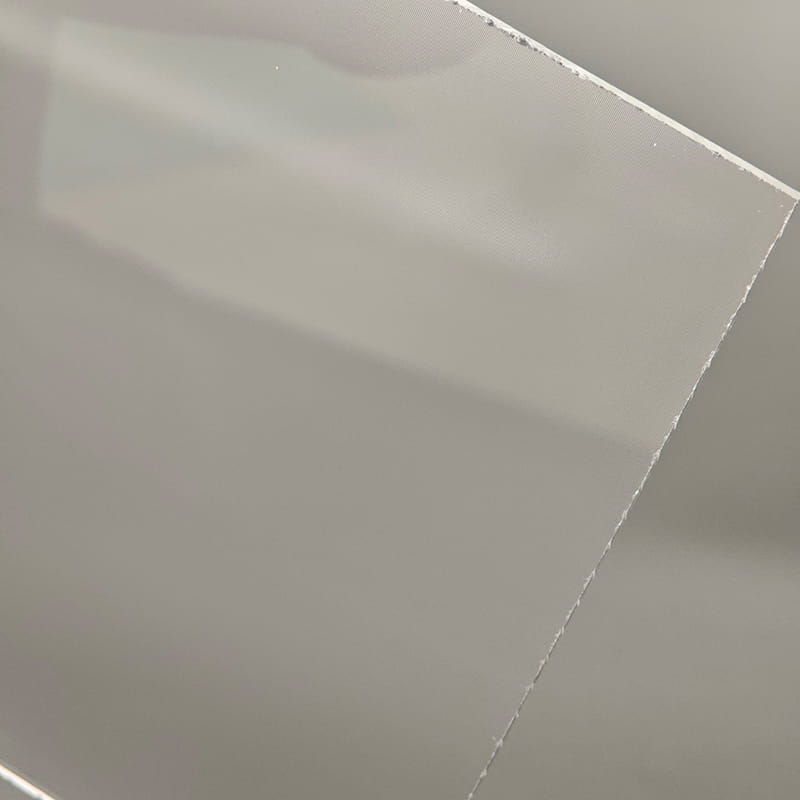 Anti-Yellowing High-Hardness PMMA Diffuser Sheet for Frameless Panel LightsThickness 1.2-4mm, 45mm transparency.View Product →
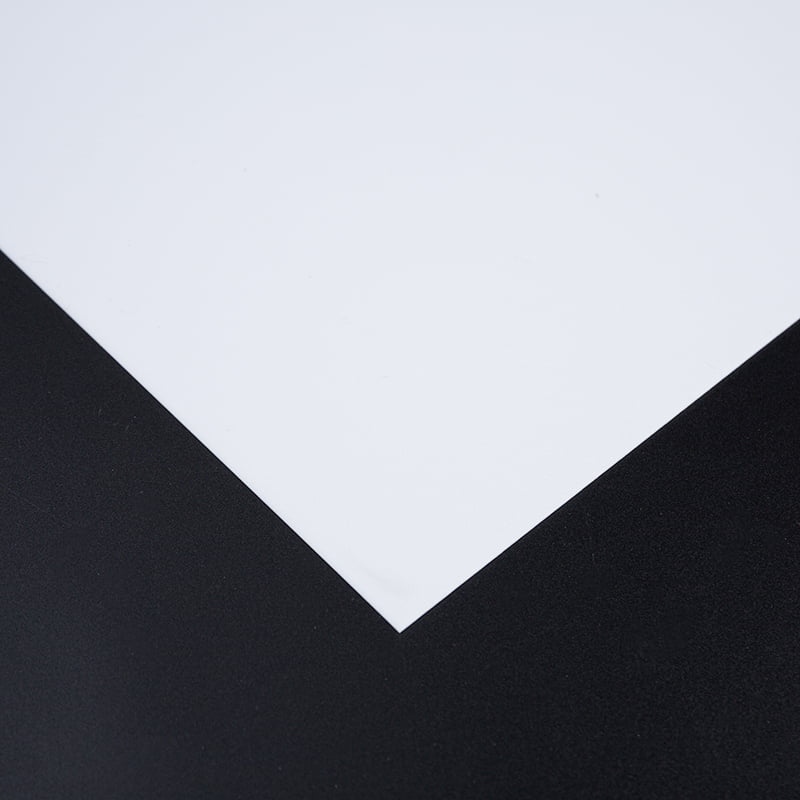 4–6H Surface-Hardened Wear-Resistant PMMA Hardened Light Guide Plate4–6H Surface-Hardened Wear-Resistant PMMA Hardened Light Guide Plate features a specialized hard coating treatment that elevates surface hardness to 4H–6H (pencil hard...View Product →
Industrial enclosures and equipment covers follow a different logic: wall thickness, flame retardancy and electrostatic behaviour matter more than haze. Sheet suppliers that extrude their own PMMA, PS and PC stock, such as this optical sheet manufacturer, can usually match the forming grade to the housing so that one material specification covers the whole assembly rather than three.
 Flame-Retardant Anti-UV Antistatic Recyclable PS Vacuum Forming ProductsThickness 0.25-2.5mmView Product →
A Selection and Setup Sequence That Holds Up in Production
Running these steps in order prevents the most expensive mistake in acrylic thermoforming, which is discovering a draw problem after the tool has been cut.
- Fix the grade and gauge first. Cast or extruded, 2 to 5 mm, and confirm the tolerance band in writing.
- Dry the sheet if storage humidity has been high, then form within the same shift.
- Design the tool with 3 to 5 degrees of draft, internal radii at least equal to sheet thickness, and vacuum holes of 0.5 to 0.8 mm on a 25 to 50 mm grid.
- Run a forming trial on the exact grade. Record oven zones, dwell, core temperature and vacuum level.
- Cool in the mold under vacuum until the part holds its shape, then demold. Forcing a hot part out is the fastest way to introduce bow.
- Anneal parts that will be machined or bonded, then trim with a controlled cutter rather than by hand where tolerances are tight.
- Measure 24 hours after trimming and compare against the first-article report before releasing the run.
On cost, a vacuum tool for a 500 mm by 500 mm cover is typically one-fifth to one-tenth the price of an injection mold, which is why acrylic thermoforming wins anywhere volumes sit between a few hundred and a few tens of thousands of parts per year. Above that band, the per-part savings of injection molding usually overtake the tooling premium.
Maintenance, Traceability and Compliance
Most "material problems" in acrylic thermoforming are actually maintenance problems. Oven elements drift, thermocouples age, and release agent residue builds up on mold surfaces until every part carries a faint bloom. A short maintenance calendar prevents the arguments.
- Verify heater zone output and thermocouple accuracy on a fixed schedule, and calibrate against a hand-held pyrometer at the sheet surface.
- Clean molds with a compatible agent rather than solvent soaking, and inspect vacuum holes for blockage after every few hundred cycles.
- Service vacuum pumps and filters so forming pressure stays within tolerance; a slow pump produces parts that look formed but never fully seated.
- Keep material lots traceable to the sheet supplier's batch, with drying records attached.
- For flame-retardant diffusers, ask for the rating documentation and confirm it applies to the formed part, not only the flat sheet. For food-contact packaging, request migration test data rather than a general food-safe claim.
A supplier working under ISO 9001 with documented incoming inspection will hand you a forming report that reduces your own first-article workload. That paperwork is worth more than a small price difference when a lighting program runs for three years.
Acrylic thermoforming rewards patience at the oven and precision at the tool. Get the core temperature right, dry the sheet, and design the mold around the shrink you will actually measure, and the rest of the process becomes predictable enough to quote with confidence.