 English
 Español


Gentle
Gentle
Gentle
Gentle
Gentle
Gentle
Gentle
Gentle
Gentle
Content
- 1 Acrylic Temperature Range: The Practical Answer First
- 2 Why Acrylic Has Three Different Temperature Limits
- 3 Material Comparison: What Changes When You Leave PMMA
- 4 Hidden Indicator: Dimensional Growth You See After Installation
- 5 Where Acrylic Temperature Range Matters by Application
- 6 Selection and ROI: Six Checks Before You Commit
- 7 Maintenance and Compliance Rules That Protect the Range
Acrylic Temperature Range: The Practical Answer First
For most commercial acrylic (PMMA) sheets, the continuous service range is -40°C to 80°C. Extruded grades often perform best below 70°C, cast grades can hold near 80°C, and short-term exposure to 90–100°C is realistic only with low load and full support. Softening starts around 100–110°C, thermoforming runs at 150–180°C, and long exposure above 200°C risks degradation.
That is the range, but the useful decision is narrower. A 3 mm diffuser in a 60°C LED panel behaves differently from a 10 mm window in a sun-loaded facade. The polymer is the same; the stress, thickness, mounting, and time at temperature are not. The base chemistry is PMMA material, an amorphous thermoplastic with no true melting point. It softens, deflects, and eventually degrades as temperature rises.
Why Acrylic Has Three Different Temperature Limits
Buyers often ask for one number. Suppliers should give three because each answers a different failure mode.
Continuous service
-40°C to 80°C for many PMMA grades. Extruded sheet is commonly rated to 70–80°C; cast sheet can reach 80°C or slightly higher. This is the window for years of use.
Glass transition
Cast acrylic typically shows Tg around 100–115°C; extruded grades often 90–105°C. Near this point, the sheet loses stiffness and dimensional memory.
Thermoforming
At 150–180°C, acrylic becomes pliable enough to shape. This is a process window, not a service condition. Cooling must be controlled to avoid stress.
Glass transition temperature is not a service limit. It is the point where polymer chains gain mobility. Below Tg, the sheet still creeps under load, which is why heat deflection temperature (HDT) is often the practical ceiling. A thick panel under a fixed frame may fail at 70°C, while the same sheet with room to expand performs at 80°C.
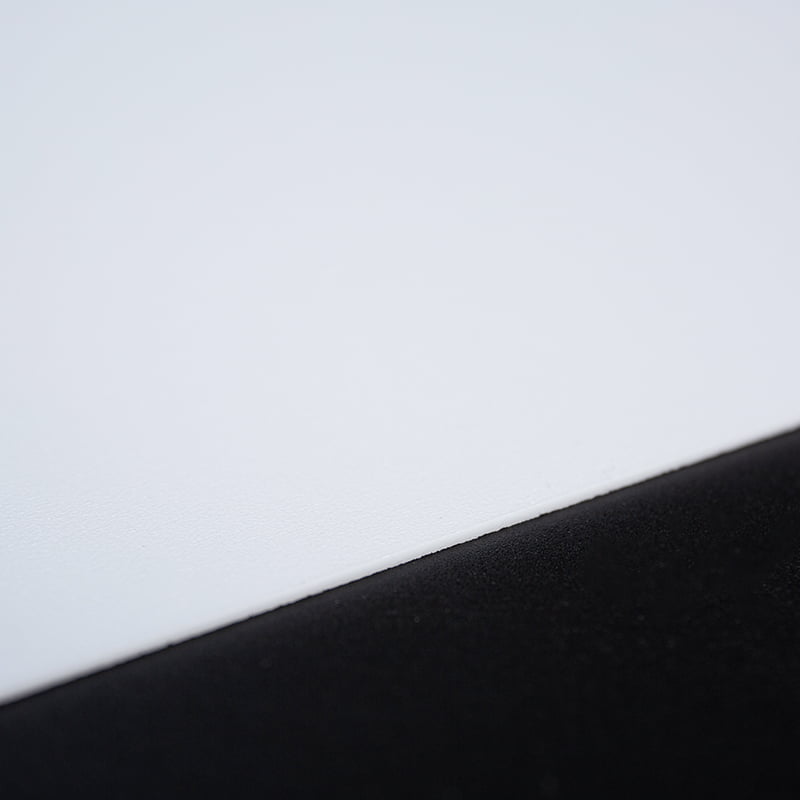
 Anti-Yellowing High-Hardness PMMA Diffuser Sheet for Frameless Panel LightsThickness 1.2-4mm, 45mm transparency.View Product →
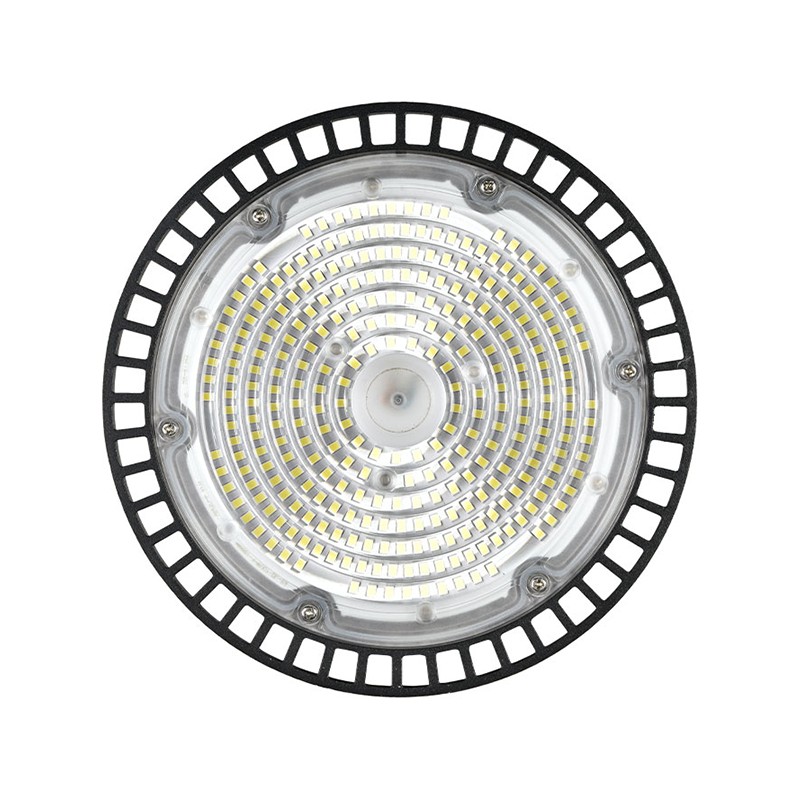
For LED luminaires, the risk is not a single hot day. It is 50,000 hours at 65–75°C, where yellowing and warping can appear. An anti-yellowing diffuser grade with controlled hardness is usually specified for that duty.
Material Comparison: What Changes When You Leave PMMA
If your design is already near 80°C, the material choice matters more than thickness. The table below compares typical ranges; actual data must come from the grade datasheet. If you are starting a project, review the PMMA sheet series before moving to higher-temperature polymers.
Table 1: Typical thermal envelopes for optical sheet materials; confirm values with the specific grade and thickness.
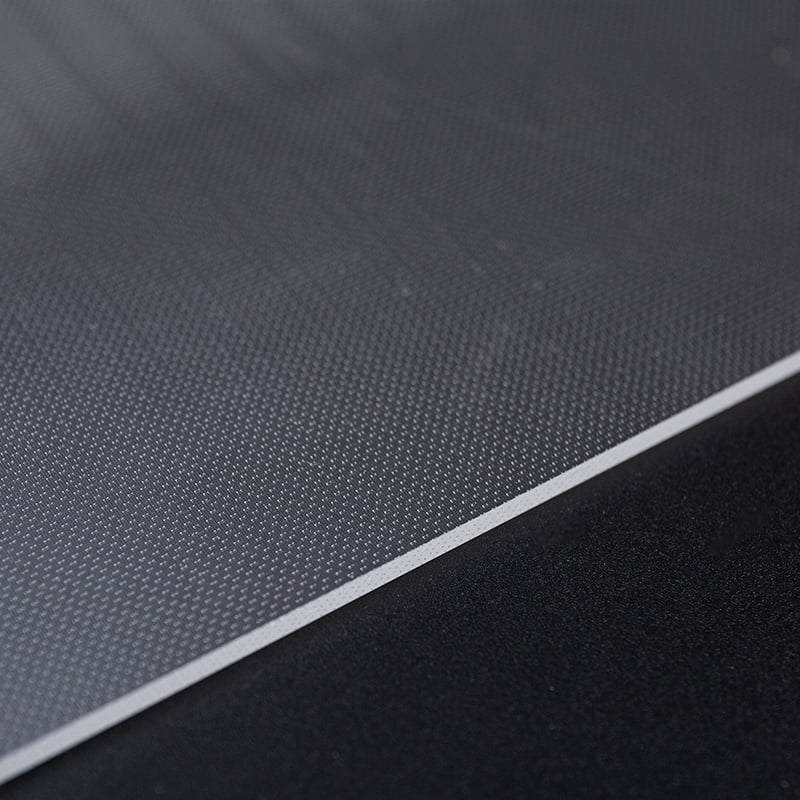
 Uniform-Lighting Flame-Retardant Wide-Temperature PC Diffuser SheetUniform-Lighting Flame-Retardant Wide-Temperature PC Diffuser Sheet is an optical-grade polycarbonate diffusion panel engineered to deliver uniform, high-quality LED l...View Product →
Polycarbonate extends continuous service toward 115–120°C and offers much higher impact strength, but it costs more, can yellow under UV unless protected, and is more sensitive to stress cracking. PS is economical and easy to extrude, yet its service ceiling is usually lower. PP can handle heat and chemicals in non-optical parts, but it is not a drop-in clarity replacement.
Hidden Indicator: Dimensional Growth You See After Installation
Warping often begins before the sheet reaches its softening point. Thermal expansion creates movement that a rigid frame will not allow. For a 600 mm panel with a 50°C rise, PMMA grows about 2.1 mm; PC grows about 2.0 mm; PS grows about 2.1 mm; glass grows about 0.3 mm. The chart uses typical coefficients of thermal expansion for comparison, not a warranty value.
PMMA
2.1 mm
2.1 mm
PC
2.0 mm
2.0 mm
PS
2.1 mm
2.1 mm
Glass
0.3 mm
0.3 mm
The hidden cost is not the sheet. It is the rework: slotted holes that were not slotted, a frame that pinches, a diffuser that bows into the LED chamber. Design 2–3 mm of movement per meter for a 50°C rise, use slotted or oversized holes, and keep fasteners loose enough to allow slide.
Where Acrylic Temperature Range Matters by Application
Temperature risk is not evenly distributed. In a representative mix of heat-sensitive PMMA sheet demand, lighting and display applications dominate because the sheet sits close to the heat source and runs for years.
Lighting 38%
Signage 22%
Construction 18%
Automotive 12%
Medical/consumer 10%
Lighting leads because LED panels, diffusers, and light guides combine heat, light, and long duty cycles. Signage follows because outdoor letters and displays face solar gain. Construction and glazing use thicker sheets with more expansion range. Automotive and medical applications usually have tighter validation but smaller volumes.
Selection and ROI: Six Checks Before You Commit
The cheapest acrylic is rarely the lowest-cost choice if it fails in the field. A disciplined qualification flow protects margin and reputation.
1. Measure surface temperature
Do not use room temperature. Log the sheet surface at steady state, at the hottest point, and during startup or peak load.
2. Define the load
HDT depends on stress. A freely supported diffuser can run hotter than a clamped panel carrying hardware or wind load.
3. Choose the grade
Compare extruded PMMA, cast PMMA, and heat-stabilized diffuser grades. Match the grade to the actual duty cycle, not the catalog headline.
4. Design for expansion
Allow 2–3 mm per meter for a 50°C rise. Use slotted holes, flexible gaskets, and avoid fully constrained edges.
5. Prototype at the high end
Run a 70–80°C oven test and thermal cycling from -20°C to 70°C. Check warp, haze, yellowing, and fastener marks.
6. Validate the supplier
Ask for grade-specific HDT, CTE, thickness tolerance, and yellowing data. Confirm lead time and batch consistency.
 4–6H Surface-Hardened Wear-Resistant PMMA Hardened Light Guide Plate4–6H Surface-Hardened Wear-Resistant PMMA Hardened Light Guide Plate features a specialized hard coating treatment that elevates surface hardness to 4H–6H (pencil hard...View Product →
ROI is straightforward: a 10–15% higher material cost for a heat-stable grade is cheaper than a field recall, a lighting fixture teardown, or a failed signage batch. The break-even is usually one avoided rework event or one extended service life cycle.
Maintenance and Compliance Rules That Protect the Range
- Keep acrylic away from direct heat sources, halogen lamps, and unvented LED drivers.
- Clean with mild soap and water. Avoid ammonia, solvents, and abrasive pads.
- Use expansion gaps and slotted fasteners. Do not overtighten screws through acrylic.
- Confirm flame rating, UV stabilization, and food-contact compliance only when the application requires it.
- Document the service temperature, cleaning method, and installation clearance in the drawing package.
Compliance also means documentation. For lighting and appliance programs, ask for grade-specific HDT, continuous service temperature, CTE, UL 94 flame rating if applicable, and yellowing data. For food-adjacent or medical-adjacent parts, confirm the correct polymer and cleaning protocol. Keep solvents, ammonia, and abrasive pads away from acrylic; they attack the surface and can accelerate cracking under thermal stress.
Acrylic performs well when temperature is treated as a design envelope, not a single melting number. Keep continuous loads below 80°C for standard PMMA, allow for expansion, choose a grade that matches the real duty cycle, and validate at the high end of the application.
That approach turns a -40°C to 80°C material into a durable component instead of a warranty claim.