 English
 Español

Gentle
Gentle
Gentle
Gentle
Gentle
Gentle
Gentle
Gentle
Gentle
Content
- 1 The Physics of Light Transmission in Amorphous Polymers
- 2 GPPS vs. Other Transparent Plastics: A Quantitative Comparison
- 3 The Structural Reason for GPPS Clarity: The Phenyl Side Group
- 4 Preserving Transparency During Thermal Processing
- 5 UV Degradation and the Yellowing Problem
- 6 Practical Applications Leveraging PS Transparency
- 7 Distinguishing GPPS from Competing Clear Materials in the Field
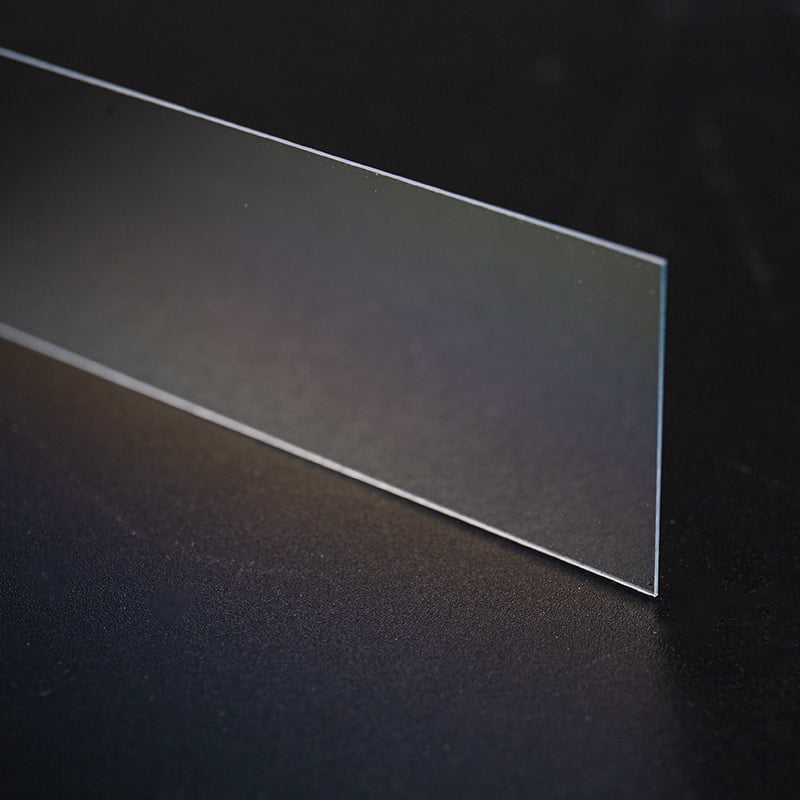
Polystyrene (PS) achieves its excellent transparency because it is an amorphous thermoplastic with a disordered molecular structure that lacks crystalline regions. In crystalline plastics, light waves scatter when they encounter the boundaries between ordered crystal lattices and disordered amorphous zones, creating opacity or translucency. General Purpose Polystyrene (GPPS) has no such internal structures. Its polymer chains are randomly entangled, allowing visible light in the 380 to 780 nanometer wavelength range to pass through with minimal refraction, resulting in a light transmission rate that can exceed 88% to 92% depending on thickness and purity. This puts it on par with glass in terms of visual clarity while being significantly lighter, easier to mold, and far less brittle.
The Physics of Light Transmission in Amorphous Polymers
Transparency in any material is fundamentally about the absence of internal structures large enough to interfere with the electromagnetic waves of visible light. The critical dimension for scattering centers is approximately one-tenth of the wavelength of light, or roughly 40 to 80 nanometers. In semi-crystalline plastics like polyethylene or polypropylene, spherulites—spherical crystalline aggregates—routinely grow to sizes of 1 to 100 microns, far exceeding this threshold and causing the polymer to appear milky or opaque.
GPPS avoids this entirely. The bulky phenyl side groups hanging off the polystyrene backbone prevent the polymer chains from folding into ordered lamellae during cooling from the melt. The chains are frozen in a random, glass-like state. The refractive index of this homogeneous phase is uniform throughout the material, so light travels through it in a straight, unaltered path. This is the same physical principle that makes inorganic silicate glass transparent, applied to an organic polymer system.
GPPS vs. Other Transparent Plastics: A Quantitative Comparison
Not all clear plastics are equal. The property that makes GPPS stand out is its high refractive index coupled with a distinct, brittle rigidity that rivals like PET and acrylic cannot match in certain price brackets. The table below quantifies these differences, focusing on the optical and physical properties that dictate material selection for transparent applications.
| Material | Light Transmission | Refractive Index | Haze Level | Key Advantage |
|---|---|---|---|---|
| GPPS (General Purpose) | 88-92% | 1.59 | < 1% | Brilliant clarity at lowest cost |
| PMMA (Acrylic) | 92-93% | 1.49 | < 1% | Superior UV resistance, weathers well |
| PET (Polyester) | 88-90% | 1.57 | < 2% | Toughness, impact resistant |
| PC (Polycarbonate) | 85-89% | 1.58 | < 1.5% | Near unbreakable, high heat resistance |
| Styrene Acrylonitrile (SAN) | 88-90% | 1.57 | < 1% | Chemical resistance with clarity |
The Structural Reason for GPPS Clarity: The Phenyl Side Group
The clarity of polystyrene is not an accident of processing; it is a direct consequence of the monomer's chemical structure. The styrene monomer carries a massive, rigid benzene ring as a side group attached to the polyethylene backbone. During radical polymerization, these phenyl groups are positioned randomly in space, forming an atactic configuration. This lack of stereoregularity prevents the chain segments from packing tightly into crystal lattices. The bulky phenyl group acts as a spacer, keeping neighboring chains apart just enough to prevent nucleation but not enough to scatter light.
The trade-off is brittleness. The same molecular rigidity that prevents crystallization also restricts chain mobility, meaning polystyrene cannot yield and deform plastically under stress like polycarbonate. It fractures. This is why GPPS components with high transparency requirements, such as clear disposable cutlery, CD jewel cases, and laboratory petri dishes, are designed with thick, rigid cross-sections that do not need to flex. For applications demanding clarity plus impact resistance, the industry shifts to HIPS (High Impact Polystyrene), which sacrifices a portion of that perfect transparency for toughness by incorporating a dispersed rubber phase that does scatter some light.
Preserving Transparency During Thermal Processing
Achieving perfect clarity in the final part depends heavily on thermal history. GPPS must be processed within a strict melt temperature window, typically between 200°C and 250°C. Exceeding this range thermally degrades the polymer. The degradation mechanism involves chain scission and the liberation of styrene monomer, which oxidizes to form yellow-tinted chromophores. Even a tiny concentration of these degradation byproducts absorbs light in the blue end of the visible spectrum, giving the molded part a perceptible yellow cast that ruins the optical quality.
Mold temperature is equally critical. Injecting molten GPPS into a cold mold—one below the glass transition temperature of approximately 100°C—quenches the surface layer too rapidly. This sets up internal flow-induced stresses and creates microscopic surface ripples that manifest as haze. To maximize transparency in injection-molded polystyrene, mold temperatures should be maintained between 40°C and 70°C, with a polished mold surface finish of SPI A-1 or A-2 diamond-buffed quality. Any tool mark or micro-scratch on the steel is faithfully replicated in the plastic part.
UV Degradation and the Yellowing Problem
GPPS has one well-documented optical weakness: it yellows and hazes over time when exposed to ultraviolet radiation in the 290 to 350 nanometer range. The phenyl rings in polystyrene are chromophores themselves. Under sustained UV bombardment, they undergo photo-oxidation, forming carbonyl and hydroperoxide functional groups that absorb blue light and emit a yellow-brown appearance. This is a permanent chemical change; it cannot be reversed by cleaning or polishing.
For indoor applications with filtered sunlight, this degradation is slow enough to be negligible over the product's intended lifespan of a few years. However, for any transparent PS component intended for outdoor exposure, UV stabilizer additive packages based on hindered amine light stabilizers (HALS) or benzotriazole UV absorbers must be compounded into the resin at levels between 0.1% and 0.5% by weight. These additives sacrificially absorb UV photons and dissipate the energy as harmless heat before they can attack the polymer backbone, preserving the material's initial transparency for significantly longer.
Practical Applications Leveraging PS Transparency
The unique combination of water-clear transparency, high surface gloss, and low material cost makes GPPS the default choice for applications where the consumer needs to see the product clearly but the structural demands are moderate. The market segments below depend on polystyrene's optical clarity as a core functional requirement, not just an aesthetic preference.
- Food Packaging Clamshells: Transparent hinged containers for bakery items and fresh produce rely on PS clarity to display the product without requiring the customer to open the package, reducing contamination risk.
- Laboratory Ware: Petri dishes, serological pipettes, and cuvettes are made from crystal polystyrene because it transmits UV light adequately for spectrophotometry at 340nm and above, a critical wavelength for DNA and protein analysis.
- Point-of-Purchase Displays: Cosmetic and fragrance packaging uses injection-molded GPPS with wall sections thick enough to mimic the weight and clarity of cut glass, achieving a premium look at a fraction of the cost.
- Lighting Diffusers: While LED covers are moving to polycarbonate, fluorescent tube diffusers historically used GPPS with a prismatic surface texture to break up the light source while maintaining overall light transmission efficiency.
- Optical Models and Prototypes: The ease of machining and polishing cast GPPS sheet makes it a preferred material for building transparent scale models of architectural atria and fluid flow visualization rigs in engineering labs.
Distinguishing GPPS from Competing Clear Materials in the Field
Without laboratory equipment, positively identifying a transparent plastic can be challenging. However, a simple density test separates polystyrene from its main competitors. GPPS has a density of approximately 1.05 g/cm³, which is very close to water. Cut a small, unfloated sample free of air bubbles and place it in a glass of water. Polycarbonate (1.20 g/cm³) and PET (1.38 g/cm³) will sink noticeably faster and more decisively. Polymethylpentene (TPX), another optically clear plastic, will float because its density is only 0.83 g/cm³.
The flame test provides further confirmation, though it should be conducted safely. Polystyrene burns with a very sooty, yellow-orange flame and emits a distinct, sweet, marigold-like styrenic odor. The heavy black smoke is characteristic of the high carbon content of the aromatic ring. Polycarbonate self-extinguishes when the flame is removed, and acrylic burns cleanly with a sharp, fruity smell, making the identification straightforward for an experienced material handler.